
You’re texting a friend, you ask a question, and they reply with just “ofc.” No explanation, no extra words. So what does OFC actually mean in text? It’s short for “of course,” and people use it to confirm something quickly and confidently. You’ll spot it everywhere texting, WhatsApp, Instagram comments, Discord servers, even quick replies at work.
It’s one of those small abbreviations that shows up so often you barely notice it, yet knowing exactly how it’s used helps you read tone correctly and reply the right way. This guide covers everything you need to know about OFC, from its meaning to real examples across every major chat platform.
What Does OFC Meaning in Text?
OFC is a quick way to say “yes, obviously” or “definitely” in a text conversation. It confirms something without needing a long explanation.
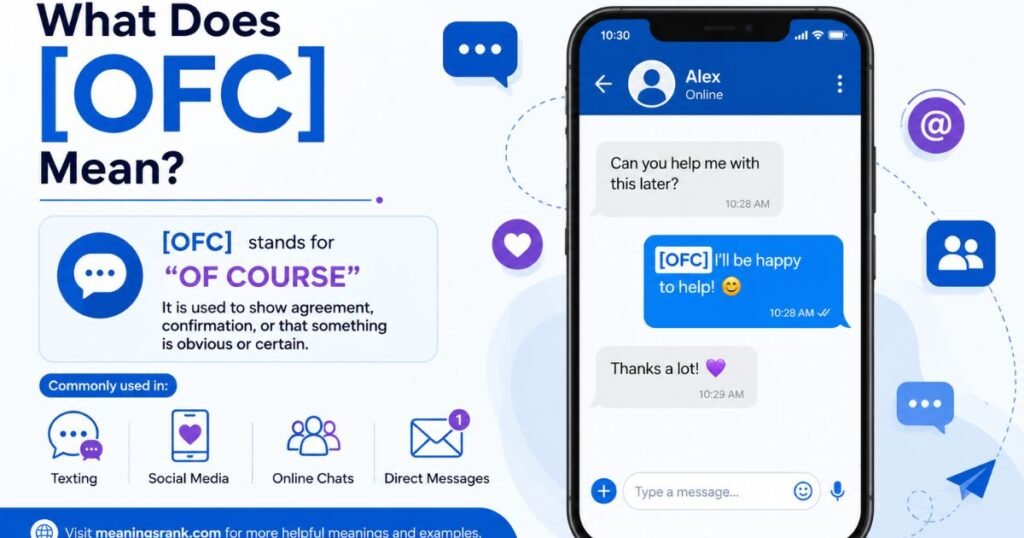
People use it when the answer to a question feels clear or expected. It adds a confident, easygoing tone to a reply.
Here’s a simple example:
Person A: “Can you help me move this weekend?”
Person B: “Ofc, just tell me the time.”
In this exchange, Person B isn’t just agreeing. They’re confirming it so naturally that it barely needs discussion. OFC makes the “yes” feel warm and automatic, not forced.
This term shows up constantly in fast-paced chats because it saves time while still sounding friendly. Instead of typing “yes, of course I will,” people just type “ofc.”
A few quick facts about how OFC works:
- It usually answers a question directly
- It signals confidence, not hesitation
- It works well in both short replies and full sentences
- It rarely needs extra punctuation to feel complete
For example, “ofc I remember your birthday” sounds warmer than a plain “yes.” The word carries a little extra reassurance, almost like saying “don’t even worry about that.”
Once you recognize this pattern, OFC becomes easy to spot in almost any kind of conversation, casual or otherwise.
Read More: https://meaningsrank.com/ntm-meaning-in-text/
What Does OFC Stand For?
OFC stands for “Of Course.” It’s a simple, three-letter shortcut for a phrase people already use constantly in everyday speech.
Like many texting abbreviations, OFC became popular because typing full phrases takes time, especially on a phone. Shortening common expressions helped conversations move faster without losing meaning.
The phrase “of course” itself has been part of English for a long time, used to confirm something is obvious or expected. OFC simply brings that same phrase into fast digital typing.
A few things worth knowing about OFC:
- It’s used across nearly every messaging app and social platform
- It fits both casual and semi-casual conversations
- It’s neutral in tone, without built-in sarcasm or attitude
- It works for people of all ages, though it’s most common among younger texters
You’ll often see it written in lowercase (“ofc”) since capitalization rarely matters in texting. Both versions carry the exact same meaning.
OFC sometimes pairs with other slang for extra emphasis, like “ofc fr” (of course, for real) or “lol ofc.” These combinations don’t change the core meaning they just add personality to how someone delivers the confirmation.
Because OFC mirrors a phrase people already say out loud daily, it feels less like invented slang and more like a natural shortcut. That familiarity is a big reason it has stayed so widely used across chat platforms for years.
The Different Meanings and Uses of OFC
While OFC almost always means “of course,” the tone behind it can shift slightly depending on the situation. Recognizing these small differences helps you read messages more accurately.
Confirming Something Obvious
This is the most common use. It answers a question that already has a clear “yes.”
Example: “Are you coming to the party?” → “Ofc!”
Reassuring Someone
OFC can comfort a person who might feel unsure or worried about asking something.
Example: “Can I vent to you for a sec?” → “Ofc, always.”
Agreeing Enthusiastically
Sometimes OFC adds extra excitement to an agreement, especially with an exclamation point or emoji.
Example: “Wanna go to the concert?” → “Ofc!! I’ve been waiting for this.”
Sarcastic or Dry Tone
In certain contexts, OFC can carry a slightly sarcastic edge, especially when something didn’t go as planned.
Example: “The Wi-Fi crashed again.” → “Ofc it did, right when I needed it.”
Polite Agreement in Group Settings
In group chats, OFC is often used to quickly agree with a plan without slowing down the conversation.
Example: “Should we push the meeting to Friday?” → “Ofc, works for me.”
Here’s a quick breakdown:
| Use Case | Tone | Example |
| Confirming plans | Neutral, confident | “Ofc, see you at 6” |
| Reassuring someone | Warm, supportive | “Ofc, I’ve got you” |
| Excited agreement | Upbeat | “Ofc!! Can’t wait” |
| Sarcastic reaction | Dry, ironic | “Ofc that happened” |
Understanding these variations helps you catch the real meaning behind a short reply, instead of reading every “ofc” the exact same way.
How Is OFC Used in Real Conversations?
OFC usually appears as a short, direct reply to a question or request. It rarely needs much else around it to make sense.
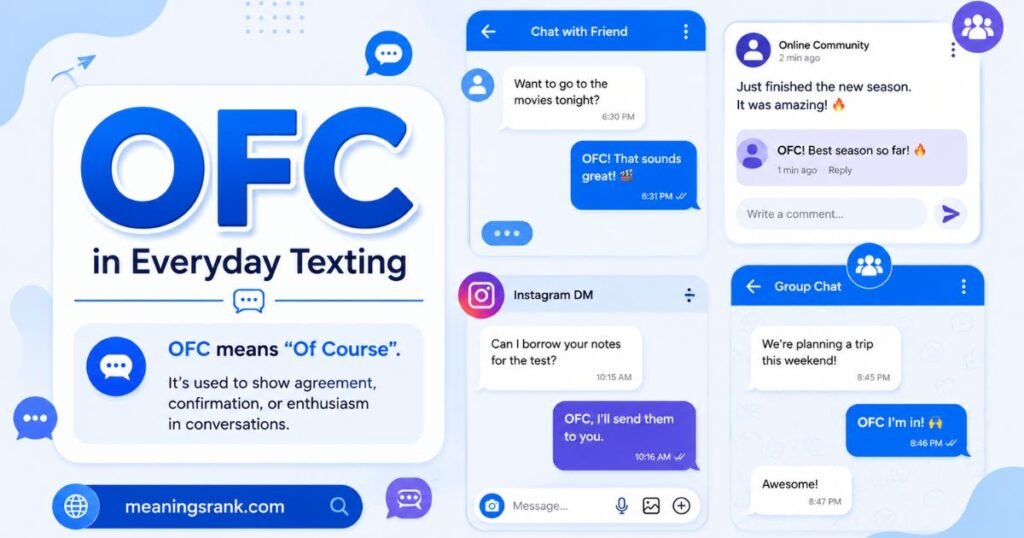
Typical Structure:
“[Ofc] + optional follow-up”
Example: “Ofc, I’ll be there by 7.”
Here’s how OFC shows up across different platforms:
Text Messages:
“Can you send me that photo?” → “Ofc, one sec.”
WhatsApp:
“Are we still doing dinner tonight?” → “Ofc, can’t wait 😊”
Instagram Comments:
“Are you going to post more of these?” → “Ofc, stay tuned!”
Snapchat:
“lol can I use ur charger” → “ofc lol”
TikTok Comments:
“Do you think part 2 is coming?” → “Ofc, it’s already filmed.”
Gaming Chats:
“You got my back this round?” → “Ofc, always.”
Discord Servers:
“Can someone explain the new rules?” → “Ofc, give me a sec to type it out.”
Workplace Chats:
“Can you send the file before lunch?” → “Ofc, sending now.”
Across every platform, OFC does the same basic job: confirming something quickly and warmly. It works especially well in fast chats where a full sentence would feel unnecessary.
In workplace messaging, OFC is often used to sound approachable while still being efficient, which makes it a handy tool for quick confirmations without sounding too stiff or too casual.
Because it’s so short, OFC also blends easily with emojis or extra words, letting people adjust the tone up or down depending on the conversation.
OFC Texting Examples in Different Situations
Seeing OFC in different everyday situations makes its use even easier to understand. Below are realistic examples from common chat platforms.
Text Message:
Person A: “Did you finish the assignment?”
Person B: “Ofc, turned it in an hour ago.”
WhatsApp Group Chat:
Person A: “Everyone good with 8 PM for the call?”
Person B: “Ofc works for me.”
Instagram Comment:
“Ofc this is my favorite post you’ve made.”
Snapchat Caption:
“ofc I had to get pizza after that workout 😂”
TikTok Comment Section:
“Ofc this song is stuck in my head now.”
Gaming Voice/Text Chat:
“Can you cover me while I reload?” → “Ofc, go.”
Discord Message:
“Can someone update the pinned rules?” → “Ofc, I’ll do it now.”
Workplace Slack Message:
“Can you double-check these numbers before I send them?” → “Ofc, give me ten minutes.”
In each of these examples, OFC keeps the reply quick but still warm and clear. It shows agreement without sounding robotic or overly formal.
Notice how the same word fits naturally into very different settings, from casual Snapchat captions to workplace confirmations. That flexibility is part of why OFC has become such a common fixture in digital conversations.
Whether the message is playful or practical, OFC adds just enough confidence to make the reply feel complete on its own.
Is OFC Rude, Flirty, or Offensive?
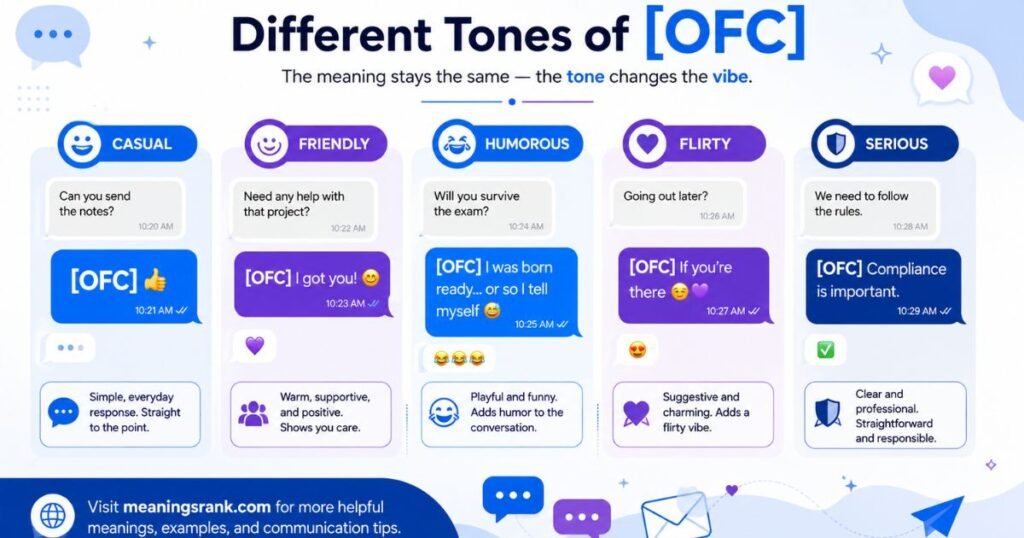
OFC is not offensive, and it’s rarely rude. Most of the time, it simply confirms something in a friendly, casual way.
Why It’s Usually Polite:
OFC shows agreement without hesitation, which often comes across as reassuring rather than dismissive.
Example: “Ofc I’ll help you study” feels supportive, not careless.
When It Could Sound Blunt:
If OFC replies to a serious or emotional message with no other words, it can feel a little short or dismissive.
Example:
Person A: “I’m really stressed about tomorrow.”
Person B: “Ofc.”
Here, a single-word OFC might feel incomplete. Adding a bit more, like “Ofc, you’ve got this,” keeps the warmth intact.
Is OFC Ever Flirty?
It can carry a soft flirty tone depending on the message it responds to.
Example: “Ofc I saved a seat for you 😊”
The flirty feeling comes from the context and emoji, not OFC itself. The abbreviation simply confirms the gesture in a warm, easygoing way.
Quick Summary:
- With friends: casual and friendly
- With serious topics: pair it with extra words for warmth
- In flirty texts: works well alongside emojis or compliments
- In professional chats: fine for quick, simple confirmations
Overall, tone depends more on the surrounding words and punctuation than on OFC itself. A single “ofc.” can feel flat, while “ofc! 😊” feels upbeat and warm.
How to Reply When Someone Says “OFC”
Replying to an OFC message is usually easy since it already confirms something clearly.
If You’re Thankful:
“Thank you so much!” “You’re the best, appreciate it.”
If You Want to Confirm Details:
“Perfect, see you then.” “Great, I’ll send the details now.”
If You Want to Keep It Casual:
“Haha love that for us.” “Ofc back at you 😄”
If It Answered a Bigger Question:
“That means a lot, thank you.”
Here’s a quick example from a workplace chat:
Person A: “Ofc, I’ll have the report ready by noon.”
Person B: “Awesome, thanks for the quick turnaround.”
Notice how Person B builds on the confirmation instead of just leaving it hanging. This keeps the conversation feeling complete and appreciative.
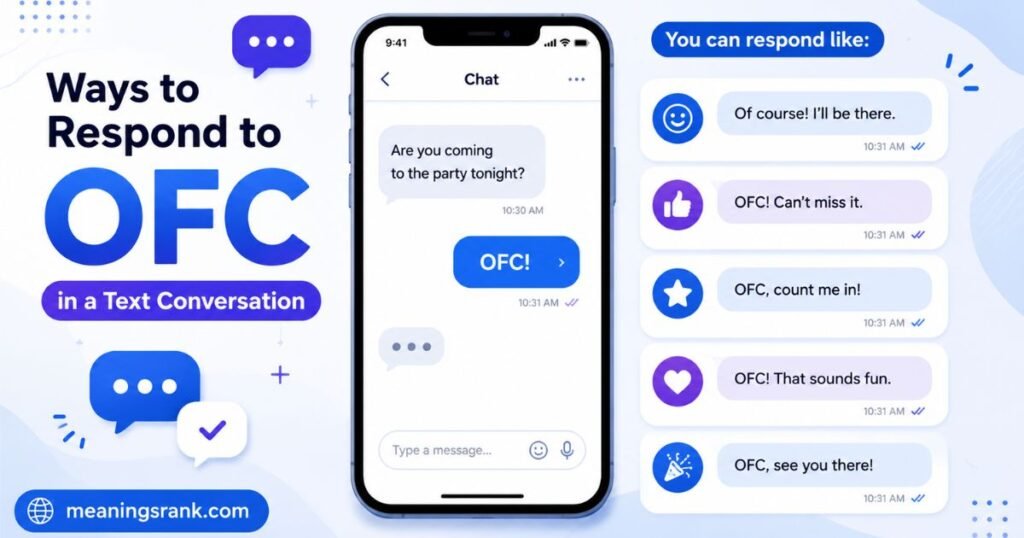
In casual chats, replies can be even shorter, especially on fast platforms like Snapchat or Instagram DMs.
Example: Person A: “ofc I’ll be there lol” Person B: “yesss can’t wait 😂”
The key with OFC replies is matching the energy. Since OFC usually confirms something positive, a warm or appreciative response keeps the conversation feeling natural and complete.
OFC vs Similar Texting Abbreviations
OFC often gets compared to a few other common texting terms. While they may look similar in casual chats, each carries a slightly different meaning.
| Term | Meaning | When to Use |
| OFC | Of Course | Confirming something clearly and confidently |
| DW | Don’t Worry | Reassuring someone about a concern |
| NP | No Problem | Responding after being thanked |
| SURE | Sure | Casual agreement, slightly less enthusiastic |
| YW | You’re Welcome | Responding after being thanked |
OFC vs DW:
DW reassures someone about a worry, while OFC confirms an answer to a question. They often appear together in the same message.
Example: “Dw, ofc I’ll be there on time.”
OFC vs NP:
NP usually responds to an apology or thanks, while OFC answers a direct question or request.
Example: “Thanks for helping!” → “Np, anytime.” “Can you help me?” → “Ofc, anytime.”
OFC vs SURE:
Both confirm agreement, but OFC feels more enthusiastic and certain, while “sure” can sometimes feel neutral or slightly hesitant.
Example: “Ofc I’ll come!” (confident) “Sure, I’ll come.” (neutral)
Knowing these small differences helps you choose the right response depending on how warm or confident you want your reply to sound.
Read More:https://meaningsrank.com/fomo-meaning-in-text/
Common Misunderstandings About OFC
Even though OFC is simple, a few misunderstandings come up often, especially among people less familiar with texting slang.
Misunderstanding 1: OFC Always Means Full Enthusiasm
Not always true. OFC mainly confirms something; the enthusiasm level depends on punctuation, emojis, and surrounding words.
Misunderstanding 2: A Short “Ofc” Reply Means Someone Is Annoyed
Not necessarily. Many people simply type short replies out of habit, not because they’re upset or dismissive.
Misunderstanding 3: OFC Is Only for Yes-or-No Questions
OFC can also confirm plans, agree with statements, or add reassurance beyond simple yes-or-no situations.
Misunderstanding 4: OFC and DW Mean the Same Thing
They’re related but different. DW addresses worry, while OFC confirms certainty. They often appear together but serve separate purposes.
Misunderstanding 5: OFC Sounds Too Casual for Any Work Chat
While it’s not meant for formal emails, OFC is completely normal in casual workplace chat tools like Slack or Teams.
Misunderstanding 6: OFC Always Needs an Exclamation Point
Not true. A plain “ofc” can still feel warm depending on the context, even without extra punctuation.
Clearing up these small misunderstandings helps prevent confusion, especially in mixed-age conversations or group chats where tone can sometimes be misread.
When Should You Avoid Using OFC?
While OFC is common and mostly harmless, there are situations where it’s better to skip it.
Formal Emails or Business Documents
OFC is casual slang, so it doesn’t belong in professional written communication meant for clients or executives.
Serious or Emotional Conversations
If someone shares something difficult, a single-word “ofc” can feel too short or dismissive without extra reassurance.
When Talking to Someone Unfamiliar With Texting Slang
Older relatives or new coworkers might not immediately understand OFC, so spelling out “of course” avoids confusion.
In Situations Requiring Clear, Detailed Answers
If a question needs more explanation, a plain “ofc” alone won’t provide enough clarity.
When Sarcasm Could Be Misread
Since OFC can sometimes carry a sarcastic tone, it’s best avoided in messages where sarcasm might cause misunderstanding.
Being mindful of when to skip OFC shows good communication awareness, especially in settings where clarity and warmth matter more than speed.
Frequently Asked Questions About OFC
What does OFC mean in a text message?
OFC means “of course.” It’s used to confirm something quickly and confidently, often replacing a longer phrase in casual texting.
Is OFC the same as DW?
No. DW means “don’t worry,” while OFC confirms something is true or agreed upon. They’re often used together in the same sentence.
Is OFC okay to use at work?
Yes, in casual chat tools like Slack. It’s best avoided in formal emails or client communication where a professional tone matters more.
Does OFC always mean full agreement?
Mostly yes, though tone depends on punctuation and emojis. A plain “ofc” feels neutral, while “ofc!! 😊” feels much more enthusiastic.
Where is OFC most commonly used?
OFC appears across texting, WhatsApp, Instagram, Snapchat, TikTok, and gaming chats, mostly to confirm plans or reassure someone quickly.
Final Thoughts on the Meaning of OFC
At its core, the OFC meaning in text comes down to one simple idea: it’s a quick, confident way to say “of course.” Whether you’re confirming plans on WhatsApp, replying in a gaming chat, or agreeing to something at work, this small abbreviation keeps conversations moving smoothly.
We’ve covered what OFC stands for, its different tones depending on context, how it compares to similar terms like DW and NP, and situations where it’s better to spell things out fully.
The next time you see OFC in a message, you’ll know exactly what it means and how to respond naturally. Small texting shortcuts like this one make everyday conversations faster, but understanding their tone makes your replies even clearer.