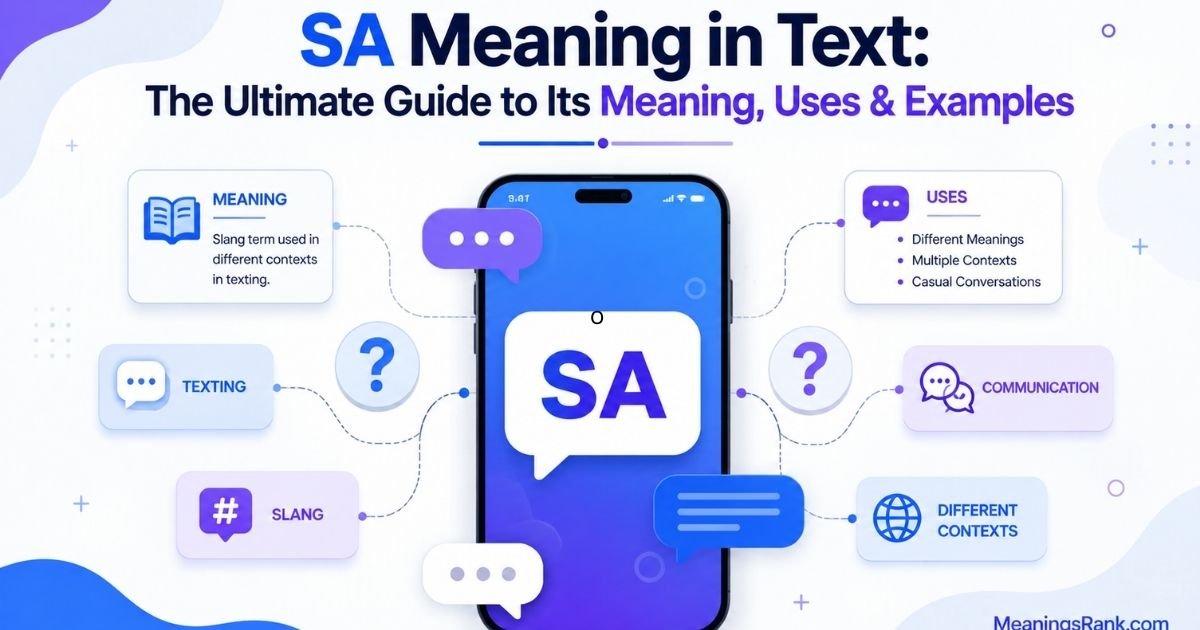

Seeing “SA” in a text and not sure what it means? You’re not alone. The SA meaning in text isn’t fixed it shifts depending on who’s texting and what the conversation is about. Most of the time, it’s a quick way to say “same” or agree with something someone just said. But SA also shows up as a casual apology, a warm cultural greeting, and in more serious conversations, a reference to a sensitive topic.
You’ll spot it in texts, Instagram comments, Discord chats, and group messages. This guide covers every common meaning of SA, so you never have to guess again.
SA Meaning in Text: Quick Answer
In most everyday texting, SA means “Same” or “Same As.” People use it to agree with something quickly, without retyping a full sentence.
Quick breakdown of SA’s main meanings:
- Same / Same As: The most common casual texting use
- Sorry About: A quick, informal apology
- Salam Alaikum: A respectful greeting used in many Muslim and South Asian communities
- Sexual Assault: Used in serious, educational, or advocacy conversations
The correct meaning almost always depends on context. A text from a friend saying “SA” after you share a story usually means “same,” while SA in a news headline or awareness post refers to something far more serious.
Here’s a simple example of the most common use:
Person A: “I’m so tired today, didn’t sleep well.”
Person B: “SA, I barely slept either.”
In this exchange, Person B is agreeing with Person A. SA works the same way as saying “same here” or “me too,” just shorter and faster to type.
Because SA carries multiple possible meanings, reading the surrounding message matters more than the letters themselves. This guide breaks down each meaning in detail so you can read any conversation with confidence.
What Does SA Mean in Text?
SA is a flexible, two-letter abbreviation. Unlike acronyms with one fixed meaning, SA changes depending on the setting, the platform, and the people involved.
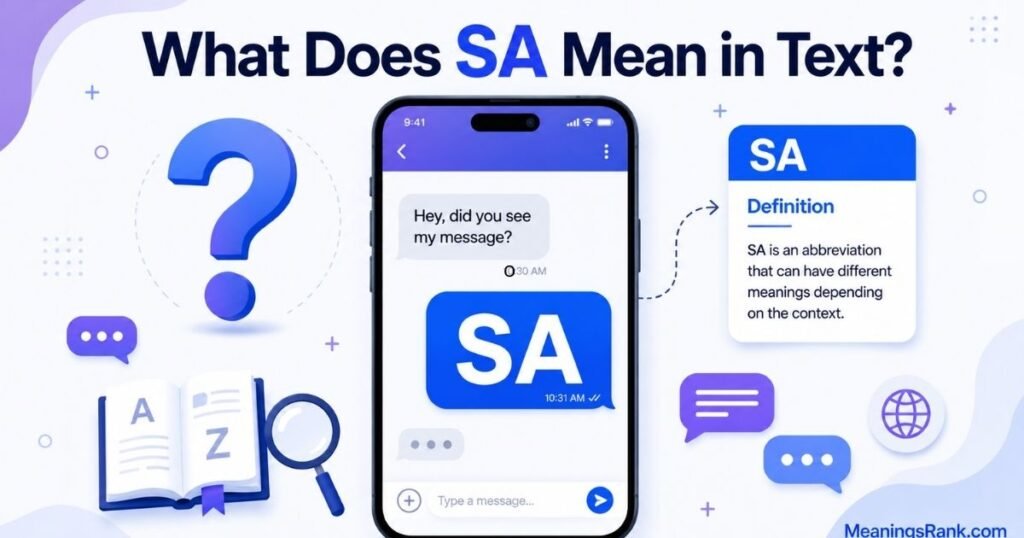
In casual texting, SA is almost always short for “Same” or “Same As.” It’s used the same way people say “me too” or “I feel that” in conversation.
Example:
Person A: “This week has been exhausting.”
Person B: “SA, honestly can’t wait for the weekend.”
Here, SA is a fast way to relate to what the other person said, without adding extra words.
SA can also mean “Sorry About” in casual apology texts, especially when someone wants to say sorry quickly without sounding overly formal.
Example:
Person A: “You never texted back yesterday.”
Person B: “SA that, my phone died.”
In cultural and religious contexts, SA often stands for “Salam Alaikum,” a traditional greeting meaning “peace be upon you.” This use is common in South Asian, Middle Eastern, and Muslim communities as a warm, respectful hello.
Example:
Person A: “SA! How have you been?”
Person B: “Wa Alaikum Salam, doing great!”
In more serious spaces news articles, awareness campaigns, school resources, or support forums SA can stand for “Sexual Assault.” This use is factual and educational, often appearing in safety guides or advocacy content rather than casual chat.
Because SA carries such different meanings, the safest approach is always to read the full sentence, not just the two letters. Context tells you almost everything you need to know.
Origin and Background of SA
SA didn’t start as one single term it grew from several different sources that eventually crossed paths in digital communication.
The Casual Texting Origin:
As SMS texting became popular in the early 2000s, character limits pushed people to shorten common phrases. “Same” naturally became “SA” for quick replies, following the same pattern as other short agreement words like “fr” (for real) or “ikr” (I know, right).
The Apology Shortcut:
“Sorry about” followed a similar path. As messaging apps grew faster and more casual, people looked for quick, low-effort ways to apologize without sounding overly serious. SA fit that need perfectly.
The Cultural Greeting:
“Salam Alaikum” is a much older phrase, used in spoken greetings long before texting existed. As younger generations began texting in these communities, they naturally shortened the greeting to SA, similar to how “hi” sometimes becomes “hey” or “yo” in English texting.
The Serious, Formal Use:
“Sexual assault” has long been abbreviated as SA in academic papers, legal documents, and advocacy materials. This usage predates modern texting and stayed consistent as awareness campaigns moved online.
A few key points about SA’s background:
- It developed from multiple, unrelated sources
- Each meaning grew within its own community or context
- Digital texting simply sped up abbreviations that already existed in some form
- The overlap in letters is coincidental, not connected historically
Understanding where each meaning came from helps explain why SA feels so different depending on where you see it. It’s not one slang term with multiple uses it’s several separate terms that happen to share the same two letters.
How SA Is Used in Real-Life Conversations
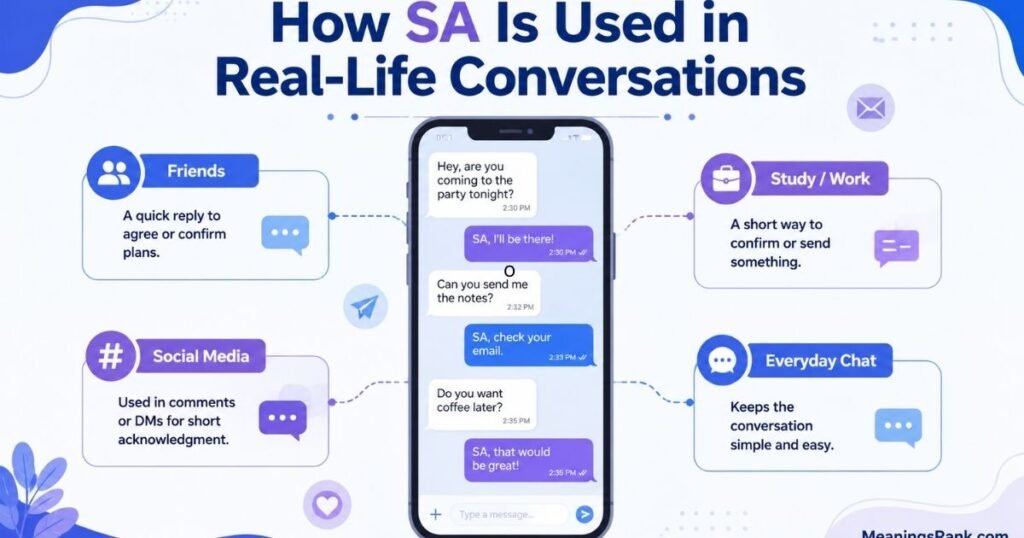
SA usually appears as a short reply or a quick addition to a sentence. Its placement depends on which meaning is being used.
As Agreement (“Same”):
SA typically stands alone or starts a short reply.
Text Messages:
“SA, I felt the exact same way.”
WhatsApp:
“lol SA, I was thinking that too”
Instagram Comments:
“SA this song has been stuck in my head all week”
As an Apology (“Sorry About”):
SA usually comes before the thing being apologized for.
Snapchat:
“SA the late reply, phone was on silent”
TikTok Comments:
“SA if this sounds harsh, just being honest”
Also Read: HRY Meaning in Text: What Does HRY Mean in Chat & Social Media? (2026)
As a Greeting (“Salam Alaikum”):
SA appears at the very start of a message, often followed by a full response using the traditional reply.
WhatsApp:
“SA! Hope you’re doing well.”
Gaming and Discord:
In gaming and Discord chats, SA is almost always used as “same,” especially when reacting to a shared frustration or experience.
Discord Message:
“SA, that boss fight took me forever too.”
Gaming Chat:
“SA bro, that lag is driving me crazy.”
Workplace Chats:
SA rarely appears in workplace messaging, since most professional settings avoid ambiguous slang. When it does show up, it’s almost always the “sorry about” version.
Workplace Chat:
“SA the delay, I’ll send the file in five minutes.”
Across every platform, the surrounding words make the meaning obvious almost instantly. That’s why SA rarely causes real confusion once you’re used to reading it in context.
SA Meaning in Different Contexts
Because SA changes meaning based on setting, breaking down each context side by side makes it much easier to understand.
In Friendly, Casual Chats:
SA almost always means “same.” It’s used constantly among friends reacting to shared experiences, feelings, or opinions.
In Apology-Focused Messages:
SA short for “sorry about” appears when someone wants to apologize quickly without over-explaining.
In Religious or Cultural Greetings:
SA representing “Salam Alaikum” shows up as a warm hello, especially in messages between people who share cultural or religious backgrounds.
In Serious or Educational Content:
SA meaning “sexual assault” appears in news coverage, school safety materials, support hotlines, and advocacy posts. This use is formal and factual, never casual or joking.
In Gaming Communities:
SA is almost always “same” here, used to relate to frustrating or funny in-game moments.
In Professional Settings:
SA is rare, but when used, it typically means “sorry about,” kept short and polite.
Here’s a simple side-by-side look:
- Friend texts “SA, that class was so boring” → means “same”
- Friend texts “SA I missed your call” → means “sorry about”
- Someone greets “SA, how’s your family?” → means “Salam Alaikum”
- A safety pamphlet mentions “SA prevention resources” → means “sexual assault”
This range is exactly why context matters so much with SA. The same two letters can shift completely depending on tone, platform, and the relationship between the people talking.
Is SA Rude, Offensive, or Inappropriate?
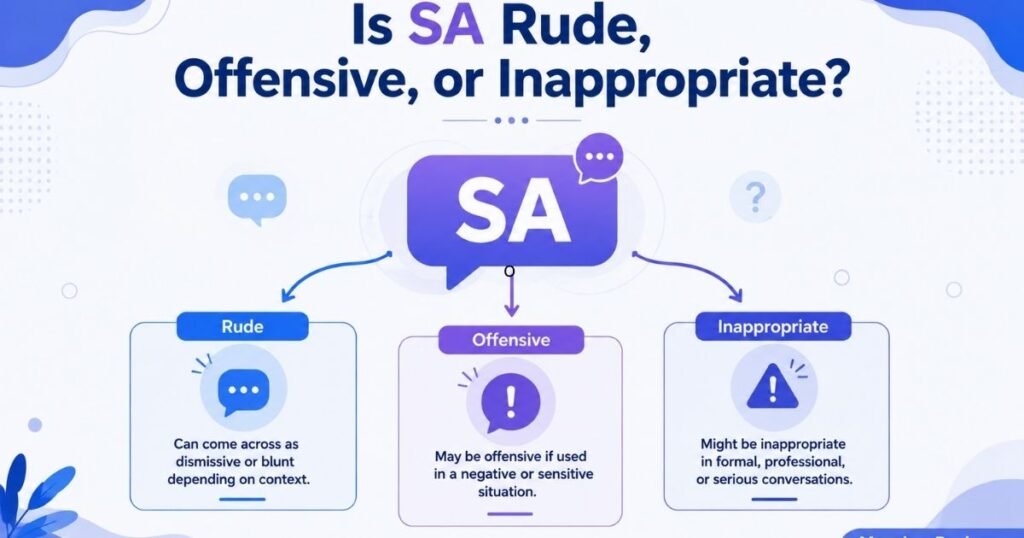
On its own, SA is not rude or offensive. Its tone depends entirely on which meaning is being used and how it fits into the message.
When SA Means “Same”:
This use is completely neutral and casual. It’s simply a fast way to relate to someone, similar to saying “me too.”
Example: “SA, I hate Mondays too” friendly and harmless.
When SA Means “Sorry About”:
This version is generally polite, though it can feel slightly casual for serious apologies. It works better for small mistakes than major ones.
Example: “SA the wait” feels fine for a short delay, but a bigger issue usually calls for a fuller apology.
When SA Means “Salam Alaikum”:
This use is respectful and warm. It reflects cultural and religious tradition, so using it correctly shows genuine politeness.
When SA Refers to Sexual Assault:
This meaning is serious and should never be used casually or as a joke. Using SA this way outside of appropriate, factual contexts can come across as insensitive or harmful.
Quick Guidelines:
- Casual “same” use: totally fine in everyday chats
- Apology use: fine for small situations, not big ones
- Greeting use: respectful when used correctly within its cultural context
- Serious use: reserved for factual, educational, or supportive conversations only
The letters themselves aren’t the issue it’s the context and intent behind them that determines whether SA feels appropriate or not. Reading the full message before responding is always the safest approach.
When Should You Not Use SA?
While SA works well in many casual settings, there are clear situations where it’s better to avoid it.
In Formal Emails or Documents
SA is too vague and casual for professional writing. Spell out “same,” “sorry about,” or the full context instead.
When Talking to Someone Unfamiliar With the Term
Not everyone recognizes SA the same way. Using it with someone who doesn’t share your texting habits can create confusion.
Also Read: _ Meaning in Text: The Complete Guide to Its Meaning & Usage
In Serious Apologies
For meaningful mistakes, a short “SA” can feel dismissive. Bigger situations deserve a full, sincere apology instead of a shortcut.
Around Sensitive Topics
Because SA can represent “sexual assault” in some contexts, using it casually especially as a joke is inappropriate and can come across as deeply insensitive.
In Mixed-Audience Group Chats
If a group includes people from different backgrounds or age groups, SA’s multiple meanings can create genuine misunderstandings.
When Precision Matters
In situations where clarity is essential, like scheduling, instructions, or important updates, SA adds unnecessary ambiguity.
Being aware of these situations helps you use SA responsibly and avoid awkward or uncomfortable moments in conversation.
Common Misunderstandings About SA
A few misunderstandings about SA come up often, especially since it carries so many different meanings.
Misunderstanding 1: SA Always Means “Same”
While this is the most common casual use, it’s not universal. Context always determines the real meaning.
Misunderstanding 2: SA Is Always Casual
This isn’t accurate. In educational, legal, or advocacy content, SA carries serious, formal meaning tied to sexual assault awareness.
Misunderstanding 3: SA Is Rude When Used as a Greeting
The opposite is true. “Salam Alaikum,” shortened to SA, is a respectful and warm greeting within its cultural context.
Misunderstanding 4: SA Is Only Used by Younger Texters
SA spans multiple generations, especially its use as a greeting, which has been common in spoken and written communication for a long time.
Misunderstanding 5: SA Has One Universal Meaning Online
Because of its overlapping uses, assuming SA always means the same thing across every platform or community can lead to real confusion.
Clearing up these misunderstandings helps prevent awkward replies and shows a better overall understanding of how flexible internet slang can be.
SA Variations and Related Meanings
SA sometimes appears alongside other short texting terms, especially when people want to add more emphasis or clarity.
- SA fr — “Same, for real,” adding extra emphasis to agreement
- Big SA — a stronger version of “same,” showing more enthusiasm
- SA tho — “Same though,” often used to agree while adding a slight contrast
- SA my b — combining “sorry about” with “my bad” for a casual double apology
Related agreement terms people often use instead of or alongside SA include:
- Same here — a clearer, spelled-out version of SA
- Facts — strong agreement, often more emphatic
- Fr — short for “for real,” used to confirm agreement
- IKR — “I know, right,” reacting with shared understanding
Related greeting terms tied to SA’s cultural use include:
- Salaam — a shortened version of the full greeting
- AoA — another common abbreviation for “Assalamu Alaikum”
Knowing these variations helps you recognize SA even when it’s dressed up with extra words or paired with other slang, which happens often in fast-paced group chats.
SA Meaning: Comparison Table
| Meaning | Context | Example |
| Same / Same As | Casual texting, agreement | “SA, I felt that too.” |
| Sorry About | Quick, informal apology | “SA the late reply.” |
| Salam Alaikum | Cultural or religious greeting | “SA! How are you?” |
| Sexual Assault | Formal, educational, advocacy content | “SA awareness resources are linked below.” |
This table offers a fast way to check which meaning fits the message you’re reading, based on tone and setting.
How to Respond When Someone Uses SA
Replying to SA depends heavily on which meaning applies to the conversation.
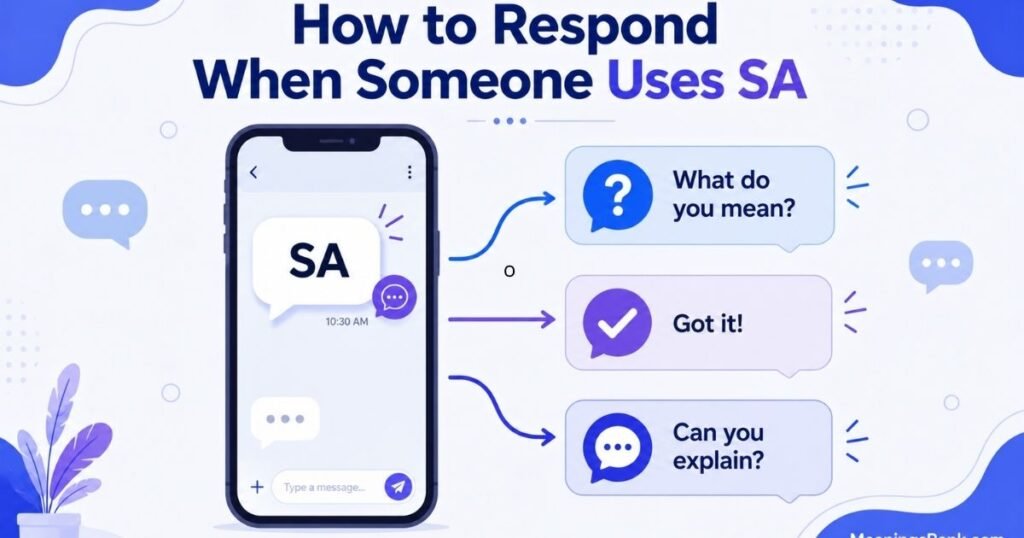
If SA Means “Same”:
“Haha SA, honestly.” “Right? Same here.”
If SA Means “Sorry About”:
“No worries, all good!” “It’s fine, don’t stress about it.”
If SA Means “Salam Alaikum”:
“Wa Alaikum Salam! Doing well, thank you.”
If SA Appears in a Serious or Sensitive Context:
Respond thoughtfully and avoid casual language. If someone is sharing something personal or difficult, focus on support rather than a quick reply.
Example from a casual chat:
Person A: “This traffic is unreal today.”
Person B: “SA, been stuck for 20 minutes.”
Example from a greeting:
Person A: “SA! Long time no talk.”
Person B: “Wa Alaikum Salam! Yes, it’s been a while.”
The safest approach is always to match the tone of the message. Casual SA gets a casual reply, while a serious or sensitive use calls for a much more careful, supportive response.
Also Read: FF Meaning in Text: The Ultimate Guide to What FF Means
Regional and Cultural Usage of SA
SA’s meaning shifts noticeably depending on region and cultural background, more than most other texting abbreviations.
In the U.S. and Western Texting Culture:
SA is used almost exclusively as “same” or occasionally “sorry about.” It’s common among teens and young adults across texting and social media.
In South Asian, Middle Eastern, and Muslim Communities:
SA frequently represents “Salam Alaikum,” used as a warm, respectful greeting in both spoken and written communication.
In Academic, Legal, and Advocacy Spaces Worldwide:
SA consistently refers to “sexual assault,” used in a formal, factual way across countries and languages, especially in awareness and prevention materials.
In Gaming Communities Globally:
SA overwhelmingly means “same,” used to relate to shared reactions during gameplay, regardless of region.
This regional variation is exactly why assuming one single meaning for SA can lead to confusion, especially in diverse group chats or international online communities. Paying attention to who’s texting, and their background, helps clarify which meaning applies.
Is SA Appropriate for Kids and Teenagers?
For the most part, yes the casual meanings of SA are perfectly normal for younger texters to use.
Why It’s Generally Fine:
“Same” and “sorry about” are harmless, everyday expressions. Kids and teens use these versions constantly in texting, gaming, and social media without any issue.
Where Parents and Guardians Should Stay Aware:
Because SA can also relate to serious topics in educational or awareness content, it’s worth having open conversations about context, especially if children encounter SA in school resources or online safety materials.
Helpful Tips for Parents:
- Explain that SA usually just means “same” in casual chats
- Mention that SA can appear in serious educational content too
- Encourage open conversations if kids see SA used in confusing or uncomfortable ways
- Remind teens that tone and context matter more than the letters themselves
For everyday texting between friends, SA is a completely normal, low-stakes abbreviation. The key is making sure kids understand that context changes meaning, a lesson that applies to plenty of internet slang beyond just SA.
Frequently Asked Questions
What does SA mean in a text message?
SA most often means “same,” used to agree with what someone just said. It can also mean “sorry about” or “Salam Alaikum,” depending on the conversation.
Is SA the same as “same here”?
Yes, in casual texting, SA is simply a shorter version of “same here,” used to show agreement quickly.
Does SA always mean something serious?
No. Most everyday uses of SA are casual and harmless, though it can carry a serious meaning in formal or educational content.
What does SA mean in Muslim greetings?
SA often stands for “Salam Alaikum,” a respectful greeting meaning “peace be upon you,” used across many Muslim communities.
Is it okay to use SA with coworkers?
It’s best avoided in professional writing. Spelling out the full phrase sounds more appropriate for workplace communication.
Conclusion
The SA meaning in text isn’t a single, fixed definition it changes based on who’s texting, where the conversation is happening, and what tone the message carries. Most of the time, it’s a quick, casual way to say “same,” but it can also mean “sorry about,” serve as a respectful greeting, or point to something far more serious in formal content.
This guide walked through every major meaning, real examples across platforms, and simple ways to respond depending on context. The biggest takeaway is this: never judge SA by the letters alone. Read the full message, consider who’s sending it, and the right meaning will almost always become clear.