
You send a message, feel a little worried about how it landed, and then your friend replies with just “DW.” If you paused for a second wondering what that meant, you’re not alone. The DW meaning in text is simple: it’s a quick way to tell someone not to stress about something. You’ll see it in text messages, WhatsApp chats, Instagram comments, and even work Slack threads.
It’s short, calming, and used constantly across every kind of digital conversation. Understanding this small abbreviation helps you read tone correctly and respond the right way, especially when a message feels a bit unclear at first glance. Let’s go through everything it means.
What Does DW Meaning in Text?
DW is used to reassure someone. It tells the other person that something isn’t a big deal, so they don’t need to feel worried, guilty, or stressed about it.
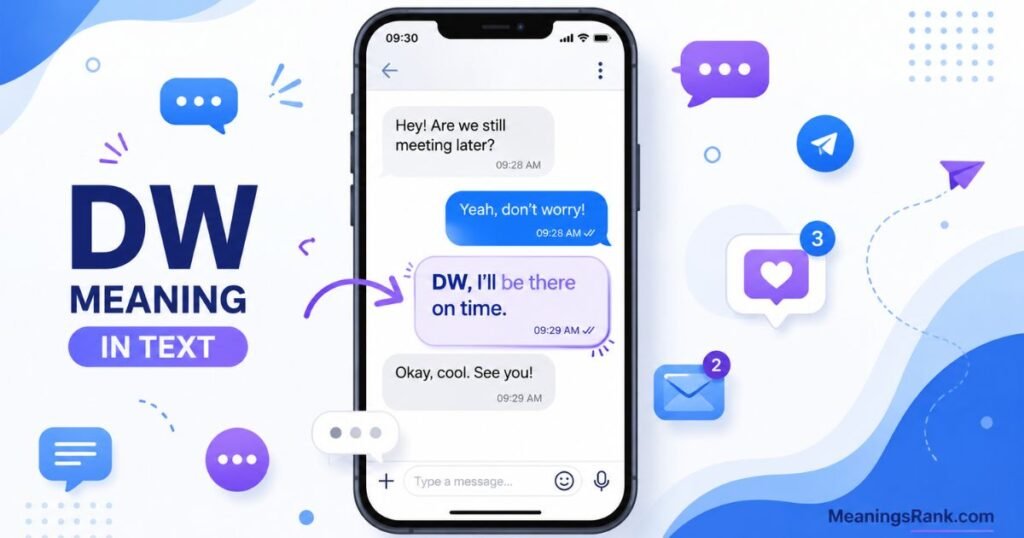
It works like a small comfort blanket in text form. Instead of typing out a full reassuring sentence, people just drop “DW” and move on.
Here’s a simple example:
Person A:
“Sorry I took so long to reply!”
Person B:
“DW, I was busy too.”
In this exchange, Person B isn’t upset at all. They’re using DW to brush off the apology and let their friend know everything is fine.
This abbreviation shows up constantly because people apologize, hesitate, or overthink small things all the time in conversations. DW gives an easy way to smooth things over without sounding overly formal or dramatic.
A few quick things to know about how DW functions:
- It reassures, rather than informs or argues
- It usually responds to an apology, worry, or mistake
- It keeps a calm, easygoing tone
- It rarely appears mid-sentence — it’s mostly a standalone reply
For example, “DW about the mess, I’ll clean it later” softens a household chore, while just replying “dw” on its own can end an entire worry in two letters. Either way, DW keeps the mood light.
Once you notice this pattern, you’ll start spotting DW everywhere, especially in fast-moving group chats.
What Does DW Stand For?
DW stands for “Don’t Worry.” It’s a short, friendly abbreviation that carries the same warmth as the full phrase, just in fewer keystrokes.
This term became popular alongside other texting shorthand in the early days of mobile messaging, when character limits and typing speed actually mattered. People needed fast ways to comfort each other without typing long sentences.
Unlike slang that constantly shifts meaning, DW has stayed consistent. It’s rarely used sarcastically and almost never carries a hidden or negative meaning.
A few notes on where DW fits in:
- It’s common across texting, social media, and group chats
- It works for both small and slightly bigger worries
- It’s used by people of nearly every age group
- It pairs naturally with emojis like 😊 or 👍
You’ll often see it written in lowercase (“dw”) since capitalization rarely matters in casual texting. Both versions mean exactly the same thing.
DW sometimes gets stretched into phrases like “dw about it” or “dw it’s fine,” which don’t change the core meaning they just match how people naturally talk.
Because DW mirrors something people already say out loud constantly, it feels less like internet slang and more like a shortcut for everyday comfort. That’s likely why it has stuck around for so long across so many platforms.
How Is DW Used in Real Conversations?
DW usually appears as a direct reply to something someone else said, especially an apology, a worry, or an offer. It doesn’t often start a brand-new topic on its own.
Typical Structure:
“DW, [reassurance or explanation]”
Example: “DW, I’ll handle it tomorrow.”
Here’s how DW shows up across different platforms:
Text Messages:
“DW about dinner, I already ate.”
WhatsApp:
“DW, I’ll send the money later today 💸”
Read More:https://meaningsrank.com/sb-meaning-in-text/
Instagram Comments:
“DW, everyone forgets sometimes!”
Snapchat:
“dw lol it’s not a big deal”
TikTok Comments:
“DW, the ending makes sense once you rewatch it”
Gaming Chats:
“DW, I’ll cover you this round.”
Discord Servers:
“DW, the server will be back up soon.”
Workplace Chats:
“DW, I already flagged that issue to the team.”
Across every platform, DW performs the same job: easing tension or worry in a quick, casual way. In workplace chats, it’s often used to reassure a coworker without sounding overly formal, especially when addressing small mistakes or delays.
In gaming and Discord chats, DW frequently pops up during stressful moments, like when a teammate makes an error or something goes wrong technically. It works almost like a quick “it’s handled” signal.
Because it’s so short and easy to type, DW fits naturally into fast conversations where people don’t want to slow things down with longer explanations.
DW Texting Examples in Different Situations
Seeing DW across different real-life scenarios makes its purpose even clearer.
Text Message:
Person A: “I might be a few minutes late.”
Person B: “DW, take your time.”
WhatsApp Group Chat:
Person A: “Sorry, I forgot to send the address.”
Person B: “DW, I already found it on Maps.”
Instagram Comment:
“DW, your photos are always worth the wait!”
Snapchat Caption:
“dw guys I’m fine, just tired 😴”
TikTok Comment Section:
“DW, part two explains everything from part one.”
Gaming Voice/Text Chat:
“DW, I’ll grab the item drop for you.”
Read More:https://meaningsrank.com/mb-meaning-in-text/
Discord Message:
“DW, I already reported that bug to the mods.”
Workplace Slack Message:
“DW, I moved the deadline back a day so we’re fine.”
In each case, DW quickly clears up tension, whether it’s a small delay, a mistake, or an unspoken worry. That’s really its main strength reducing friction without needing a long explanation.
Notice how naturally DW fits into both casual chats and workplace messages. It rarely feels out of place because reassurance is something people need in almost every kind of conversation, personal or professional.
Whether it’s calming a friend down or smoothing over a work hiccup, DW keeps the tone light and moves the conversation forward.
Is DW Rude, Flirty, or Offensive?
DW is neither rude nor offensive. It’s actually one of the most gentle and considerate abbreviations used in texting today.
Why It’s Almost Always Kind:
DW is meant to comfort, not criticize. It tells someone their mistake or worry isn’t worth stressing over, which naturally makes it feel warm and supportive.
Example: “DW about spilling the drink, it happens” feels caring, not judgmental at all.
Could DW Ever Feel Dismissive?
In rare cases, yes. If someone is genuinely upset and just gets a quick “dw” with nothing else, it might feel a little brushed off rather than comforting.
Example:
Person A: “I feel really bad about missing your call.”
Person B: “dw”
Here, a longer reply like “DW, I know you’re busy, we’ll talk later” would feel warmer than a single flat “dw.”
Is DW Ever Flirty?
Not typically. DW is functional and reassuring rather than romantic. But it can appear in flirty conversations without carrying flirty meaning itself.
Example: “DW, I saved you a seat next to me 😊”
Here, the flirty tone comes from the gesture and emoji, not from DW itself. The abbreviation is simply softening the message.
Quick Summary:
- In casual chats: warm and reassuring
- In emotional conversations: needs a little more explanation to feel genuine
- In flirty texts: fine, tone comes from surrounding words
- In professional messages: safe and commonly used
Because DW carries such a gentle tone, it’s considered one of the safest abbreviations to use across almost any relationship or setting.
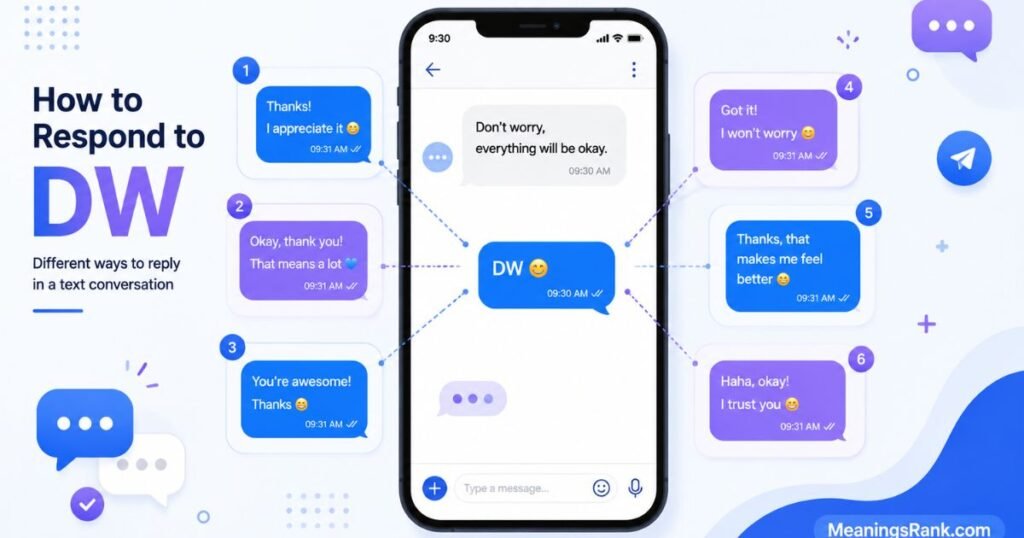
How to Reply When Someone Says “DW”
Replying to a DW message is usually easy since it’s meant to close out a worry rather than start a new discussion.
If You Feel Relieved:
“Oh good, thanks!” “Phew, okay thank you.”
If You Want to Confirm Everything’s Fine:
“You sure? I don’t want to be a bother.” “Okay, let me know if anything changes.”
If You Want to Keep It Light:
“Haha okay, appreciate you!”
If You Want to Move the Conversation Forward:
“Got it, thanks. Anyway, how was your day?”
Here’s a quick example from a workplace chat:
Person A: “DW, I already sent the client an updated timeline.”
Person B: “Awesome, thanks for handling that.”
Notice how Person B doesn’t overanalyze the message. A short, appreciative reply keeps the conversation efficient and shows the reassurance was received well.
In casual chats, replies can be even shorter, especially on fast platforms like Snapchat or Instagram DMs.
Example:
Person A: “dw about the plans, we can reschedule anytime”
Person B: “omg thank you, you’re the best 🥹”
The key with DW replies is accepting the reassurance without overthinking it. Since DW is meant to ease tension, responding with a simple thank-you or light comment keeps the conversation feeling natural and warm.
Common Misunderstandings About DW
Even though DW is simple, a few mix-ups happen fairly often, especially with people less familiar with texting slang.
Misunderstanding 1:
DW Means the Same as “Whatever” This isn’t accurate. DW carries a caring tone, while “whatever” often feels dismissive or annoyed. They’re not interchangeable.
Misunderstanding 2:
A Short “dw” Always Means Someone Is Annoyed Not true. Short replies are common in texting overall, and DW usually reflects casual comfort, not irritation, unless the surrounding context suggests otherwise.
Misunderstanding 3:
DW Can Only Be Used for Small Issues DW works for both minor and slightly bigger concerns. Context determines the size of the worry, not the abbreviation itself.
Misunderstanding 4:
DW Requires a Long Explanation Every Time Sometimes a plain “dw” is enough, especially in fast, casual conversations where both people already understand the situation.
Misunderstanding 5:
DW Is Only Used by Teens DW is used across many age groups. It’s simple enough that people of all backgrounds pick it up quickly once they see it a few times.
Misunderstanding 6:
DW Guarantees Everything Is Actually Fine Sometimes people say DW to avoid conflict, even if something still bothers them. Tone and follow-up messages matter more than the abbreviation alone.
Clearing up these small mix-ups helps prevent awkward misunderstandings, especially in group chats or workplace conversations where reassurance needs to feel genuine, not just automatic.
DW vs Similar Texting Abbreviations
DW is often grouped with other reassuring or dismissive-sounding texting terms. While similar, each one carries a slightly different tone.
| Term | Meaning | When to Use |
| DW | Don’t Worry | Reassuring someone after an apology or concern |
| NP | No Problem | Responding to thanks or a small favor |
| NVM | Never Mind | Dismissing or canceling a previous statement |
| IDC | I Don’t Care | Expressing indifference, sometimes bluntly |
| ITS OK | It’s Okay | A softer, fuller reassurance |
DW vs NP:
NP usually follows “thank you,” while DW usually follows an apology or worry.
Example: “Thanks for waiting!” → “NP!” “Sorry I’m late!” → “DW!”
DW vs NVM:
NVM cancels something, while DW comforts someone. They serve very different purposes even though both are short.
Example: “DW, I’ll grab it myself.” (reassurance) “NVM, I found it already.” (cancellation)
DW vs IDC:
IDC can sound blunt or careless, while DW always carries a warmer, more considerate tone.
Example: “IDC what we watch.” (indifferent) “DW, we can watch whatever you want.” (reassuring)
Understanding these differences helps you choose the right abbreviation depending on whether you want to comfort, dismiss, or simply express indifference.
When Should You Avoid Using DW?
While DW is common in everyday texting, a few situations call for something more thoughtful instead.
Serious Emotional Conversations
If someone is genuinely upset or dealing with something heavy, a plain “dw” can feel too brief. A fuller sentence shows more care.
Formal Emails or Documents
DW is casual shorthand, so formal writing should use the full phrase “don’t worry” instead.
Situations Requiring a Real Explanation
If someone asks a serious question, replying only with DW might leave them more confused instead of reassured.
When Talking to Someone Unfamiliar With Texting Slang
Older relatives, new coworkers, or people from different backgrounds might not instantly recognize DW. Spelling it out avoids confusion.
Customer Service or Business Messages
Professional communication with clients should stick to full phrases for clarity and a polished tone.
When the Other Person Needs More Than Reassurance
Sometimes people need action, not just comforting words. In these cases, pairing DW with a clear next step works better than DW alone.
Knowing when to skip DW, or add more detail around it, shows strong communication awareness, especially in emotional or professional situations where tone really matters.
Frequently Asked Questions About DW
What does DW mean in a text message?
DW means “Don’t Worry.” It’s used to reassure someone after an apology, mistake, or minor concern, keeping the conversation calm and casual.
Is DW the same as NP?
Not exactly. DW responds to worry or an apology, while NP usually replies to a “thank you” or small favor someone did.
Can DW be used in professional chats?
Yes, especially in casual workplace tools like Slack. Formal emails, though, should use the full phrase “don’t worry” for a more polished tone.
Is DW ever rude or dismissive?
Rarely. DW is usually warm and reassuring, though a plain “dw” during a serious conversation can feel too short without added context.
Does DW always mean everything is fine?
Not always. Sometimes people say DW to avoid conflict, even if something still bothers them slightly, so tone and follow-up matter too.
What’s the difference between DW and NVM?
DW reassures someone, while NVM cancels or dismisses a previous statement. They sound similar in length but serve very different purposes.
Can I reply to DW with just “ok”?
Yes, a short “ok” or “thanks” works fine in casual chats. Just make sure the tone matches the seriousness of the original conversation.
Final Thoughts on the Meaning of DW
At its core, the DW meaning in text comes down to one simple idea: it’s a quick, caring way to ease someone’s worry. Whether it shows up in a text message, a WhatsApp chat, or a quick Slack reply at work, its job stays consistent comfort without extra fuss.
We’ve covered what DW stands for, how it’s used across different platforms, how it compares to terms like NP and NVM, and when it’s better to add a little more warmth instead of relying on DW alone.
The next time you see DW in a message, you’ll know exactly what it means and how to respond naturally. A small abbreviation like this one keeps digital conversations light, but understanding it fully makes your replies feel even more genuine.