
Someone texts you “wtv” after a plan falls through, and now you’re stuck wondering what they actually meant by it. The WTV meaning in text isn’t always the same twice that’s what makes it tricky. Sometimes it’s a lazy way of saying “whatever,” sometimes it signals annoyance, and sometimes it just means someone doesn’t care either way. You’ll run into it in texting, WhatsApp, Instagram DMs, Discord, and even work chats when someone’s trying to sound low-effort on purpose.
Understanding WTV helps you read the mood behind a message instead of guessing. This guide breaks down every meaning, tone, and situation so you never misread it again.
What Does WTV Meaning in Text?
WTV is a shortened way of typing “whatever.” It’s used to show a lack of preference, a bit of annoyance, or sometimes just plain laziness when typing.
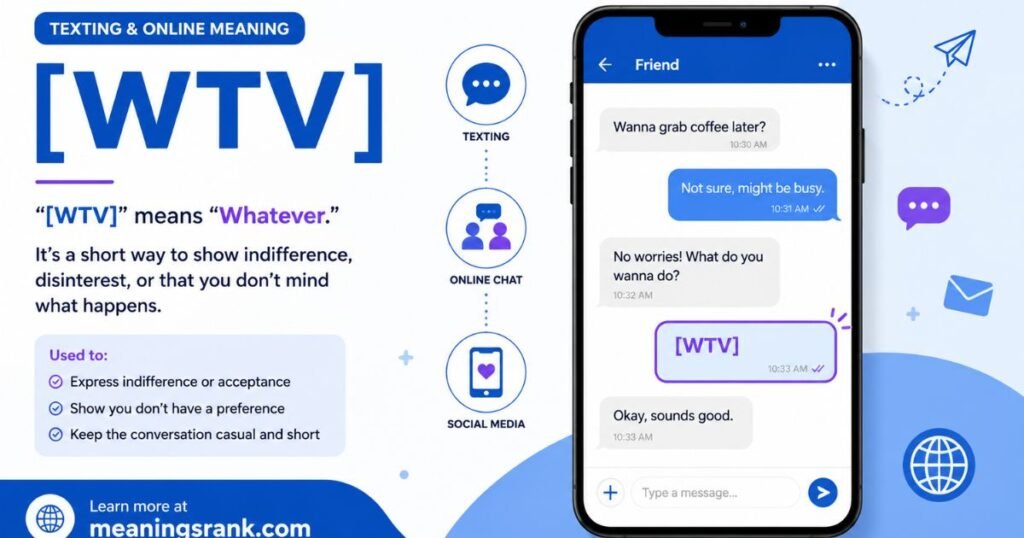
The tricky part about WTV is that it doesn’t carry one fixed emotion. It shifts depending on the conversation, the punctuation, and even the relationship between the two people texting.
Here’s a simple example:
Person A: “Do you want pizza or burgers?”
Person B: “wtv, either is fine.”
In this case, WTV shows Person B genuinely doesn’t have a strong preference. It’s relaxed, not annoyed.
But WTV can shift quickly depending on context:
Person A: “I can’t make it tonight, sorry.”
Person B: “wtv.”
Here, the same word feels colder. Without extra words softening it, WTV can come across as short, dismissive, or even a little hurt.
Some quick things to know about WTV:
- It almost always shortens “whatever”
- Tone depends heavily on punctuation and surrounding words
- It can mean indifference, mild annoyance, or casual ease
- It’s more common in fast texting than in longer messages
Because WTV is so short, people often add emojis or extra words to clarify their tone, like “wtv lol” or “wtv, it’s fine.” Without those extra cues, the reader has to guess the emotion behind it which is exactly why WTV causes so much confusion in everyday texting.
What Does WTV Stand For?
WTV stands for “Whatever.” It’s a fast, typing-friendly shortcut that trims down a common English word into just three letters.
Unlike acronyms built from full phrases, WTV works differently it’s a compressed version of a single word, similar to how “srsly” stands for “seriously” or “prob” stands for “probably.”
This type of shorthand became popular as texting speed became more important, especially on phones with small keyboards. Typing “wtv” instead of “whatever” saves time without losing the core meaning.
Read More: https://meaningsrank.com/ofc-meaning-in-text/
A few background details worth knowing:
- WTV became common through texting and early smartphone messaging
- It spread quickly because “whatever” is used so often in daily conversation
- It works the same way in speech and text, unlike more internet-specific slang
- It’s used across many age groups, not just teens
You’ll typically see it written in lowercase (“wtv”) in casual chats, though capitalization doesn’t change its meaning. Some people also stretch it out for effect, like “wtvvvv,” to emphasize a mood, usually boredom or mild irritation.
Because “whatever” already carries a flexible tone in spoken English sometimes calm, sometimes annoyed WTV inherited that same flexibility once it moved into texting. That’s the main reason this abbreviation feels harder to pin down than more neutral texting terms.
The Different Meanings and Tones of WTV
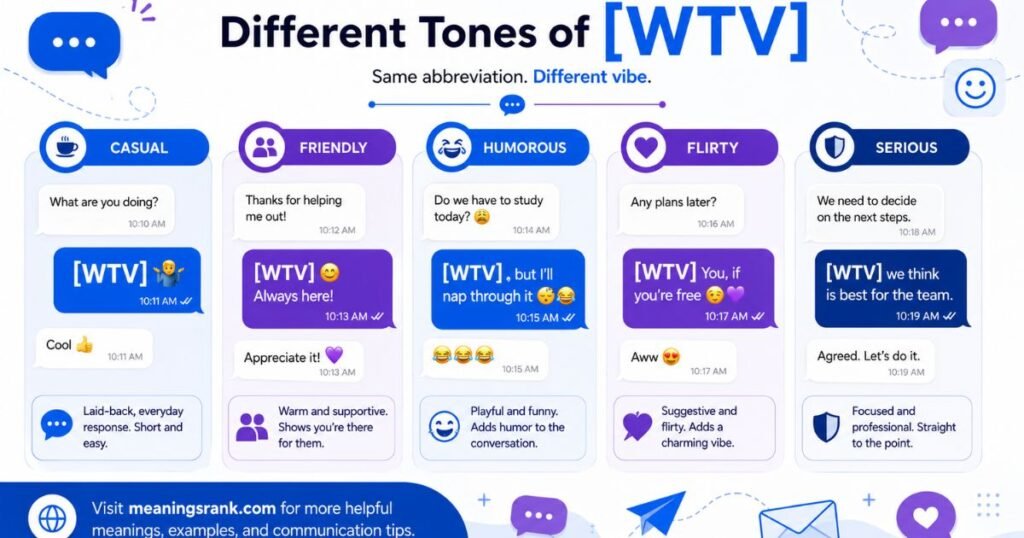
WTV isn’t a one-size-fits-all word. Its meaning shifts based on tone, punctuation, and the emotional context of the conversation.
Genuine Indifference
This is the most neutral version of WTV. It simply means “I don’t have a preference.”
Example: “Movie night or game night? Wtv works for me.”
Mild Annoyance
When WTV follows a disagreement or disappointment, it often signals frustration, even if it’s mild.
Example: “You canceled again? Wtv, I guess.”
Dismissiveness
Sometimes WTV is used to shut down a conversation, especially during an argument.
Example: “I don’t want to talk about this anymore. Wtv.”
Playful or Joking Tone
When paired with laughing emojis or casual slang, WTV can feel light and funny instead of serious.
Example: “wtv lol you always say that 😂”
Passive Resignation
This version shows someone giving in without much enthusiasm, almost like a tired shrug in text form.
Example: “Fine, wtv, let’s just do what you want.”
Here’s a quick breakdown:
| Tone | Feels Like | Example |
| Indifferent | Relaxed, easygoing | “wtv, you pick” |
| Annoyed | Short, a bit cold | “wtv, forget it” |
| Dismissive | Ending the topic | “wtv, moving on” |
| Playful | Light, joking | “wtv lol stop” |
| Resigned | Reluctant agreement | “fine, wtv” |
Because the tone shifts so easily, reading the rest of the message matters just as much as the word itself. WTV rarely stands alone in meaning — it borrows its emotional weight from everything around it.
How Is WTV Used in Real Conversations?
WTV usually appears as a short, standalone reply or right at the start of a sentence. Its placement is flexible, but its brevity is what gives it power.
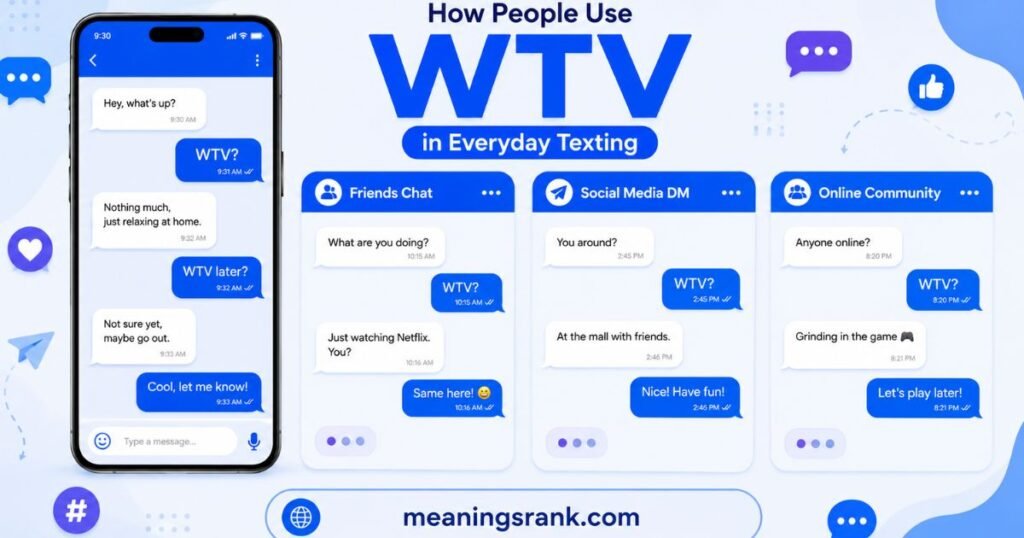
Common Structures:
- “Wtv, [reaction]”
- “[Statement], wtv.”
- Just “wtv” on its own
Here’s how it shows up across different platforms:
Text Messages:
“Wtv, I’ll just order food myself.”
WhatsApp:
“wtv lol it’s not a big deal 😅”
Instagram DMs:
“wtv, I didn’t even want to go anyway”
Snapchat:
“lol wtv, whatever happens happens”
TikTok Comments:
“wtv people say, I still liked the video”
Gaming Chats:
“wtv, let’s just restart the match.”
Discord Servers:
“wtv, I’ll just wait for the next update.”
Workplace Chats:
WTV is rarely used here, and when it is, it’s usually between close coworkers in casual chat threads, not in official communication.
Across every platform, WTV keeps the same core function expressing a lack of investment in the outcome, whether that’s from ease or frustration. On faster-paced platforms like Snapchat and Discord, it often appears without punctuation at all, which usually signals a more casual, relaxed tone.
In slower or more thought-out messages, like Instagram DMs or longer texts, WTV combined with extra explanation tends to soften its tone significantly compared to a lone “wtv.” reply.
Read More: https://meaningsrank.com/mhm-meaning-in-text/
WTV Texting Examples in Different Situations
Seeing WTV play out in different real conversations makes its shifting tone much easier to understand.
Text Message:
Person A: “Should we leave now or in 20 minutes?”
Person B: “wtv, I’m ready whenever.”
WhatsApp Group Chat:
Person A: “Beach or mountains for the trip?”
Person B: “wtv, both sound fun tbh.”
Instagram Comment:
“wtv the haters say, this look is amazing”
Snapchat Caption:
“wtv today was a mess lol 🙃”
TikTok Comment Section:
“wtv, I still think the original version was better”
Gaming Voice/Text Chat:
“wtv, let’s just try a different strategy this round.”
Discord Message:
“wtv, I’ll just download the update later tonight.”
Workplace Slack Message (casual context between close coworkers):
“Meeting moved again? Wtv, I’ll just join whenever it starts.”
In most of these examples, WTV signals a relaxed, go-with-the-flow attitude. But notice how a few examples lean slightly more toward mild frustration, especially when tied to repeated inconveniences, like a meeting getting rescheduled multiple times.
This is exactly why WTV needs context to be understood correctly. The same three letters can sound completely calm in one message and mildly irritated in another, depending on what surrounds it.
Is WTV Rude, Dismissive, or Flirty?
WTV can lean in several directions depending on tone, and it’s one of the few texting terms where context does almost all the work.
Why It’s Sometimes Seen as Rude:
When used as a one-word reply during a disagreement, WTV can feel cold or dismissive, especially if the other person was hoping for a real response.
Example: Person A: “I really think we should talk about this.”
Person B: “wtv.”
Here, the short reply can feel like a wall going up rather than an open conversation continuing.
Why It’s Often Just Casual:
In everyday chatting, especially with friends, WTV is simply a relaxed way of saying “I’m flexible” or “it doesn’t matter to me.”
Example: “Wtv, you choose the restaurant, I’m easy either way.”
Is WTV Ever Flirty?
Rarely, but it can show up in playful teasing between people who are flirting.
Example: “wtv, you know you like me 😏”
In this case, the flirty tone comes from the wink and playful challenge, not from WTV itself. The word simply adds a teasing, laid-back attitude to the message.
Quick Summary:
- In relaxed chats: usually casual and easygoing
- In arguments: often feels dismissive or cold
- In teasing conversations: can add playful energy
- In professional settings: almost always too casual
Since WTV can swing between careless and cold so easily, paying attention to what happened right before it appears in a conversation is the best way to judge its real meaning.
How to Reply When Someone Says “WTV”
Replying to WTV depends heavily on the tone it seems to carry. Matching that tone helps keep the conversation flowing smoothly.
If It Feels Neutral or Relaxed:
“Cool, I’ll pick then!” “Okay, sounds good.”
If It Feels a Little Cold or Annoyed:
“Hey, are you okay? You seem a little off.” “Did I say something wrong?”
If It Feels Dismissive During a Disagreement:
“I don’t want to just drop this, can we talk?” “Okay, we can revisit this later.”
If It Feels Playful:
“Lol stop, you know it’s true 😂”
Here’s a quick example from a group chat:
Person A: “wtv, I’ll just stay home then.”
Person B: “Wait, don’t be like that, come with us!”
Notice how Person B doesn’t ignore the shift in tone. They respond to the underlying feeling, not just the literal word.
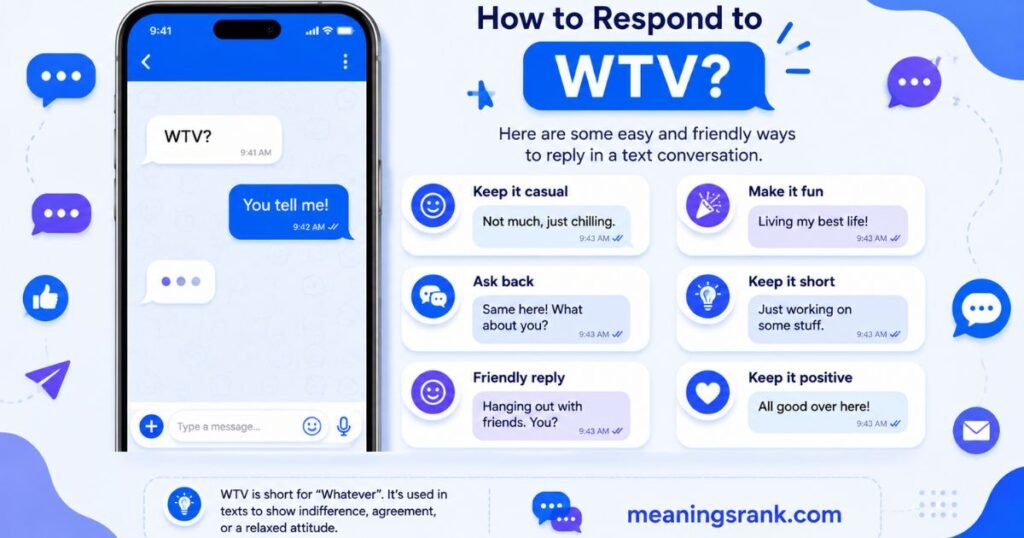
In lighter conversations, a short and easygoing reply works best:
Person A: “wtv works for dinner tonight.”
Person B: “Okay, tacos it is!”
The key with WTV replies is emotional awareness. Since the word can carry hidden frustration, checking in briefly even with a simple question often prevents small misunderstandings from turning into bigger ones.
WTV vs Similar Words and Texting Slang
WTV often gets compared to other short, casual expressions. While they may seem alike, each carries a slightly different tone and purpose.
| Term | Meaning | When to Use |
| WTV | Whatever | Showing indifference or mild annoyance |
| IDC | I Don’t Care | Stronger, more direct lack of interest |
| NVM | Never Mind | Dropping or canceling a topic entirely |
| IDK | I Don’t Know | Expressing uncertainty, not indifference |
| K | Okay | Short acknowledgment, often feels blunt |
| Meh | So-so, unimpressed | Reacting to something unenthusiastically |
WTV vs IDC:
IDC feels more intense and direct, almost like a firmer version of WTV. WTV can still sound relaxed, while IDC often sounds more final.
Example: “wtv, you pick” (relaxed) “idc, just decide already” (more blunt)
WTV vs NVM:
NVM usually cancels something entirely, while WTV shows indifference about an outcome that’s still happening.
Example: “wtv, let’s still go.” (indifferent, but open) “nvm, forget it.” (shutting the idea down)
WTV vs K:
Both can feel short and cold, but “k” usually reacts to a specific statement, while WTV often reacts to a decision or choice.
Example: “k.” (blunt acknowledgment) “wtv.” (indifferent or mildly annoyed reaction)
Knowing these small differences helps you pick up on subtle emotional cues hidden inside short texting replies.
When Should You Avoid Using WTV?
While WTV is common in casual chats, there are clear situations where it’s better left unused.
During Serious or Emotional Conversations
If someone is sharing something important, replying with “wtv” can feel careless, even if that’s not the intention.
In Professional Messages
WTV feels too informal for workplace emails, client messages, or official communication, even in casual chat tools.
When Trying to Resolve a Disagreement
WTV can shut down a conversation instead of moving it forward, which isn’t helpful when trying to actually fix a problem.
With People Who May Misread Tone
Not everyone reads texting tone the same way. Some people may take “wtv” as more hurtful or dismissive than intended.
In Messages to Older Relatives or Unfamiliar Contacts
Since WTV can sound cold without context, it’s safer to spell out “whatever” or add a warmer explanation.
When You Actually Have a Preference
Using WTV when you do care about the outcome can send the wrong message and create confusion later.
In Public or Brand Social Media Posts
Businesses and public accounts should avoid WTV, since it can come across as careless or unprofessional in a public setting.
Being mindful of these situations helps prevent WTV from creating unnecessary tension, especially since its tone is so easy to misread in fast-moving conversations.
Frequently Asked Questions About WTV
What does WTV mean in texting?
WTV means “whatever.” It shows indifference, mild annoyance, or a relaxed lack of preference, depending on the tone of the message around it.
Is WTV always rude?
No. WTV can be relaxed and casual, but it can also sound dismissive during arguments. Context and punctuation usually reveal the real tone.
Is WTV the same as IDC?
Not quite. IDC feels more direct and final, while WTV can still sound flexible or easygoing, depending on how it’s used.
Can WTV be used at work?
It’s best avoided in professional messages. WTV feels too casual for workplace emails or client communication, even in relaxed company cultures.
Why do people use WTV instead of typing “whatever”?
It’s faster to type and fits naturally into quick texting conversations, especially on mobile keyboards where shorter replies feel more convenient.
Final Thoughts on the Meaning of WTV
The WTV meaning in text really comes down to flexibility it can sound relaxed, annoyed, dismissive, or even playful, all depending on the conversation around it. That’s what makes it different from more predictable texting abbreviations.
We’ve covered what WTV stands for, its different emotional tones, how it shows up across texting, gaming, and social platforms, and when it’s smarter to avoid using it altogether.
The next time “wtv” pops up in your messages, take a second to read the tone before reacting. A little awareness goes a long way in keeping digital conversations clear, especially with a word as flexible as this one.