
You’re scrolling through your phone and see a text that says “ugh, major FOMO right now.” Sound familiar? The FOMO meaning in text points to a very specific feeling the anxious sense that everyone else is having fun without you. It shows up constantly in texting, Instagram captions, TikTok comments, group chats, and even casual conversations at work.
Unlike a lot of internet slang that comes and goes, FOMO has stuck around because it names a feeling almost everyone has experienced at some point. Understanding how it’s used, and how to respond when someone brings it up, makes your texting feel more natural and helps you connect better in everyday digital conversations. Let’s dig into what it really means.
What Does FOMO Meaning in Text?
FOMO describes the uneasy feeling you get when you think you’re missing out on something fun, exciting, or important that other people are experiencing.
It’s more than just curiosity. FOMO usually comes with a small pinch of anxiety or regret, especially when social media makes it feel like everyone else is living their best life.
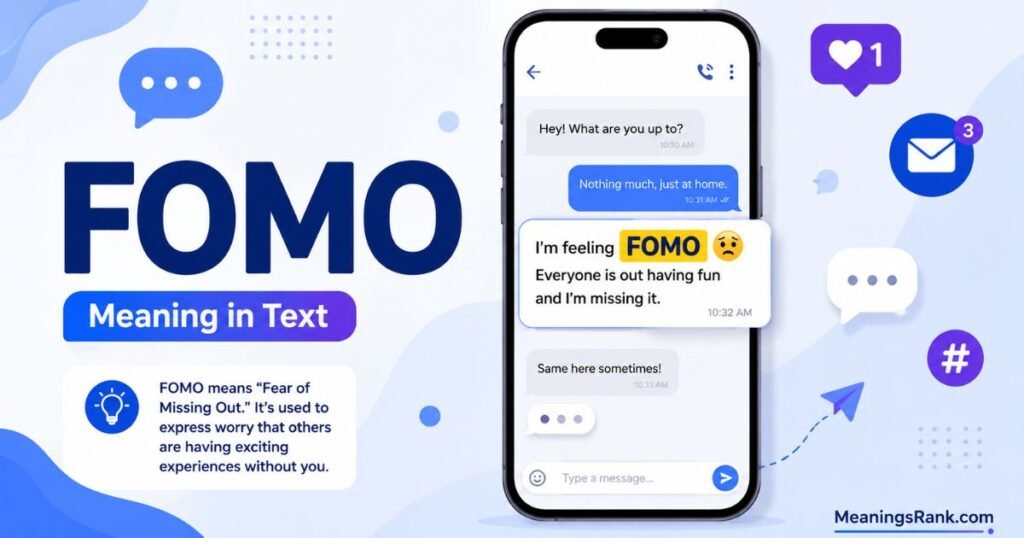
Here’s a simple example:
Person A:
“We’re all at the beach right now, wish you were here!”
Person B:
“Ugh, major FOMO. I’m stuck at work all day.”
In this exchange, Person B isn’t just saying they wish they were there. They’re expressing that specific mix of jealousy and disappointment that comes from watching others enjoy something in real time.
FOMO became especially common once social media made it easy to see what friends were doing at any given moment. A single Instagram story can trigger it instantly.
Some quick things to know about how FOMO works in text:
- It’s usually self-directed, describing your own feeling
- It can be triggered by photos, stories, or even a simple text update
- It’s almost always informal and used in casual conversations
- It rarely appears in professional or formal writing
For example, “I have such bad FOMO seeing your vacation pics” expresses genuine longing, while “lol FOMO” used jokingly can be lighter and less serious. The tone shifts depending on the situation, but the core meaning stays the same.
What Does FOMO Stand For?
FOMO stands for “Fear Of Missing Out.” It’s one of the most widely recognized emotional acronyms used online today, and unlike many slang terms, it actually describes a real psychological experience.
The phrase started gaining traction in the early 2010s as social media use exploded. Researchers and marketers picked up on the term because it captured something people were genuinely feeling but hadn’t quite named before.
A few interesting facts about where FOMO came from:
- It was popularized through blog posts and early social media commentary before becoming mainstream slang
- It eventually made its way into major dictionaries as an official English word
- It’s used by psychologists to describe anxiety linked to social comparison
- It applies to everything from parties to job opportunities to trending topics online
Unlike acronyms like ASF or IMO, FOMO isn’t really “internet slang” in the traditional sense anymore. It has become part of everyday vocabulary, spoken out loud just as often as it’s typed.
You’ll see it written in all caps (“FOMO”) most of the time, since it functions almost like a standalone word rather than a typical abbreviation. Some people even use it as an adjective, saying something is giving them “FOMO vibes.”
Understanding where FOMO comes from helps explain why it feels different from other slang. It’s less about saving keystrokes and more about naming a very specific, very relatable emotion that didn’t have an easy label before.
How Is FOMO Used in Text Messages and Social Media?
FOMO typically shows up either as a standalone reaction or attached to a short explanation of what’s being missed. Its placement is flexible compared to stricter acronyms like BTW or IMO.
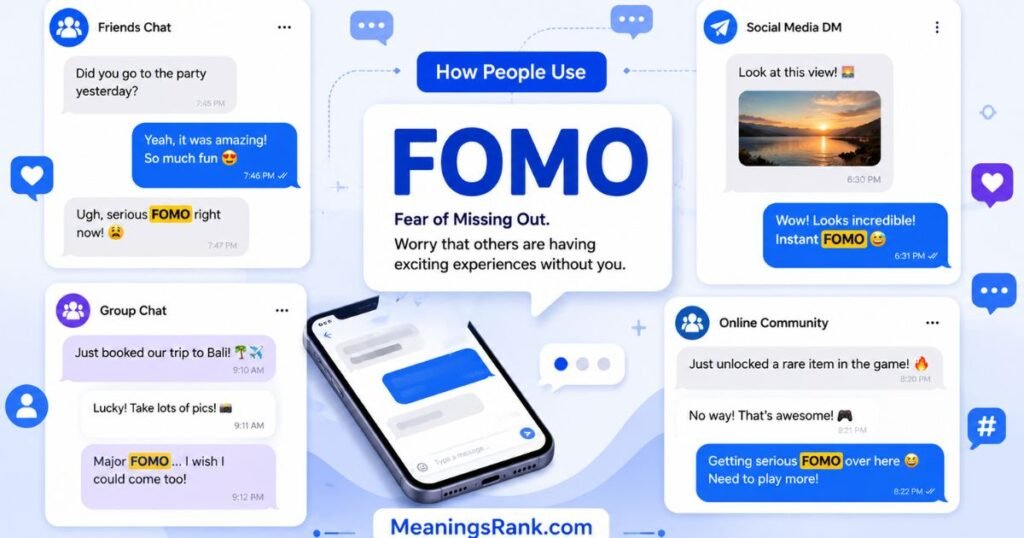
Common Structures:
“FOMO is real right now.” “I have FOMO seeing this.” “Major FOMO.”
Here’s how it looks across different platforms:
Text Messages:
“Everyone’s at the concert without me, I have such bad FOMO.”
WhatsApp:
“Saw your trip photos, total FOMO over here 😭”
Instagram Comments:
“This looks incredible, giving me serious FOMO.”
Snapchat:
“lol FOMO seeing everyone at the party rn”
TikTok Comments:
“The FOMO from this video is unreal, wish I went.”
Gaming Chats:
“You guys played without me? FOMO is hitting hard.”
Discord Servers:
“Missed the event stream, big FOMO right now.”
Workplace Chats:
“Heard the team lunch was fun, definitely feeling some FOMO after seeing the pics.”
Across every platform, FOMO expresses the same core emotion, but the intensity shifts depending on context. On Instagram and TikTok, it’s often triggered by visual content like photos or videos. In group chats or workplace messages, it’s usually tied to missing an actual event or gathering.
Interestingly, FOMO isn’t only used to describe missing social events. People also use it around limited-time sales, exclusive product drops, or trending topics they feel pressure to keep up with. This broader use shows just how flexible the term has become in everyday digital conversation.
Different Meanings of FOMO in Everyday Life
While FOMO started as a way to describe missing social events, its meaning has expanded quite a bit. Understanding these different contexts helps you use the term more accurately.
Social FOMO
This is the most common type the fear of missing parties, hangouts, trips, or events that friends are attending.
Example: “Everyone’s at Sarah’s party and I’m stuck home sick. FOMO is killing me.”
Digital FOMO
This happens when someone feels they need to keep checking their phone constantly, worried they’ll miss a message, post, or update.
Example: “I can’t stop checking my notifications, I get so much FOMO if I put my phone down.”
Shopping or Deal FOMO
Retailers often use urgency to trigger this type of FOMO, especially with countdown timers or “limited stock” messages.
Example: “The sale ends tonight, I don’t want FOMO tomorrow.”
Career or Opportunity FOMO
This shows up when people worry they’re missing career growth, networking chances, or trends others seem to be capitalizing on.
Example: “Everyone’s talking about this new industry certification, I’m getting FOMO about falling behind.”
Travel FOMO
Seeing friends travel to exciting places while stuck in a routine often triggers this specific version.
Example: “My feed is full of people traveling this summer, serious travel FOMO happening.”
Each of these variations shares the same emotional root a fear of missing something valuable but the trigger and context change depending on the situation. Recognizing these different types makes it easier to understand exactly what someone means when they bring up FOMO in conversation.
Read More: https://meaningsrank.com/sb-meaning-in-text/
Real Examples of FOMO in Conversations
Seeing FOMO used in realistic conversations makes its meaning even clearer. Here are examples across different everyday situations.
Text Message:
Person A: “We just got ice cream downtown, you should’ve come!”
Person B: “Noo, instant FOMO. Save me some next time.”
WhatsApp Group Chat:
Person A: “The hiking trip was amazing, best views ever.”
Person B: “This is giving me so much FOMO, I need to join next time.”
Instagram Comment:
“This concert footage is giving me FOMO, I wish I bought tickets.”
Snapchat Caption:
“POV: watching everyone’s snaps from the festival I couldn’t attend 😩 #FOMO”
TikTok Comment Section:
“The FOMO is real watching this trend blow up without me.”
Gaming Voice/Text Chat:
“You guys got the rare drop without me? That’s some serious FOMO.”
Discord Message:
“Missed the live Q&A again, FOMO is getting real at this point.”
Workplace Slack Message:
“Heard the offsite retreat was great this year, feeling a little FOMO after seeing the recap photos.”
In each of these examples, FOMO expresses a similar emotional pattern: noticing something enjoyable happened without you, then reacting with a mix of longing and light disappointment. The tone can range from playful to genuinely emotional depending on the situation and relationship between the people chatting.
This flexibility is part of why FOMO fits so naturally into casual conversations across nearly every digital platform.
Is FOMO Positive, Negative, or Just a Feeling?
FOMO isn’t inherently positive or negative it’s simply a feeling. But how it shows up in conversation can lean one way or another depending on tone and context.
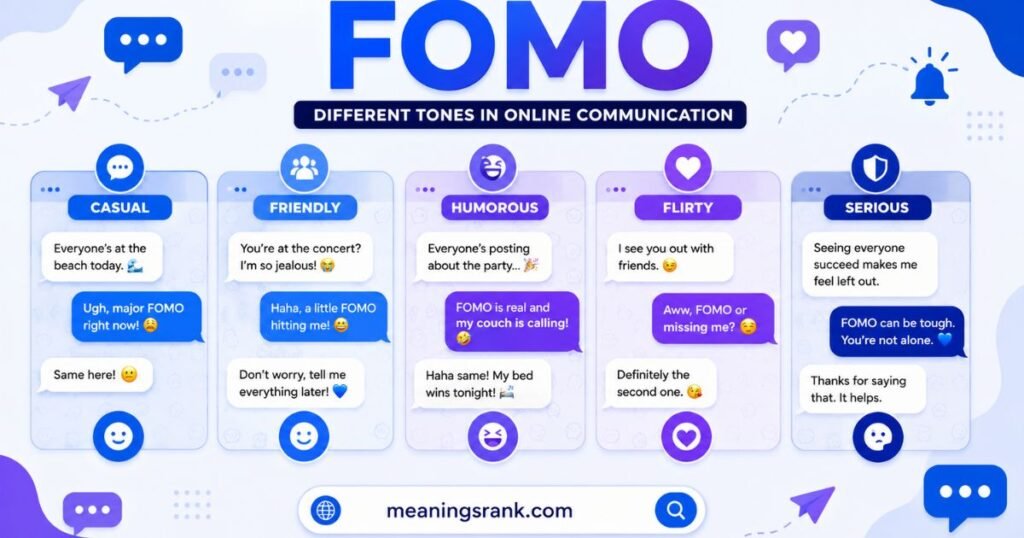
When FOMO Feels Lighthearted:
Often, FOMO is used jokingly, without any real distress behind it.
Example: “Lol FOMO seeing you guys at brunch without me” usually isn’t serious. It’s more of a playful comment than genuine sadness.
When FOMO Feels Genuine:
Sometimes FOMO reflects real emotional discomfort, especially when someone feels consistently left out or disconnected from friends.
Example: “I always see everyone hanging out without me, the FOMO is honestly exhausting” reflects a deeper, more persistent feeling.
Is FOMO Ever a Good Thing?
In small doses, FOMO can motivate people to say yes to new experiences or step outside their comfort zone. It can push someone to attend an event they might have otherwise skipped.
Read More: https://meaningsrank.com/mhm-meaning-in-text/
However, frequent or intense FOMO tied to constant social media comparison can contribute to stress or lower self-esteem over time. Mental health professionals have noted this pattern, especially among heavy social media users.
Quick Summary:
- Casual FOMO: lighthearted, often joked about
- Persistent FOMO: can reflect real emotional stress
- Motivational FOMO: pushes people to engage more socially
- Social media–driven FOMO: linked to comparison and overuse of apps
Recognizing the difference between casual and genuine FOMO matters, especially in close friendships where consistent feelings of being left out deserve a caring response rather than a joke.
How to Reply When Someone Says “FOMO”
Replying to a FOMO message usually depends on whether it’s lighthearted or reflects a more genuine feeling.
If It’s Casual or Joking:
“Haha don’t worry, next time for sure!” “We missed you too!”
If It Seems Genuine:
“I get that, want to plan something together soon?” “That makes sense, I’m sorry you felt left out.”
If You Want to Reassure Them:
“Don’t stress, you didn’t miss much!” “We’ll definitely include you next time.”
If You Want to Keep It Light:
“FOMO squad, we’ll get you next round 😂”
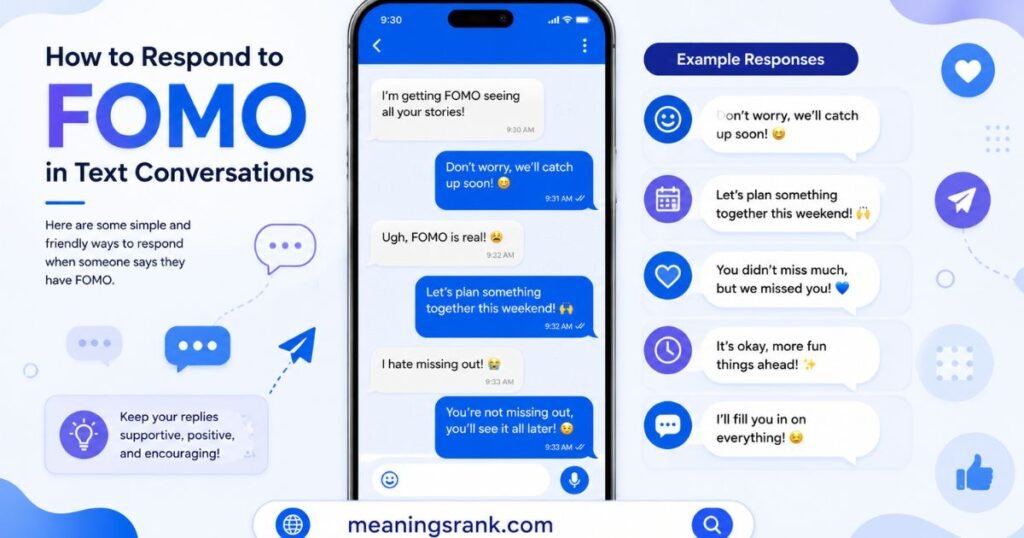
Here’s a quick example from a group chat:
Person A: “Ugh, FOMO seeing you guys at the game without me.”
Person B: “Aw, next game’s on us, we’ll save you a seat!”
Notice how Person B responds with reassurance rather than dismissing the feeling. This keeps the conversation warm and shows they care about including their friend next time.
In more casual settings, like Snapchat or Instagram comments, a short and playful reply often works best.
Example:
Person A: “FOMO watching your story rn 😭”
Person B: “Haha come next time, it’s a standing invite!”
The key with FOMO replies is empathy mixed with reassurance. Even in joking conversations, a small acknowledgment goes a long way in keeping the tone friendly and inclusive.
FOMO vs Similar Internet Slang and Terms
FOMO is often mentioned alongside other emotional or social acronyms. While they may seem related, each one carries a distinct meaning.
| Term | Meaning | When to Use |
| FOMO | Fear Of Missing Out | Feeling anxious about missing an event or experience |
| JOMO | Joy Of Missing Out | Feeling content or relieved about skipping an event |
| YOLO | You Only Live Once | Encouraging spontaneous or bold decisions |
| SMH | Shaking My Head | Expressing disappointment or disbelief |
| TBH | To Be Honest | Sharing a direct or honest opinion |
FOMO vs JOMO:
These two are essentially opposites. FOMO reflects anxiety about missing out, while JOMO reflects genuine relief or happiness about staying home or skipping an event.
Example: “FOMO seeing everyone at the party.” (missing out feels bad) “JOMO staying home tonight instead.” (missing out feels good)
FOMO vs YOLO:
YOLO often pushes someone toward action, while FOMO usually describes the emotional aftermath of not taking action.
Example: “YOLO, let’s just book the trip.” (encouraging a decision) “FOMO seeing everyone’s trip photos.” (reacting after missing out)
FOMO vs SMH:
SMH expresses disapproval or disbelief, while FOMO expresses personal longing. They rarely overlap in meaning.
Understanding these distinctions helps you use each term accurately, especially since they often appear in similar casual, emotional contexts online.
When Should You Avoid Using FOMO?
While FOMO fits naturally into casual conversations, there are situations where it’s better to leave it out.
Formal Emails or Professional Writing
FOMO is casual slang and doesn’t belong in official documents, client emails, or formal workplace communication.
When Someone Is Dealing With Real Exclusion
If a friend is genuinely upset about being left out repeatedly, joking about FOMO can come across as dismissive rather than supportive.
In Marketing Without Transparency
Businesses sometimes use FOMO tactics, like fake countdown timers, to pressure purchases. This can feel manipulative and damage trust if it isn’t genuine urgency.
During Serious or Sensitive Conversations
Bringing up FOMO in the middle of a deeper emotional discussion can feel out of place or minimize what the other person is truly feeling.
With Audiences Unfamiliar With Slang
Some people, especially older relatives or new acquaintances, might not immediately recognize the term. In these cases, simply saying “fear of missing out” avoids confusion.
When It Might Encourage Unhealthy Comparison
Constantly discussing FOMO in the context of social media can sometimes reinforce comparison habits rather than ease them. Using the term thoughtfully, rather than obsessively, keeps conversations healthier.
Knowing when to skip FOMO shows emotional awareness, especially in conversations where empathy matters more than casual slang.
Frequently Asked Questions About FOMO
What does FOMO mean in a text message?
FOMO means “Fear Of Missing Out.” It describes the anxious feeling of missing something fun or important that others are experiencing.
Is FOMO a real psychological term?
Yes, FOMO is recognized by psychologists as a genuine form of social anxiety, often linked to social media comparison and overuse.
What’s the opposite of FOMO?
The opposite is JOMO, or “Joy Of Missing Out,” which describes feeling content or relieved about skipping social events.
How do I know if someone’s FOMO is serious?
Tone matters. Repeated or emotional messages about feeling left out usually signal genuine FOMO rather than a joke.
Is it okay to use FOMO at work?
Casually, yes, in informal chats. Avoid it in formal emails or professional documents.
Final Thoughts on the Meaning of FOMO
At its heart, the FOMO meaning in text describes something almost everyone has felt at some point that nagging worry about missing out on something good. Whether it shows up in a text message, an Instagram comment, or a quick reaction in a group chat, the emotion behind it stays consistent.
We’ve covered what FOMO stands for, how it shows up across different platforms, its many everyday variations, and how it compares to related terms like JOMO and YOLO. We’ve also looked at when it’s best to leave FOMO out of a conversation altogether.
The next time FOMO comes up in your messages, you’ll understand exactly what it means and how to respond with empathy. Recognizing this small but powerful feeling helps you connect more genuinely, both online and off.