
Ever gotten a text that just says “wdym?” and felt a little confused, or maybe even a bit called out? You’re not alone. The WDYM meaning in text is short for “What Do You Mean,” and it’s one of those abbreviations that shows up everywhere once you start noticing it. You’ll spot it in texting, WhatsApp threads, Instagram comments, gaming chats, and even work messages.
People use it to ask for clarification, express confusion, or sometimes push back on something that was just said. Knowing how WDYM works helps you read the tone of a message correctly, so you don’t misjudge a simple question for something more serious. Let’s dig into everything this term covers.
What Does WDYM Mean? 🧐
WDYM is short for “What Do You Mean.” People use it when something in a conversation isn’t clear and they want more detail before responding.
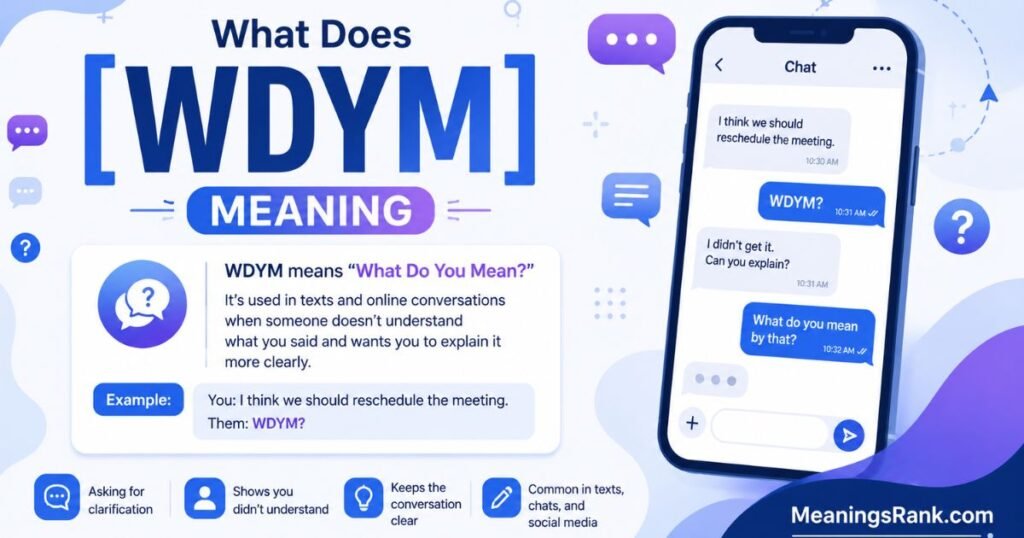
It’s a question, plain and simple. But like most texting slang, the way it’s used can shift the meaning slightly depending on tone and context.
Here’s a basic example:
Person A:
“I don’t think I can come tonight.”
Person B:
“Wdym? You said you were free earlier.”
In this exchange, Person B isn’t necessarily upset. They’re just confused by the sudden change and want an explanation. WDYM works as a quick way to ask “please explain” without typing out a full sentence.
A few things worth knowing about how WDYM behaves in conversation:
- It almost always appears as a question, even without a question mark
- It can express genuine confusion or mild disbelief
- It’s used in both short replies and longer discussions
- Tone depends heavily on punctuation, capitalization, and surrounding words
For instance, “wdym?” feels neutral and curious, while “WDYM??” can come across as more urgent or surprised. Small details like extra letters, punctuation, or capital letters change how the message lands, even though the core meaning stays the same.
Once you get used to spotting these small tone shifts, WDYM becomes easy to read correctly, no matter which platform it shows up on.
Why Do People Use WDYM?
People reach for WDYM because it’s fast, direct, and gets straight to the point. Typing out “what do you mean” every time takes longer, especially during quick back-and-forth texting.
There are a few common reasons someone might type WDYM:
- Genuine confusion:
They honestly don’t understand what was just said.
- Surprise or disbelief:
Something unexpected was mentioned, and they want more context.
- Mild disagreement:
They’re questioning a statement they don’t fully agree with.
Also Read: What Does TYSM Mean in Text? Meaning, Usage & Examples
- Playful teasing:
Sometimes it’s used jokingly among friends, without any real confusion at all.
Example of genuine confusion:
Person A: “I switched majors.”
Person B: “Wdym, when did this happen?”
Example of disbelief:
Person A: “I already finished the whole project.”
Person B: “Wdym already? We just started yesterday.”
This flexibility is exactly why WDYM has become such a common part of digital conversations. It adapts to whatever emotional tone the moment calls for, whether that’s confusion, shock, or light teasing between friends.
In group chats, WDYM often triggers more explanation from the original speaker, which keeps conversations moving instead of leaving confusing statements unaddressed. It works almost like a built-in request for clarity, something every fast-moving text thread eventually needs.
Because it takes so little effort to type, WDYM has become second nature for many people, especially in casual conversations where getting an answer quickly matters more than sounding formal.
WDYM Meaning in Different Contexts 📲
WDYM shifts slightly in tone depending on the platform and situation. Below are examples showing how it plays out across different types of chats.
Text Messages:
“Wdym you’re not coming? We planned this for weeks.”
WhatsApp:
“Wdym the flight got delayed? Since when?”
Instagram Comments:
“Wdym this isn’t your best post? It’s amazing!”
Snapchat:
“wdym lol explain 😂”
TikTok Comments:
“Wdym this song is overrated, it’s a classic.”
Gaming Chats:
“Wdym we’re losing? We just took the objective.”
Discord Servers:
“Wdym the update broke everything, it worked fine yesterday.”
Workplace Chats:
“Wdym the deadline moved? I wasn’t told about that.”
Notice how WDYM keeps its core function in every example: asking for clarification. But the emotional weight shifts depending on the situation. In gaming or Discord chats, it often reflects mild frustration or disbelief about a sudden change. In Instagram comments, it frequently shows up as a compliment in disguise, pushing back gently against something modest someone said about themselves.
In workplace chats, WDYM should be used carefully since tone matters more in professional settings. A blunt “wdym” without context can come across as short or even irritated, even if that wasn’t the intention.
Understanding these small contextual shifts helps you use WDYM appropriately, no matter which app or conversation you’re in.
Is WDYM Polite, Rude, or Flirty?
WDYM sits in a gray zone. It’s not inherently rude, but tone and context can push it in different directions.
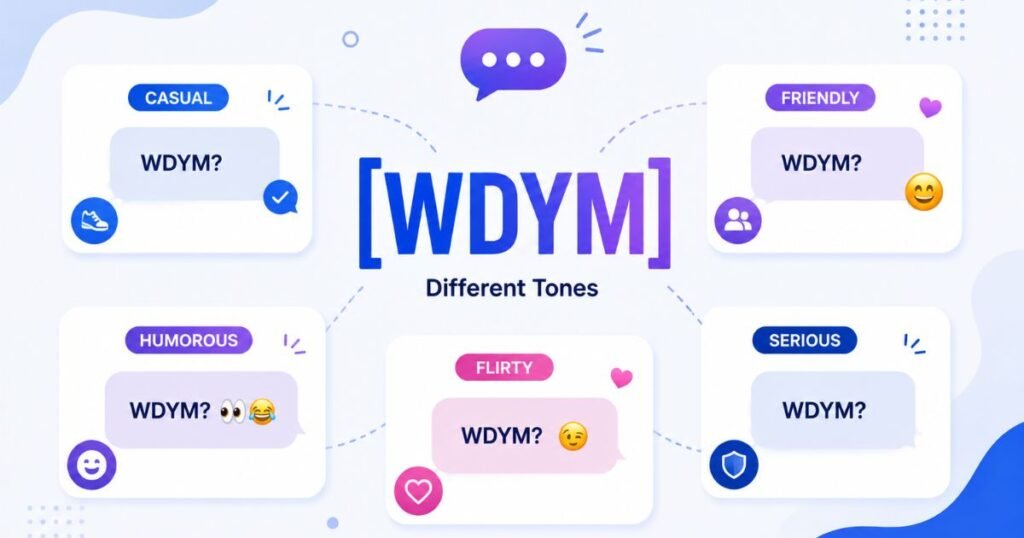
Why It’s Usually Fine:
In most casual conversations, WDYM is simply a request for more information. It doesn’t carry negativity on its own.
Example: “Wdym you moved? That’s huge news!” feels excited, not rude at all.
When It Can Feel Blunt:
If someone disagrees strongly with a statement, WDYM can sound sharper, especially without softening words around it.
Example:
Person A: “I think we should cancel the project.”
Person B: “Wdym cancel it? We’re almost done.”
Here, the bluntness comes from the disagreement itself, not the abbreviation. Still, pairing WDYM with a stronger statement can make a message feel more confrontational.
Is WDYM Ever Flirty?
It can be, depending on what it responds to. WDYM often shows up in flirty banter when someone wants to react to a playful or teasing comment.
Example: “Wdym you don’t like me? I thought we had a whole moment 😏”
In this case, the flirty tone comes from the joking context, not from WDYM itself. The abbreviation is just reacting to the statement with playful confusion.
Quick Summary:
| Situation | Typical Tone |
| Casual confusion | Neutral, curious |
| Disagreement | Can feel blunt |
| Compliment pushback | Friendly, warm |
| Flirty banter | Playful, teasing |
| Workplace chat | Should be used carefully |
As with most slang, surrounding words and punctuation shape the tone far more than WDYM does by itself.
How to Use WDYM Correctly ✅
Using WDYM well comes down to matching it with the right tone and situation. Here are a few practical tips.
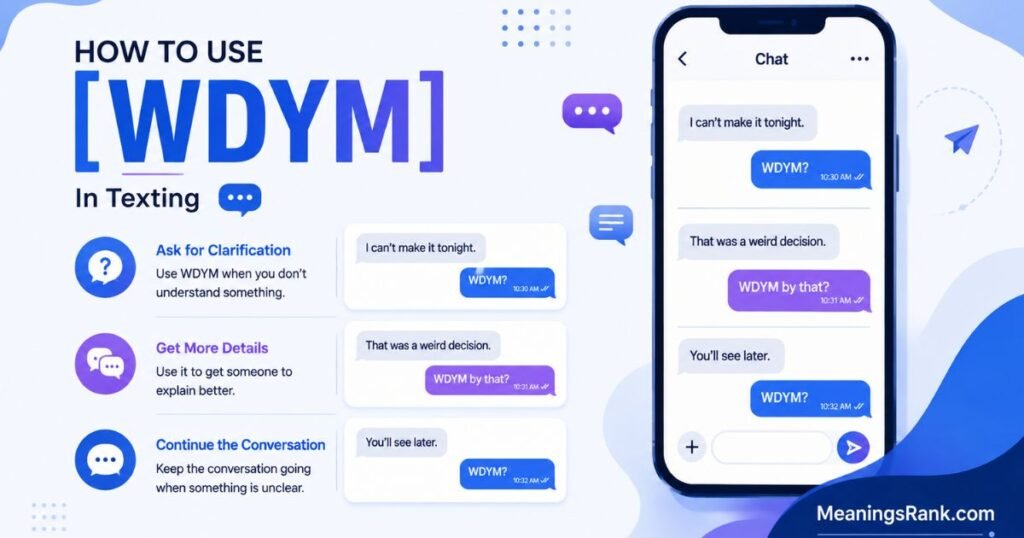
- Add context when needed.
“Wdym by that?” feels clearer than a standalone “wdym.”
- Watch your punctuation.
A question mark softens the tone, while all caps or multiple question marks can feel intense.
- Use it for genuine confusion first.
It reads most naturally when you actually need clarification.
- Pair it with emojis in casual chats
To keep the tone light, especially with friends.
- Avoid it in formal writing
Stick to “what do you mean” in emails or official messages.
Example of a well-used WDYM: “Wdym the store closed early? I was just there an hour ago.”
This example works because it’s specific. The listener immediately understands what part of the message needs clarifying.
Compare that to a vague version: “wdym”
Without context, this can feel confusing or even a little cold, since the other person doesn’t know exactly what needs explaining.
A good rule of thumb: the clearer your WDYM message is, the smoother the conversation flows. Adding just a few extra words often prevents unnecessary back-and-forth, especially in group chats where multiple people might be confused about the same thing.
Real-Life Examples of WDYM in Conversations 💬
Seeing WDYM across different real conversations makes its use even clearer.
Text Message:
Person A: “I’m thinking about skipping the trip.”
Person B: “Wdym skip it? You’ve been planning this for months!”
WhatsApp Group Chat:
Person A: “The venue changed.”
Person B: “Wdym changed? Nobody told me.”
Instagram Comment:
“Wdym you don’t like your hair? It looks amazing!”
Snapchat Caption Reply:
“wdym you failed the test, you studied so much”
TikTok Comment Section:
“Wdym this trend is over, everyone’s still doing it.”
Gaming Voice/Text Chat:
“Wdym we need to retreat, we’re winning this fight.”
Discord Message:
“Wdym the bot isn’t working, it just responded to me.”
Workplace Slack Message:
“Wdym the client wants changes? We just got approval yesterday.”
In every case, WDYM introduces a moment of pause where clarification is needed. It rarely stands alone in real conversations — it usually leads into a follow-up question or explanation that keeps the discussion moving.
These examples also show how naturally WDYM fits into different emotional tones, from mild concern to friendly disbelief, all without needing extra slang to carry the message.
How to Reply When Someone Says WDYM?
Replying to WDYM is usually straightforward since the person is asking for clarity, not necessarily challenging you.
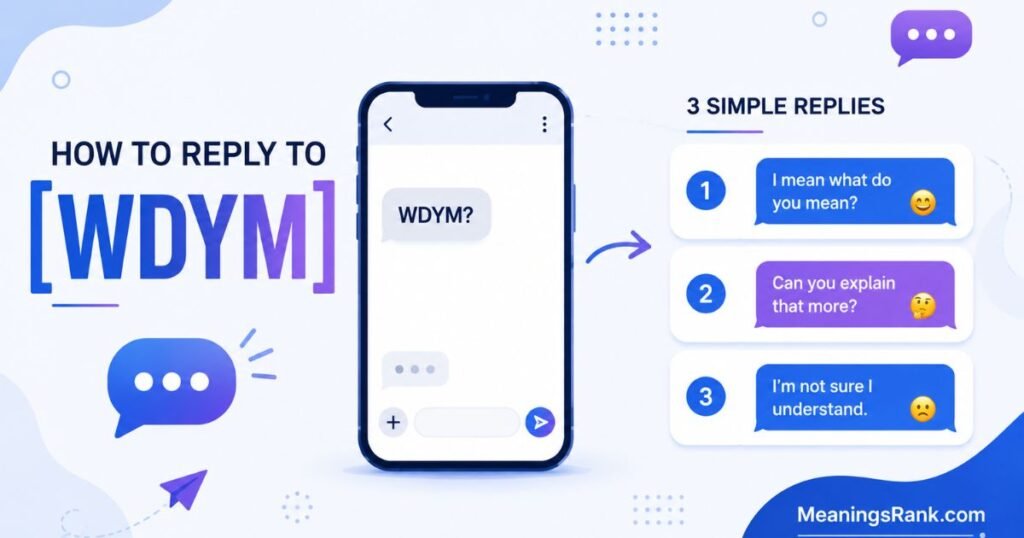
If You Want to Explain Clearly:
“I mean I might not be able to make it tonight.”
If You Want to Add Context:
“Sorry, I meant the meeting moved to 4 PM, not 3.”
If It Was a Joke:
“Lol nothing, just messing with you.”
If You Want to Confirm Something Serious:
“I meant exactly what I said, we need to talk.”
Here’s a quick example from a Discord chat:
Person A: “Wdym the raid failed?”
Person B: “We lost connection right before the final boss.”
Notice how Person B answers directly instead of leaving the confusion unresolved. This keeps the conversation clear and prevents unnecessary back-and-forth.
In casual chats, a short clarification is usually enough:
Person A: “wdym you’re not hungry, you always eat by now”
Person B: “haha true, just not feeling it today”
The key to replying well is matching the seriousness of the original message. If WDYM was asked out of real concern, a clear and direct answer works best. If it was more playful, a light response keeps the tone consistent.
Also Read: IGL Meaning in Text: What It Means, How to Use It, and Real Examples (2026 Guide)
When Should You Avoid Using WDYM?
While WDYM works well in casual conversations, there are moments when it’s better to skip it.
- In formal emails or documents. Spell out “what do you mean” instead for a more professional tone.
- During sensitive conversations. If someone is sharing something emotional, a blunt “wdym” can feel dismissive.
- With people unfamiliar with texting slang. Older relatives or new coworkers may not recognize the abbreviation right away.
- In customer service messages. Businesses should avoid casual slang when responding to clients.
- When tone could easily be misread. Serious topics need clearer wording to avoid sounding confrontational.
- In arguments that are already heated. Adding WDYM without softer phrasing can escalate tension unintentionally.
For example, replying “wdym?” to a coworker’s serious update about a missed deadline can feel abrupt. A better option would be, “Could you explain what happened with the deadline?”
Being mindful of these situations shows strong communication awareness, especially in settings where tone and professionalism matter more than speed.
Formal Alternatives to WDYM
In professional or formal writing, it’s best to replace WDYM with clearer, more polished phrasing.
| Casual (WDYM) | Formal Alternative |
| Wdym? | Could you clarify what you mean? |
| Wdym by that? | Could you explain that further? |
| Wdym it’s cancelled? | Can you tell me more about the cancellation? |
| Wdym already? | Could you explain how that happened so quickly? |
These alternatives keep the same intent, asking for clarification, while sounding more appropriate for emails, reports, or formal conversations.
Using formal alternatives is especially useful in workplace settings where tone plays a big role in how messages are received. A simple swap in wording can prevent a message from sounding blunt or dismissive.
Origin and Popularity of WDYM 🕒
WDYM developed the same way many texting abbreviations did, through the need for faster typing during instant messaging and early texting.
The full phrase “what do you mean” has been part of everyday spoken English for a long time. As texting became more common in the early 2000s, people naturally shortened frequently used phrases to save time.
WDYM became especially popular because confusion is such a common part of daily conversation. Whether it’s a plan change, an unclear statement, or a surprising update, people needed a quick way to ask for clarification.
Its popularity grew alongside:
- The rise of texting and instant messaging apps
- The growth of social media comment culture
- Gaming communities that rely on fast communication
- Group chats where quick replies keep conversations moving
Unlike some slang terms that fade after a few years, WDYM has remained steady because its purpose is timeless. People will always need a fast way to ask what someone meant, no matter which platform they’re using.
Similar or Related Texting Terms 🔄
WDYM often appears alongside other clarification-related abbreviations. Here’s how they compare.
| Term | Meaning | When to Use |
| WDYM | What Do You Mean | Asking for clarification or expressing confusion |
| IDK | I Don’t Know | Expressing uncertainty |
| TBH | To Be Honest | Sharing a direct opinion |
| IMO | In My Opinion | Sharing a personal viewpoint |
| HUH | Expression of confusion | Reacting with surprise or lack of understanding |
| SMH | Shaking My Head | Expressing disappointment or disbelief |
WDYM vs HUH:
“Huh” is a shorter, more casual reaction to confusion, while WDYM asks directly for an explanation.
WDYM vs SMH:
SMH expresses disapproval or disbelief without asking a question, while WDYM actively requests clarification.
Example comparison: “Huh? That doesn’t make sense.” (reaction) “Wdym that doesn’t make sense?” (direct question)
Knowing these differences helps you choose the right term depending on whether you want a reaction or an actual explanation.
Common Mistakes and Misinterpretations ⚠️
Even though WDYM is simple, a few common misunderstandings show up regularly.
Mistake 1:
Assuming WDYM Always Means Anger Not true. WDYM often reflects curiosity or surprise, not frustration. Tone and context matter more than the abbreviation itself.
Mistake 2:
Using WDYM Without Context A standalone “wdym” can confuse the other person if they don’t know which part of their message needs clarifying.
Mistake 3:
Thinking WDYM Is Only for Arguments WDYM shows up just as often in compliments, jokes, and casual curiosity as it does in disagreements.
Mistake 4:
Ignoring Punctuation Differences “Wdym?” and “WDYM??” can carry very different tones, even though the words are identical.
Mistake 5:
Using WDYM in Professional Emails This abbreviation is too casual for formal writing and should be replaced with full wording in those settings.
Avoiding these mistakes helps keep conversations clear, especially in group chats or workplace messages where tone can easily be misread.
FAQs About WDYM ❓
What does WDYM mean in a text?
WDYM means “What Do You Mean.” It’s used to ask for clarification when something in a message feels unclear, confusing, or unexpected during a conversation.
Is WDYM the same as “huh”?
Not exactly. WDYM directly asks for an explanation, while “huh” is a shorter reaction that shows confusion without specifically requesting clarification.
Can WDYM be used in a professional chat?
It’s best avoided in formal emails. Casual workplace chat tools may allow it occasionally, but spelling out “what do you mean” is safer.
Does WDYM always mean someone is upset?
No. WDYM often reflects curiosity, surprise, or playful teasing rather than anger, especially in casual conversations between friends.
Why do people shorten “what do you mean” to WDYM?
Texting favors speed. Shortening common phrases like WDYM helps conversations move faster without losing the original meaning.
Conclusion 🎯
Understanding the WDYM meaning in text really comes down to one idea: it’s a quick way to ask for clarity when something isn’t clear. Whether it shows up in a text message, an Instagram comment, or a fast-paced gaming chat, its job stays the same.
We’ve covered what WDYM stands for, how tone changes its meaning, how to reply naturally, and when it’s better to use formal alternatives instead.
Slang like this moves fast, but WDYM has stuck around because confusion is something everyone deals with. The next time it shows up in your messages, you’ll know exactly what it means and how to respond with confidence.