
If you’ve scrolled through TikTok comments or opened a group chat lately, you may have run into the word “huzz” and wondered what on earth it means. You’re not alone. This slang term has been popping up everywhere, from Snapchat captions to Discord servers, and it confuses a lot of people who didn’t grow up online.
The huzz meaning isn’t complicated once you break it down, but it does carry some baggage worth knowing before you use it yourself. In this guide, we’ll explain exactly what huzz meaning, where it came from, how people use it today, and when you should probably avoid saying it altogether.
Quick Answer: What Does Huzz Mean?
“Huzz” is Gen Z internet slang that’s short for “hoes,” used loosely to refer to women or girls, often in a joking, dismissive, or sometimes disrespectful way. It comes from AAVE (African American Vernacular English) and gained massive popularity through TikTok and meme culture. The word can be used casually among friends, but it’s also considered offensive or derogatory depending on the tone, context, and who’s using it.
Think of it as one of those slang words that lives in a gray area. It’s not a slur, and it’s not a compliment either. It sits right in the middle, shaped almost entirely by how it’s said, who’s saying it, and who it’s being said about. That’s exactly why so many people search for its meaning after seeing it pop up in a comment section or a group chat without any obvious context clues.
Here’s the short version:
- Meaning: Slang term referring to women, similar to “hoes” or “girls”
- Tone: Can be playful, sarcastic, or insulting
- Origin: African American Vernacular English (AAVE), spread through TikTok
- Common use: Group chats, memes, comment sections, gaming lobbies
- Caution level: Moderate to high context really matters here
- Best used: Casually, among people who already know and accept the slang
- Avoid using: In professional settings, with strangers, or as a genuine insult
What Does “Huzz” Mean in Text & Chat?
In texting and online chat, “huzz” is almost always written as a stylized, slangy version of “hoes.” People use it in casual conversations, memes, and captions to talk about women in a way that’s meant to sound funny or edgy rather than literal. It rarely shows up in formal writing because it’s purely internet slang.
You’ll typically see it in lowercase, sometimes stretched out for emphasis like “huzzz” or “huzzzz.” The extra z’s usually signal excitement, sarcasm, or emphasis, similar to how people stretch out “yasss” or “nooo” in texts.
Common Text Abbreviation Style
In chats, “huzz” often shows up attached to other slang, like:
- “huzz be like…” (a meme format mocking behavior)
- “these huzz ain’t loyal” (referencing a well-known Chris Brown lyric that helped popularize similar slang)
- “huzz mad” (implying someone is upset)
Tone Depends Heavily on Punctuation and Emojis
Adding laughing emojis (😂💀) usually signals a joke. Adding angry or serious emojis can shift the tone toward genuine disrespect. This is one of those words where the same five letters can mean very different things depending on how it’s dressed up.
What Is the Definition of Huzz?
The straightforward definition of huzz is: a slang term used to refer to women, derived from the word “hoes,” typically used in a casual, joking, or dismissive tone within internet and youth culture.
It’s important to note that huzz isn’t a compliment. It’s not neutral either. It sits somewhere between playful teasing and outright disrespect, and where exactly it lands depends entirely on the relationship between the people talking and the context of the conversation.
Some dictionaries and slang trackers classify it under “derogatory slang for women,” while others note its more casual, meme-driven usage that strips away some of the original harshness. Both interpretations are technically correct because the word genuinely gets used both ways online.
It also helps to compare huzz to how other slang words shift meaning over time. Words like “sis,” “bro,” or even “girl” started with narrow, literal meanings and eventually stretched to cover much broader, looser uses in casual speech. Huzz followed a similar path, just starting from a much harsher root word. That origin is part of why it still carries weight even when it’s used lightly, and why it’s worth being careful with rather than treating it as fully neutral slang.
Is Huzz Singular or Plural?
One small but common point of confusion is whether “huzz” meaning refers to one person or a group. In almost every real example online, huzz is used as a plural or collective term, similar to saying “the girls” or “these women.” It’s rarely used to describe just one individual directly, though it can technically be stretched that way in a sentence like “she’s such a huzz.” Most of the time, though, you’ll see it referring to women as a group rather than a single person.
Also Read: GNG Meaning in Text: The Ultimate Guide to Its Meaning, Uses & Slang
Where Did “Huzz” Come From?
“Huzz” is a phonetic spelling that comes from African American Vernacular English (AAVE), where “hoes” is often pronounced closer to “huzz” or “hoez.” This kind of phonetic slang spelling is common in hip-hop culture and has been used in song lyrics for years before it crossed over into mainstream internet slang.
The word exploded in popularity thanks to short-form video platforms. TikTok trends, sound clips, and comment sections helped spread it far beyond its original community, and it eventually became a meme format of its own. Phrases like “huzz be like” turned into a template people used to poke fun at relatable, often exaggerated situations involving women’s reactions or behaviors in relationships.
Like a lot of AAVE-origin slang that goes viral (think “finna,” “bussin,” or “no cap”), huzz got adopted by a much wider, more diverse online audience sometimes respectfully, sometimes carelessly. This is a big part of why the word carries some controversy. When slang crosses cultural lines quickly, its original tone and context can get lost or misused.
The Role of Music and Hip-Hop Culture
Long before TikTok existed, phonetic spellings similar to “huzz” meaning showed up in rap lyrics and hip-hop culture, where pronunciation often gets stylized for rhythm and flow. Songs referencing loyalty, relationships, and trust issues helped normalize the word in everyday speech long before it became a meme template. When TikTok creators started remixing sounds and lyrics from these songs into short skits, the word got a second life, this time detached from its musical context and repurposed as a standalone joke format.
From Niche Slang to Mainstream Meme
The jump from AAVE community slang to mainstream internet meme happened fast, which is fairly typical of how viral slang spreads today. A single popular sound, video format, or caption trend can push a word from a specific cultural context into general internet vocabulary within just a few weeks. This rapid spread is part of why so many people encounter the word without any background on where it came from, which naturally leads to confusion and, sometimes, misuse.
How Is Huzz Used in Conversations?
People use “huzz” in a few different conversational styles, and recognizing these patterns helps you understand what someone actually means.
As a joking generalization
Example: “Huzz will do anything for clout lol” This is meant to be a lighthearted, sweeping joke, not usually aimed at one specific person.
As a meme reaction
Example: “Huzz be like: ‘I’m not mad, I’m just disappointed'” This format mimics a stereotype for comedic effect, often shared as a relatable joke rather than a genuine insult.
As a direct insult
Example: “You’re acting like such a huzz right now” This use is more pointed and can definitely come across as disrespectful or hurtful.
As slang for “girls” in a neutral sense
Example: “The huzz are coming through later” Some younger users use it almost like a casual stand-in for “the girls,” stripped of any negative intent, similar to how “the guys” gets used for men.
Because all four of these uses exist at once, huzz is a genuinely context-dependent word. The exact same sentence structure can be a joke among friends or a real insult depending on delivery, relationship, and tone.
Here’s a quick comparison to help you tell the difference between the lighter and harsher uses:
| Usage Style | Example | Likely Intent |
| Joking generalization | “huzz will do anything for clout lol” | Humor, not personal |
| Meme reaction | “huzz be like: not mad, just disappointed” | Relatable joke format |
| Direct insult | “you’re acting like such a huzz” | Genuine disrespect |
| Neutral group reference | “the huzz are coming later” | Casual, no real intent behind it |
Reading these side by side shows just how much the same word can shift depending on structure and delivery. This is exactly why context clues, like emojis, punctuation, and the relationship between speakers, end up mattering more than the word itself.
Huzz Meaning on Social Media Platforms
Different platforms shape how “huzz” meaning gets used. Here’s a breakdown of how the word typically shows up across popular apps.
| Platform | Common Usage | Typical Tone |
| TikTok | Meme captions, “huzz be like” trends, comment jokes | Playful, sarcastic, meme-driven |
| Comments on relationship or drama posts | Joking, sometimes shady | |
| Snapchat | Private jokes between friends, group chat banter | Casual, inside-joke energy |
| Discord | Gaming servers, banter between members | Teasing, sometimes competitive trash talk |
| Twitter/X | Reaction tweets, viral threads about dating or relationships | Sarcastic, occasionally harsh |
| Group chats, especially among younger users | Casual, friend-group specific |
TikTok
TikTok is really where “huzz” took off. Creators used it in skits, voiceovers, and captions, often layering it over relationship-drama content or comedic skits mocking exaggerated female stereotypes. The “huzz be like” trend specifically helped cement the word into meme culture.
Instagram and Twitter/X
On these platforms, huzz meaning often shows up in comment sections reacting to celebrity gossip, relationship drama, or viral posts. It’s frequently paired with laughing emojis or GIFs, signaling that the commenter is joining in on a joke rather than making a serious statement.
Discord and Gaming Chats
In gaming spaces, “huzz” sometimes gets used more loosely, almost like generic slang thrown into banter between friends, regardless of who’s actually being talked about. It’s less about literal meaning here and more about sounding “in the loop” with internet culture.
Real-Life Examples of Huzz in Texts & Chats
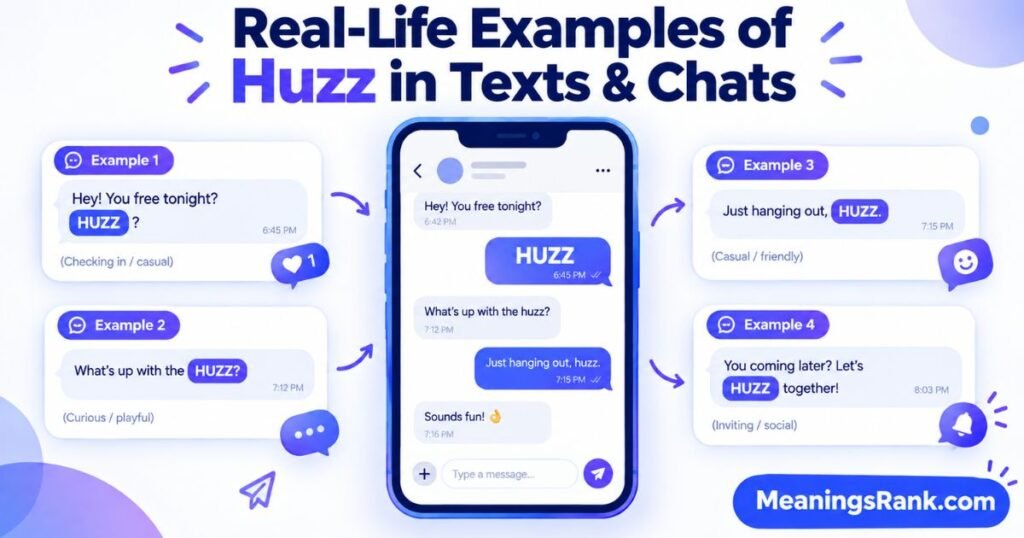
Seeing the word in real conversational contexts makes the meaning click faster than any definition alone. Here are some example exchanges across different platforms.
Text message:
Friend 1: “did u see her story lol” Friend 2: “yeah huzz really posted that 💀”
WhatsApp group chat:
“the huzz are planning brunch for saturday, who’s in?”
Instagram comment:
“huzz be like ‘we’re just friends’ 😂”
Snapchat caption:
“when the huzz find out the tea 👀”
TikTok comment section:
“this is so accurate huzz behavior fr”
Discord gaming chat:
“bro got destroyed, that’s some huzz gameplay ngl” (used here almost as a generic tease, unrelated to gender)
Workplace chat (rare, and risky):
This word essentially never appears in professional or workplace communication, and using it there would almost certainly be seen as inappropriate or unprofessional, regardless of intended tone.
Alternative Meanings of Huzz
While the AAVE-derived meaning is by far the most common online, “huzz” occasionally shows up in a few other, much less popular contexts:
- Old English exclamation: “Huzza” or “huzzah” is a centuries-old cheering exclamation, similar to “hooray.” “Huzz” is sometimes used as a shortened, playful version of this in historical reenactment or gaming communities, completely unrelated to the slang meaning.
- Random internet handle or brand name: Some usernames, small brands, or gaming tags use “Huzz” simply because it sounds catchy, with no connection to slang meaning at all.
- Typo or autocorrect result: Occasionally, “huzz” appears as an accidental typo for words like “fuzz” or “buzz,” especially on mobile keyboards.
These alternate meanings are rare compared to the dominant slang usage, but they’re worth knowing if you see “huzz” used in an unexpected context, like a historical fiction book or a random gaming tag.
Also Read: ICL Meaning: The Ultimate Guide to ICL Slang in Text & Social Media
Related Gen Z Slang Terms & NLP Variations
Understanding huzz gets easier when you see it alongside similar slang terms that Gen Z uses in comparable ways.
- Bussin – means something is really good, usually food
- No cap – means “no lie” or “I’m serious”
- Finna – means “about to” or “going to”
- Simp – someone seen as overly devoted to someone they like
- Ate – means someone did something exceptionally well
- Mid – means something is average or mediocre
- Rizz – charisma, especially in flirting
- Sus – suspicious or questionable
Semantic and NLP Variations of “Huzz”
Search engines and AI tools often see “huzz” spelled or searched in slightly different ways, including:
- huzz meaning slang
- what does huzz mean in text
- huzz meaning urban dictionary
- huzz meaning tiktok
- huzz be like meaning
- huzzz meaning
All of these variations point back to the same core slang definition, just phrased differently depending on how someone types or speaks the search.
How to Respond to “Huzz”
If someone uses “huzz” in a chat with you, how you respond really depends on the tone and your relationship with that person.
- If it’s clearly a joke among friends: You can laugh along, reply with a laughing emoji, or play into the meme format if you’re comfortable with it.
- If it feels aimed at you or someone else negatively: It’s completely fair to say something like, “not a fan of that word, ngl” or simply not engage with it.
- If it’s used in a group chat you’re part of: You can ignore it, respond neutrally, or redirect the conversation if it feels disrespectful.
- If a stranger uses it toward you online: Treat it the same way you’d treat any other borderline-disrespectful comment you don’t owe a reaction, and blocking or muting is always an option.
There’s no single “correct” reply because the word itself doesn’t have one fixed tone. Reading the room matters more than finding the perfect comeback.
Misinterpretations and Common Confusion About Huzz
A lot of people misunderstand “huzz” simply because they’re seeing it out of context, usually from an older relative, a coworker, or someone unfamiliar with internet slang stumbling across it. Here are the most common points of confusion:
Confusing it with “buzz” or “fuzz”
Due to similar spelling, especially through autocorrect.
Assuming it’s always an insult
When in many casual friend groups it’s used almost neutrally, similar to saying “the girls.”
Assuming it’s always harmless slang
When in reality it can absolutely be used to demean or disrespect someone.
Not realizing its AAVE origin
Which matters because using slang without understanding its cultural roots can come across as careless or disrespectful, especially if used mockingly.
Thinking it’s brand new
When the phonetic spelling and root word have existed in music and vernacular speech for a long time before TikTok popularized this specific spelling.
Because the tone genuinely shifts based on context, it’s completely normal to feel a little confused the first time you see it, even if you’re generally familiar with internet slang.
Parents, teachers, and older relatives are especially likely to misread the word, mostly because they’re seeing it without any of the surrounding meme culture that gives it context. If a parent stumbles across “huzz” in their kid’s group chat screenshots or Instagram comments, it can look far more alarming out of context than it actually is in practice. On the flip side, some teens genuinely don’t realize how harsh the root word is, since they picked up “huzz” purely as a meme term without ever connecting it back to “hoes.” Both sides of this generational gap contribute to a lot of the ongoing confusion around the word.
When NOT to Use “Huzz”
There are several situations where using “huzz” is a bad idea, no matter how casual your intentions are.
- In professional or workplace communication, it will almost always come across as unprofessional or inappropriate.
- Around people you don’t know well, tone can easily be misread as disrespectful rather than playful.
- When talking about real people you don’t have permission to joke about, especially in a demeaning way.
- In mixed-generation family chats, where the slang and its tone will likely be misunderstood or seen as rude.
- If you’re not part of the cultural context the word originated from, using it carelessly can come across as appropriative rather than playful, especially in a mocking tone.
- On public posts or captions meant for a wide, general audience, since tone is much harder to control once something reaches strangers.
When in doubt, it’s safer to skip the word entirely. Slang like this only really “works” in the right crowd, and getting it wrong can cause real offense even if that wasn’t the intent.
Usage Tips for Using Huzz Correctly
If you do want to use “huzz” casually with friends who are already familiar with the term, here are some practical tips to avoid misunderstandings:
- Match the tone of the people you’re talking to. If your friend group uses it jokingly, keep it light and playful.
- Avoid using it to genuinely insult someone, even as a joke, since it can land harder than intended.
- Pair it with context clues, like emojis or a clearly joking sentence structure, so your tone isn’t misread.
- Don’t use it about someone who isn’t comfortable with slang like this. Not everyone finds it funny, and that’s completely valid.
- Skip it in any formal, professional, or mixed-audience setting.
- Recognize its cultural origin and use it thoughtfully rather than carelessly copying a trend without context.
A Simple Rule of Thumb
If you’re ever unsure whether “huzz” fits the moment, ask yourself one question: would this joke still land the same way if I used the word “girls” instead? If the answer is yes, you’re probably in safe, casual territory. If the joke only works because the word sounds edgier or harsher, that’s usually a sign it’s leaning toward disrespectful rather than playful, and it might be worth rethinking the wording before you hit send.
Also Read: RS Meaning in Text: The Ultimate Guide to Its Real Meaning in Chat & Social Media
Frequently Asked Questions About Huzz
What does huzz meaning in slang?
Huzz is slang derived from “hoes,” used casually or jokingly to refer to women or girls online.
Is huzz an offensive word?
It can be, depending on tone and context; it’s not universally offensive but often borderline.
Where did the word huzz come from?
It comes from AAVE pronunciation of “hoes,” popularized widely through TikTok trends.
Is huzz the same as huzzah?
No, huzzah is an old English cheering word unrelated to this slang meaning.
Can huzz be used in a friendly, non-insulting way?
Yes, some friend groups use it casually, similar to saying “the girls.”
Should I use huzz in professional settings?
No, it’s considered too casual and potentially inappropriate for workplace communication.
Conclusion
So, what does huzz actually mean? At its core, it’s internet slang rooted in AAVE, used mainly to refer to women in a way that can range from playful to genuinely disrespectful depending on context, tone, and who’s saying it. It became popular through TikTok memes and has since spread across nearly every major platform, from Instagram comments to Discord servers. While some friend groups use it casually without any negative intent, it’s still a word that requires reading the room carefully before typing it out.
If you’re ever unsure whether it’s appropriate in a conversation, it’s usually safer to leave it out, especially around people you don’t know well or in professional spaces. Slang like huzz shows how quickly language moves online, and understanding both its meaning and its roots helps you use it thoughtfully rather than carelessly.