
If you’ve seen “ICL” pop up in a text and had no clue what it meant, you’re not alone. This little abbreviation shows up everywhere these days, from Instagram comments to group chats with friends. The ICL meaning is simple once you know it, but it can be confusing the first time you spot it. In this guide, we’ll break down exactly what ICL meaning, where it came from, how people use it on different apps, and how you can use it too. By the end, you’ll never scratch your head at this slang term again.
Slang like ICL spreads fast because it fits the way people actually talk to each other online: quick, honest, and a little bit playful. Whether you’re a parent trying to keep up with your kid’s texts, a new social media user, or just someone who wants to sound fluent in today’s internet language, understanding ICL gives you one more piece of the puzzle. This guide covers everything from its exact meaning to real examples across every major app, so you can read, use, and reply to ICL with total confidence.
Quick Answer: What Does ICL Mean in Text?
ICL stands for “I Can’t Lie.” People use it when they want to admit something honestly, even if it’s a little embarrassing or unexpected. It’s basically a short way of saying “to be honest” or “not gonna lie.”
Here’s a quick example:
“ICL, I watched that whole movie twice this week.”
That means: “I can’t lie, I watched that whole movie twice this week.” Simple, right? It’s used to add honesty and personality to a message, and it’s become a favorite among younger texters, especially Gen Z.
This quick answer covers the basics, but there’s a lot more to unpack. Keep reading to learn exactly how ICL works in different situations, how it spread across social media, and how you can start using it naturally in your own conversations.
What Does ICL Mean in Text & Chat?
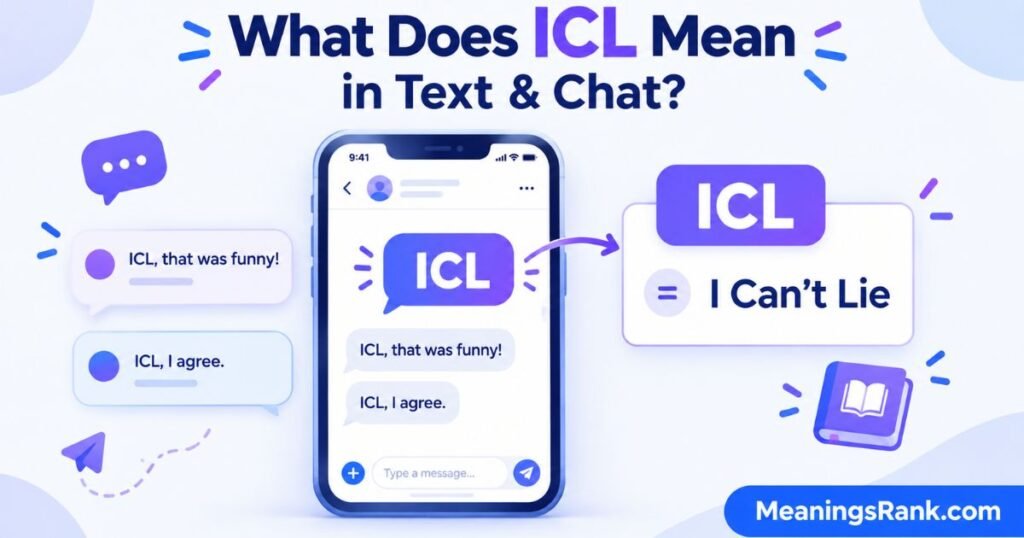
When someone types ICL in a text message, they’re setting up a confession or an honest opinion. It works almost like a verbal shrug before admitting something true. Think of it as a cousin to phrases like “not gonna lie” (NGL) or “to be honest” (TBH).
People often use ICL right before sharing something that might sound surprising, funny, or slightly vulnerable. It softens the statement and lets the other person know the message is coming from a place of honesty, not exaggeration.
For example:
- “ICL, I forgot your birthday was yesterday.”
- “ICL, that outfit looks amazing on you.”
- “ICL, I’m not ready for finals week.”
In each case, ICL signals that the speaker is being real and upfront. It’s casual, friendly, and fits naturally into everyday chat conversations.
Why People Add ICL Before a Statement
Texting doesn’t come with tone of voice, so it’s easy for messages to sound flat or unclear. Adding ICL gives a message some emotional context. It tells the reader, “this is genuine, not sarcastic or exaggerated.” That small signal makes digital conversations feel more human and less robotic.
The Emotional Purpose Behind ICL
Beyond just saving time while typing, ICL serves an emotional purpose too. Texting can feel distant and impersonal because you can’t see a person’s face or hear their voice. When someone types ICL before a statement, they’re trying to bridge that gap. It’s their way of saying, “trust me, this is real,” even through a screen. This small habit has become a normal part of how people build trust and connection in digital friendships.
ICL Meaning and Full Definition
The full definition of ICL is straightforward:
ICL = “I Can’t Lie”
It’s used as an honesty marker in casual conversation. Unlike formal language, ICL meaning doesn’t follow grammar rules strictly. It can start a sentence, end one, or even stand alone as a reaction.
Here’s how it typically functions in a sentence:
| Usage Type | Example |
| Starting a sentence | “ICL, that show was better than I expected.” |
| Ending a sentence | “That test was so hard, ICL.” |
| Standing alone as a reply | “ICL 😅” |
The meaning stays the same in every case: the person is being honest about something, often something a little unexpected or personal.
Grammar Flexibility Makes ICL Easy to Use
One reason ICL has spread so quickly is because it doesn’t require any special grammar knowledge. You don’t need to worry about capitalization, punctuation, or sentence structure. Whether you write it in all caps, lowercase, or with a comma after it, the meaning stays clear. This flexibility makes it beginner-friendly for anyone learning modern texting slang, including parents or older siblings trying to understand what their kids are saying online.
What Does ICL Stand For?
ICL stands for “I Can’t Lie.” It’s part of a larger family of honesty-based texting abbreviations that includes:
- NGL – Not Gonna Lie
- TBH – To Be Honest
- FR – For Real
- ICYMI – In Case You Missed It (different meaning, but same abbreviation style)
These terms all share a similar purpose: they let someone admit something true, often with a hint of vulnerability or surprise. ICL is one of the newer additions to this group, and it has quickly become popular because it feels casual and easy to type.
The Origins of ICL
ICL likely grew out of internet culture and texting shorthand, where speed and brevity matter. As people started typing faster and shorter, phrases like “I can’t lie” naturally got shortened to ICL. It picked up steam on social media platforms where character limits and fast scrolling encourage short, punchy phrases. Over time, it moved from niche online communities into mainstream texting language, especially among teens and young adults who spend a lot of time on apps like TikTok and Instagram.
How ICL Became Mainstream
Slang terms usually follow a pattern before they become widely known. They start in small online communities, get picked up by content creators, and eventually spread into everyday conversation. ICL followed this exact path. It began appearing in comment sections and captions on platforms popular with younger users. Once a few viral videos or posts used the term, more people started copying it, and it quickly became a normal part of texting vocabulary. This kind of organic spread is common with internet slang, and it shows how quickly language can evolve when millions of people are chatting online every day.
Also Read: POV Meaning: The Powerful Guide to Its Definition, Common Uses & Real-Life Examples
Context and Usage of ICL
ICL fits best in casual, informal settings. You’ll see it most often in texts between friends, comments on social media posts, or captions where someone wants to share a genuine thought.
It’s rarely used in formal writing, emails to a boss, or academic papers. Instead, it belongs in relaxed digital spaces where personality and honesty matter more than polish.
Common Situations Where ICL Fits
- Admitting a guilty pleasure (“ICL, I still watch cartoons”)
- Giving honest feedback (“ICL, your essay needs work”)
- Reacting to something surprising (“ICL, I didn’t expect that ending”)
- Sharing a personal habit (“ICL, I talk to my dog like he understands me”)
- Confessing a small mistake (“ICL, I forgot to submit the form”)
- Complimenting someone genuinely (“ICL, you did really well today”)
ICL works well whenever someone wants to sound sincere without sounding overly serious. It keeps the tone light while still being truthful.
How Tone Changes the Meaning Slightly
While the core meaning of ICL never changes, the tone around it can shift depending on the sentence. Sometimes it introduces something funny, like admitting a silly habit. Other times, it introduces something more serious, like honest feedback about a project. Paying attention to the words that follow ICL helps you understand whether the person is joking, being sincere, or somewhere in between. This flexibility is part of why the term works so well across so many different types of conversations.
Real-Life Examples of ICL in Conversations
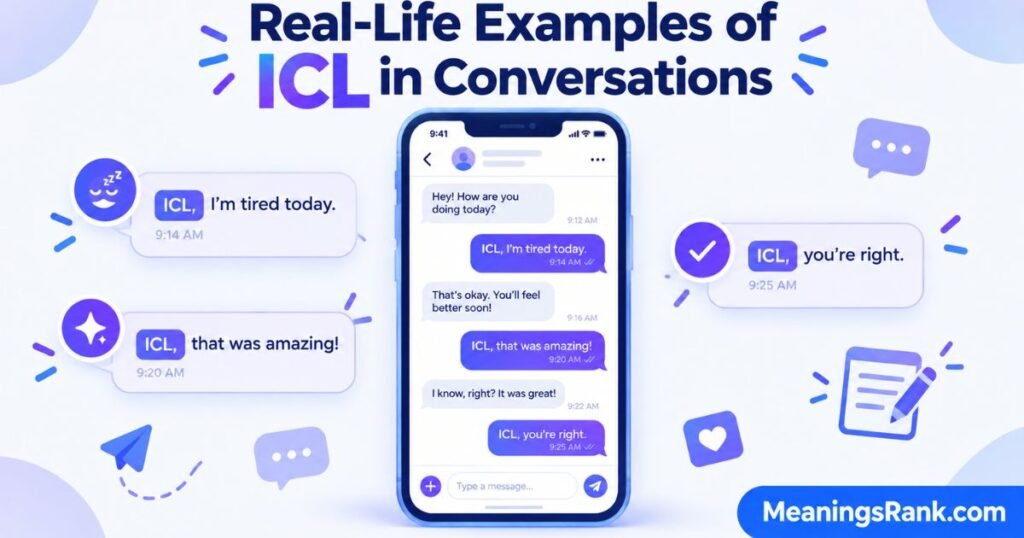
Seeing ICL in action helps make the meaning stick. Here are examples across different everyday scenarios.
Text message between friends:
Friend 1: “Did you like the party?”
Friend 2: “ICL, it was kind of boring after midnight.”
Instagram comment:
“ICL this photo is giving main character energy 🔥”
TikTok caption:
“ICL I’ve rewatched this show four times this month lol”
Discord chat during gaming:
“ICL that last round was pure luck, not skill 😂”
Workplace chat (casual team, informal culture):
“ICL, I think we should push the deadline by a day.”
Group chat planning an event:
“ICL, I don’t think I can make it Saturday.”
Snapchat reply to a friend’s story:
“ICL that view is unreal, where even is that?”
Text between siblings:
“ICL mom’s cooking was way better than that restaurant.”
Comment on a YouTube video:
“ICL this tutorial actually helped me more than my class did.”
Each example shows how ICL meaning adds a layer of honesty to the message, whether it’s lighthearted or a bit more serious. Notice how the term fits naturally into so many different settings, from casual friend chats to slightly more structured workplace conversations, without ever feeling out of place.
ICL in Gaming and Discord Culture
Gaming communities move fast, and players often need short, quick ways to react during matches or in group chats. ICL fits naturally into this environment because it lets gamers admit something honest without slowing down the conversation. Common examples include admitting a mistake during a match (“ICL, I missed that shot on purpose… okay not really”), complimenting a teammate (“ICL that was a clutch play”), or reacting to a tough loss (“ICL we should have won that round”).
On platforms like Discord, where voice chats and text channels run side by side, ICL often appears in messages sent between rounds or during breaks, keeping the tone friendly even when players are teasing each other. Because gaming culture already leans heavily on shorthand and quick reactions, ICL blends in perfectly with other common gaming abbreviations like GG (good game) or AFK (away from keyboard).
ICL in Workplace and Professional Chat Culture
While ICL is mostly casual, some modern workplaces with relaxed communication styles have started to see it appear in internal chat tools like Slack or Microsoft Teams, especially among younger employees or in creative, informal industries. It might show up in casual check-ins between coworkers who are friendly outside of work tasks, or in quick honest feedback shared between close colleagues.
That said, it’s best avoided in messages to clients or external partners, formal reports, or conversations with supervisors in traditional corporate settings. Workplace culture varies widely: a tech startup with a casual vibe might embrace slang like ICL meaning in everyday chat, while a traditional corporate office would likely see it as too informal. Reading your specific workplace culture before using casual slang is always a smart move.
ICL Meaning on WhatsApp, Instagram, TikTok & Snapchat
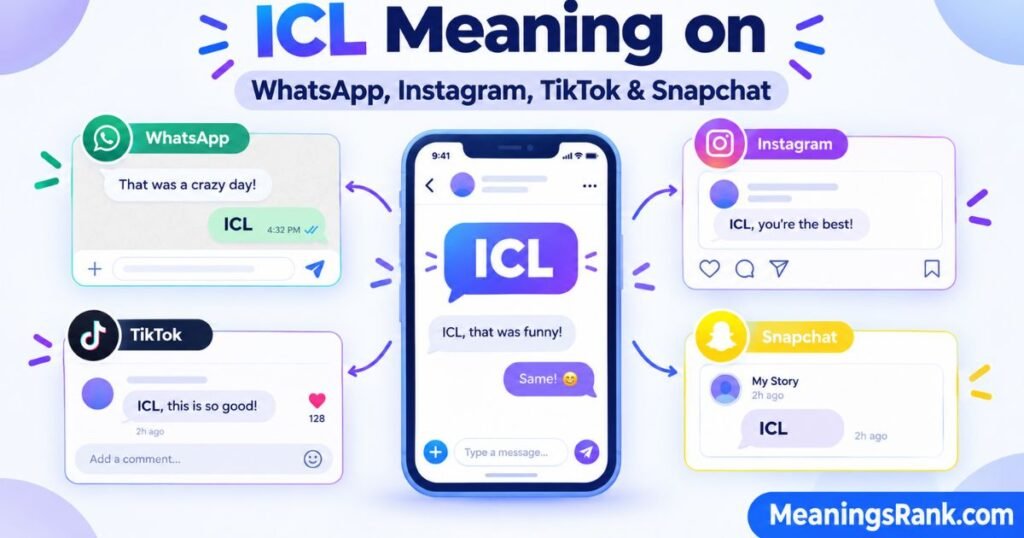
ICL meaning the same thing across every platform: “I Can’t Lie.” But the way it’s used can shift slightly depending on the app and its culture.
ICL on WhatsApp
WhatsApp conversations tend to be more personal, often between close friends or family. ICL here usually shows up in longer, more detailed messages, since WhatsApp doesn’t have strict character limits like some other apps.
Example: “ICL, I was so nervous before that interview, but it went better than expected.”
WhatsApp also tends to host group chats for families, coworkers, and close friend circles, so ICL meaning might appear alongside more detailed explanations rather than short one-liners.
ICL on Instagram
On Instagram, ICL meaning often appears in comments or captions, especially when someone is reacting to a photo, reel, or story. It’s short and quick, matching the fast-scrolling nature of the app.
Example: “ICL your skin is glowing in this pic ✨”
Instagram users also use ICL when replying to polls or questions in stories, since it offers a quick and honest way to answer without typing a long response.
ICL on TikTok
TikTok users love ICL in captions and comments because it fits the platform’s honest, relatable vibe. Many TikTok trends are built around confessions or funny truths, and ICL fits right in.
Example: “ICL I cried during this video and I’m not even sorry”
Because TikTok trends move fast, ICL meaning often appears in duet captions or comment threads where users are reacting honestly to a viral video, adding a personal layer to trending content.
ICL on Snapchat
Snapchat messages are usually quick and disappear fast, so short slang like ICL is perfect. It’s often used in Snap captions or chat replies.
Example: “ICL I already ate the whole pizza 🍕”
Since Snapchat conversations often revolve around quick daily updates, ICL fits naturally when someone wants to admit something honest about their day without overexplaining.
Platform Comparison Table
| Platform | Common Use of ICL | Typical Tone |
| Personal confessions, longer messages | Warm, personal | |
| Comments and captions | Casual, complimentary | |
| TikTok | Captions, honest reactions | Relatable, funny |
| Snapchat | Quick chat replies | Playful, spontaneous |
| Discord | Gaming reactions, group chat banter | Friendly, joking |
Alternative Meanings of ICL
While “I Can’t Lie” is by far the most common meaning, ICL can occasionally stand for other things depending on context. It’s important to consider where and how the term is used before assuming the meaning.
Other possible meanings include:
- ICL – Intraocular Lens: Used in medical contexts, especially eye surgery discussions.
- ICL – In Case of Loss: Occasionally used in insurance or shipping conversations.
- ICL – Implantable Collamer Lens: A specific type of vision correction procedure, related to the medical meaning above.
- ICL – International Cricket League: Sometimes used in sports discussions, especially among cricket fans in certain regions.
These meanings are far less common in everyday texting. If you see ICL in a casual chat with friends, it almost always means “I Can’t Lie.” The medical, technical, or sports-related meanings usually appear in specific contexts like health articles, doctor visits, or sports forums, not casual conversation.
How to Tell Which Meaning Is Being Used
Context is everything. If the conversation is about eyesight, surgery, or medical procedures, ICL meaning likely refers to a lens. If it’s about cricket scores or league updates, it might refer to a sports league. If it’s a text from a friend, a social media comment, or a group chat, it almost certainly means “I Can’t Lie.” Paying attention to the surrounding words will clear up any confusion quickly.
A Simple Trick to Avoid Confusion
If you’re ever unsure which meaning applies, try reading the full sentence and asking yourself what topic is being discussed. A conversation about a doctor’s appointment or a medical procedure points toward the lens meaning. A conversation about feelings, opinions, or honest confessions points toward “I Can’t Lie.” This small mental check takes only a second but saves you from misunderstanding the message.
Also Read: TMB Meaning in Text: The Ultimate Guide to What TMB Really Means in Chat & Social Media 💬
ICL Slang and Its Popularity Among Gen Z
ICL has become especially popular among Gen Z, a generation known for creating and spreading internet slang at lightning speed. This age group values authenticity, and ICL fits that value perfectly since it’s built around honesty.
Social media platforms like TikTok and Instagram have played a huge role in spreading ICL beyond small friend groups into mainstream usage. Once a term starts trending in comment sections or captions, it spreads fast, especially when influencers or popular creators use it in their own posts.
Why Gen Z Loves Honesty-Based Slang
Gen Z grew up online, surrounded by curated posts, filters, and carefully edited content. As a reaction, many young people value raw honesty in their everyday conversations. Terms like ICL, NGL, and FR let people admit real thoughts and feelings without sounding overly dramatic or fake. It’s a small way of keeping conversations genuine in a digital world that can sometimes feel artificial.
ICL also works well because it’s short, easy to type, and fits naturally into fast-paced texting. It doesn’t require much thought, yet it adds emotional honesty to a message instantly.
How ICL Compares to Older Generations’ Slang
Every generation has its own version of honesty slang. Older generations might have used phrases like “honestly speaking” or “truth be told” in casual conversation. Gen Z simply shortened these ideas into quick texting abbreviations that fit the pace of modern digital communication. This isn’t really a new concept, just a faster, more compact version of something people have always done: signaling honesty before sharing an opinion.
The Role of Influencers and Creators
Content creators play a huge part in spreading slang like ICL. When a popular creator uses a term in a caption or video, millions of followers see it and start copying the phrase in their own posts and comments. This creates a snowball effect, where a term that started in a small community suddenly becomes recognizable across the entire platform, and eventually spreads to other apps too.
The Broader Impact of Texting Slang Like ICL
Terms like ICL are part of a much larger shift in how people communicate. Texting slang isn’t just about saving time anymore. It’s about expressing emotion, tone, and honesty in a format that naturally strips away facial expressions and vocal tone. Abbreviations like ICL, NGL, and TBH have become tools that help bridge that gap, giving digital conversations a more human, relatable feel.
As social media continues to shape how younger generations communicate, more terms like ICL will likely continue to emerge, spread, and eventually become part of everyday vocabulary. Understanding these shifts not only helps you keep up with modern conversations but also gives insight into how language naturally evolves alongside technology.
Related Terms and NLP Variations of ICL
ICL belongs to a bigger group of honesty and reaction-based slang terms. Understanding these related terms helps you see the full picture of how people communicate honestly online.
| Term | Meaning | Example |
| NGL | Not Gonna Lie | “NGL, that was impressive.” |
| TBH | To Be Honest | “TBH, I didn’t like the ending.” |
| FR | For Real | “FR, this is the best pizza ever.” |
| ICYMI | In Case You Missed It | “ICYMI, the concert got postponed.” |
| IMO | In My Opinion | “IMO, the book was better than the movie.” |
| LWK | Low-key | “LWK, I’m kind of nervous.” |
| HWK | Highkey | “HWK, I love this song.” |
These terms often appear together in the same conversation, layering honesty and emphasis. For example: “ICL, FR, that was the funniest thing I’ve seen all week.” While that might look repetitive, it’s actually a common texting style that adds extra emphasis to a genuine statement.
How ICL Fits Into Semantic Search and Voice Search
Because ICL is now a widely searched term, understanding its natural language context matters for how people search for it online. Many people type or say questions like “what does ICL meaning in text,” “ICL meaning slang,” or “what does ICL stand for on Instagram” into search engines or voice assistants.
Recognizing these natural phrasing patterns helps make sense of why ICL has become such a commonly searched abbreviation, and it shows how texting slang has become part of everyday digital vocabulary that people actively look up when they don’t understand it, especially since voice assistants and search engines increasingly rely on understanding conversational, natural-sounding questions rather than stiff keyword searches, which means people can simply ask their phone “what does ICL mean” out loud and expect a clear, direct answer back within seconds.
Why Understanding Slang Variations Matters
Learning ICL alongside its related terms gives you a broader understanding of modern texting culture. Once you recognize the pattern behind these honesty-based abbreviations, spotting and understanding new slang terms becomes much easier in the future. Instead of memorizing each term one by one, you start to notice the shared structure and purpose behind them, which makes decoding new slang faster and more intuitive over time.
How to Respond to ICL in Text & Chat
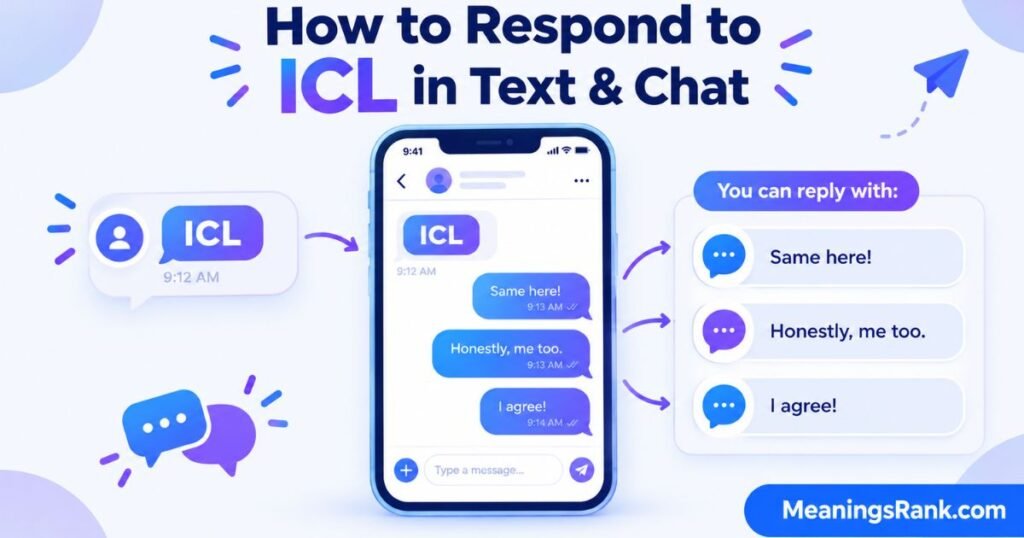
Responding to ICL is easy once you understand the tone behind it. Since ICL usually introduces an honest statement, your reply should acknowledge that honesty, whether you agree, disagree, or just want to react.
Simple Ways to Respond
- Agree with the honesty: “Same, ICL.”
- Show surprise: “Wait, really? ICL I didn’t know that.”
- Add your own honest confession: “ICL me too lol.”
- Ask a follow-up question: “ICL why though?”
- Show support: “ICL that’s totally understandable.”
- Tease playfully: “ICL you always say that lol.”
Example Conversation
Friend: “ICL, I’ve never seen that movie everyone talks about.” You: “Wait, ICL that’s actually shocking, we need to watch it together.”
Responding naturally, without overthinking it, keeps the conversation flowing smoothly. ICL doesn’t require a formal or lengthy reply. A short, honest response usually works best.
Matching Energy in Your Reply
When someone uses ICL to admit something lighthearted, it’s best to match that same casual energy in your response. On the other hand, if someone uses ICL to share something more personal or serious, a slightly warmer or more thoughtful reply shows that you understood the honesty behind their message. Reading the emotional weight of the original message helps you respond in a way that feels genuine rather than dismissive.
Misinterpretations and Common Mistakes
Even simple slang terms can get misunderstood, especially by people who aren’t familiar with texting abbreviations. Here are some common mistakes people make with ICL.
Mistake 1: Confusing It With “I Can Lie”
Some people mistakenly read ICL backward and think it means “I Can Lie,” which is the opposite of its real meaning. Remembering that ICL stands for “I Can’t Lie” (with the apostrophe implied) helps avoid this confusion.
Mistake 2: Using It in Formal Writing
ICL is casual slang. Using it in professional emails, school assignments, or formal documents can come across as unprofessional. It’s best saved for texting, social media, and informal chats.
Mistake 3: Assuming It Always Means the Same Thing
While rare, ICL can refer to medical terms like “Intraocular Lens” in specific contexts. Always consider the setting before assuming which meaning applies.
Mistake 4: Overusing It in Every Sentence
Using ICL too many times in a single conversation can make messages feel repetitive or forced. It works best when used occasionally, right before a genuinely honest or surprising statement.
Mistake 5: Using It With People Unfamiliar With Slang
Sending ICL to someone who doesn’t text often, like an older relative or a new coworker, can lead to confusion. They might not understand the abbreviation at all, which can make the message feel unclear instead of honest.
Also Read: NGL Meaning in Text: The Complete Guide to Its Meaning, Uses & Examples
When NOT to Use ICL
Knowing when to avoid ICL is just as important as knowing when to use it. Here are situations where it’s better to skip this slang term.
- Professional emails or workplace documents: Stick to formal language in official communication.
- Academic papers or school essays: Slang doesn’t belong in formal writing assignments.
- Serious or sensitive conversations: If someone is sharing something emotional or difficult, ICL might come across as too casual.
- Conversations with people unfamiliar with slang: Older relatives or people who don’t text often might not understand what ICL means, leading to confusion.
- First-time professional messages: When messaging a new client, teacher, or employer, keep the tone professional and skip casual abbreviations.
- Formal customer service chats: Businesses communicating with customers should avoid slang to maintain a professional tone.
Using good judgment about your audience and setting will help ICL land the right way every time.
Smart Usage Tips for ICL
Want to use ICL like a pro? Follow these practical tips to make sure it fits naturally into your conversations.
Use it before honest confessions:
ICL works best right before you share something true, especially if it’s a little surprising or personal.
Keep it casual:
Save ICL for texts, social media, and friendly chats, not formal writing.
Don’t overuse it:
Sprinkle ICL into conversation occasionally rather than every message.
Pair it with emojis for extra tone:
Adding an emoji after ICL can clarify your mood, like 😅 for embarrassment or 🔥 for excitement.
Know your audience:
Make sure the person you’re texting understands slang before using it, especially with older generations.
Combine it with other honesty slang carefully:
Phrases like “ICL FR” can work, but don’t overload a single sentence with too many abbreviations.
Use it to soften tough feedback:
ICL can make honest opinions feel less harsh, like “ICL, I think you could improve this part.”
Practice reading the room:
Before using ICL, think about whether the conversation is light enough for casual slang or if a more thoughtful tone is needed instead.
Following these tips will help you use ICL naturally, the same way native speakers of internet slang do every day.
Frequently Asked Questions About ICL
What does ICL meaning in a text message?
ICL means “I Can’t Lie,” used to introduce an honest statement.
Is ICL the same as NGL?
Yes, ICL and NGL both mean admitting something honestly and truthfully.
Can ICL mean something other than “I Can’t Lie”?
Yes, it can rarely mean “Intraocular Lens” in medical contexts.
Is ICL appropriate for workplace messages?
Only in casual workplace chats; avoid it in formal business communication.
Where did the slang term ICL originate?
It grew from internet texting culture, later becoming popular through social media.
How do you respond to someone who says ICL?
Reply naturally, agreeing, reacting, or sharing your own honest thought.
Conclusion
Now that you understand the ICL meaning, you’ll never be confused by it again. This simple abbreviation, short for “I Can’t Lie,” has become a favorite way for people to share honest thoughts in texts, comments, and captions. Whether you spot it on WhatsApp, Instagram, TikTok, or Snapchat, the meaning stays consistent: someone is being real with you. ICL fits perfectly into casual conversations, especially among Gen Z, where honesty and relatable communication matter more than ever.
It shows up in friend group chats, gaming sessions on Discord, casual workplace banter, and social media comments alike, always carrying the same honest, down-to-earth tone. Just remember to use it in the right settings, keep it casual, and avoid overusing it so it keeps its natural charm. With this guide, you’re now fully equipped to understand, use, and respond to ICL like a true internet slang expert. Keep exploring MeaningsRank for more guides that help you stay fluent in today’s fast-changing digital language.