
Someone texts you “mb” after a mix-up, and you’re left wondering what it actually means. You’re not alone. The MB meaning in text usually points to a quick, casual way of admitting a small mistake. It’s short, simple, and shows up everywhere texting, WhatsApp, Instagram comments, gaming chats, and even workplace messages.
People use it instead of typing out a full apology when the situation is minor. Once you understand how MB works, you’ll never feel confused seeing it pop up in a conversation again. This guide breaks down everything, from its exact meaning to real examples and reply ideas, so you can use it naturally yourself.
What Does MB Mean in Text?
MB is a short way of saying “my bad.” People use it to admit a small mistake or mix-up without making a big deal out of it.
It works like a mini apology. Instead of writing out a full sentence explaining what went wrong, MB gets the point across instantly.
Here’s a simple example:
Person A:
“You said we were meeting at 5, not 6.”
Person B:
“MB, I got the times mixed up.”
In this exchange, Person B isn’t over-explaining or making excuses. They’re just owning the small error and moving on quickly, which keeps the conversation light and easygoing.
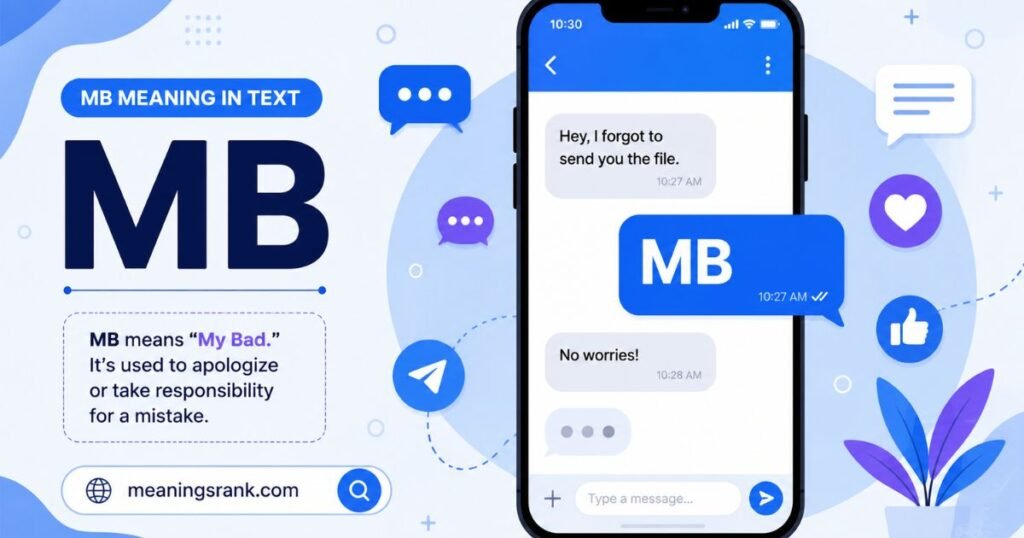
MB shows up so often because most everyday mistakes don’t need a long explanation. Forgetting a detail, sending the wrong file, or mixing up plans usually just needs a quick acknowledgment, and that’s exactly what MB provides.
A few quick things worth knowing about how MB functions in conversation:
- It works as a casual stand-in for “sorry” or “my mistake”
- It’s used for small errors, not serious issues
- It rarely needs further explanation unless the other person asks
- It keeps the tone light instead of overly serious
For example, “mb, wrong chat” clears up confusion instantly when someone sends a message to the wrong group. Or “mb, forgot to reply” explains a late response without sounding overly formal.
Once you get used to spotting this pattern, MB becomes one of the easiest texting abbreviations to recognize and use correctly.
What Does MB Stand For? Common Meanings Explained
MB most commonly stands for “My Bad.” It’s a casual admission of fault, usually for something small and easy to move past.
That said, MB does have a couple of other meanings depending on context, so it helps to know the difference.
1. My Bad (Most Common Meaning) This is by far the most frequent use of MB in texting and social media. It signals a quick, informal apology.
Example: “MB, I forgot to send that link earlier.”
2. Megabyte (Technical Meaning) In tech conversations, MB can refer to a unit of digital storage, like file size or data usage.
Example: “This file is only 2 MB, it should upload fast.”
3. Message Back (Less Common, Context-Dependent) In some casual chats, especially shorter ones, MB can occasionally mean “message back,” though this is far less common than “my bad.”
Example: “Can’t talk now, MB later.”
Read More: https://meaningsrank.com/mhm-meaning-in-text
Here’s a quick breakdown:
| Meaning | Context | Example |
| My Bad | Casual texting, social media, gaming | “MB, wrong group chat” |
| Megabyte | Tech talk, file sizes, data plans | “The app is 45 MB” |
| Message Back | Rare, casual short chats | “Busy rn, MB later” |
In everyday texting and social media, “my bad” is almost always the correct interpretation. The technical meaning only really comes up when the conversation is already about files, storage, or data, so context makes it easy to tell the difference.
Knowing these variations helps you avoid any confusion, especially if MB shows up in a conversation that isn’t purely casual chatting.
How Is MB Used in Real Conversations?
MB usually shows up right after a small mistake gets pointed out, or right when someone realizes they messed up on their own. It rarely needs extra words around it to make sense.
Typical Structure:
“MB, [short explanation]” or just “MB” on its own.
Example: “MB, I meant to say Thursday, not Friday.”
Here’s how it plays out in different situations:
Text Messages:
“MB, I totally forgot to text you back.”
WhatsApp:
“MB, wrong chat 😅”
Instagram Comments:
“MB, didn’t mean to tag the wrong person!”
Snapchat:
“mb i meant to send that to someone else lol”
TikTok Comments:
“MB, I misread your comment the first time.”
Gaming Chats:
“MB, I wasn’t watching the map.”
Discord Servers:
“MB, wrong channel, moving this to general.”
Workplace Chats:
“MB, I’ll resend the file with the correct numbers.”
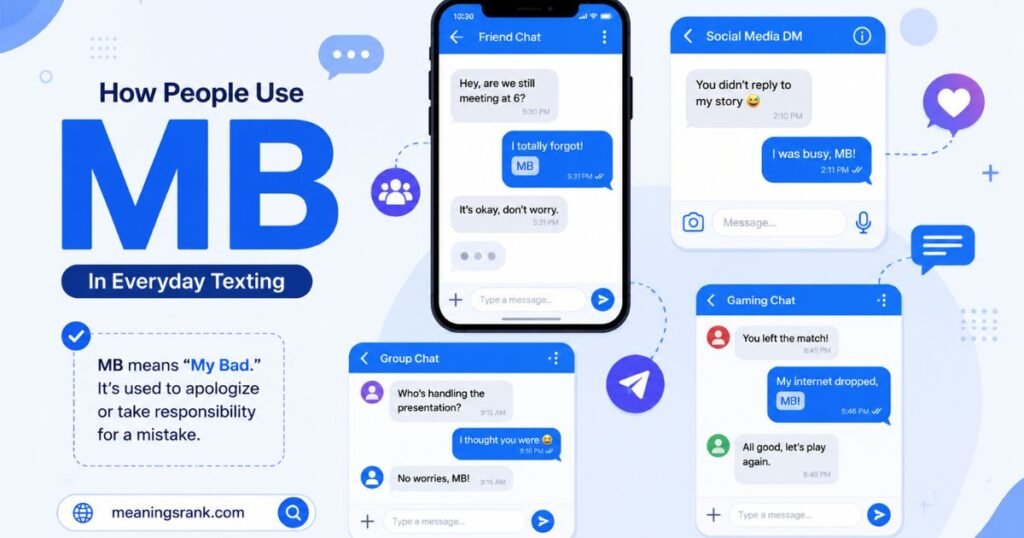
Notice how MB fits smoothly into almost any type of conversation without needing much setup. It works because most people already understand its meaning right away, even without extra context.
In faster-paced chats, like gaming or Discord, MB often appears alone, without any explanation at all. Since the mistake is usually obvious in the moment, like missing a call in a game, MB alone gets the message across.
In slightly more detailed conversations, like workplace chats, MB is often followed by a short fix or clarification, which keeps things professional while still sounding human and approachable.
MB Meaning on Instagram, Snapchat, WhatsApp, and Other Platforms
While MB means the same thing everywhere, its tone and usage shift slightly depending on the platform.
Instagram:
MB often appears in comments or DMs after a small social mix-up, like tagging the wrong person or misreading a caption.
Example: “MB, thought this was a different post!”
Snapchat:
Since Snapchat conversations move fast and disappear quickly, MB is often used casually to clear up quick mistakes.
Example: “mb wrong snap, ignore that 😂”
WhatsApp:
WhatsApp conversations, especially in group chats, often use MB to correct scheduling mix-ups or wrong information shared earlier.
Example: “MB, the event is actually on Saturday.”
Read More:https://meaningsrank.com/wym-meaning-in-text/
TikTok:
In comment sections, MB usually shows up when someone misunderstands a video or corrects their own comment.
Example: “MB, rewatched it and get it now lol”
Gaming Platforms:
MB is extremely common here, especially in fast-moving matches where quick communication matters more than long explanations.
Example: “mb, didn’t see you needed backup”
Discord:
Similar to gaming chats, MB often appears when someone posts in the wrong channel or misunderstands a rule.
Example: “MB, forgot this channel was announcements only.”
Workplace Communication Tools (Slack, Teams):
MB is used, but usually in more casual company cultures. It works well for small errors like sending the wrong file or missing a minor detail.
Example: “MB, forgot to CC you on that email.”
Across every platform, MB stays functionally the same, but the pace and formality shift depending on where it’s used. Fast-moving apps like Snapchat and gaming chats often see MB used alone, while slightly more detailed platforms like WhatsApp or Slack usually pair it with a short explanation.
MB Texting Examples in Real Conversations
Seeing MB in action across different situations makes its meaning even clearer.
Text Message:
Person A: “You told me the store closes at 8.”
Person B: “MB, it actually closes at 7.”
WhatsApp Group Chat:
Person A: “Wait, isn’t the trip in July?”
Person B: “MB, I meant August the whole time.”
Instagram Comment:
“MB, I thought this was your other post about the trip!”
Snapchat Caption:
“mb for the blurry pic, camera glitched lol”
TikTok Comment Section:
“MB, I completely misunderstood your point earlier.”
Gaming Voice/Text Chat:
“MB, I pushed too early without backup.”
Discord Message:
“MB, I posted this in the wrong server by accident.”
Workplace Slack Message:
“MB, I’ll fix the numbers in the report right now.”
In each case, MB clears up a small mistake instantly, without dragging the conversation into a long explanation. That efficiency is exactly why it has become such a popular texting habit.
Notice how MB works whether the mistake is social, technical, or work-related. It adjusts naturally to the situation while keeping the same simple meaning throughout.
How to Reply When Someone Says “MB”
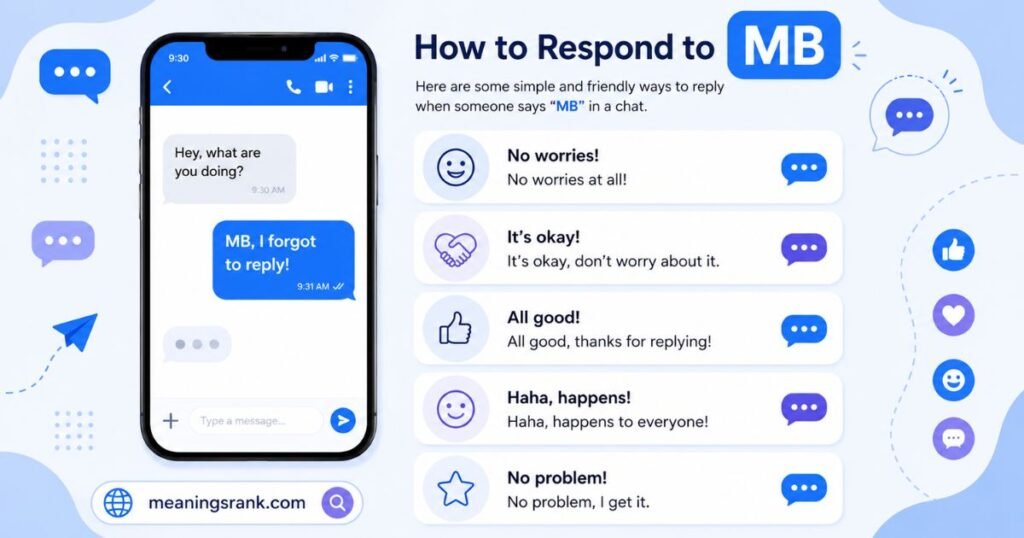
Replying to MB is usually easy since it’s just a quick acknowledgment of a small mistake. Most replies are short and casual.
If It’s No Big Deal:
“All good, don’t worry about it!” “Haha no worries.”
If You Want to Confirm the Fix:
“Okay, thanks for clearing that up.” “Got it, that makes more sense now.”
If You’re Also Owning a Mistake:
“MB too, I misread it as well.”
If You Want to Keep It Light:
“Lol happens to everyone.”
Here’s a quick example from a workplace chat:
Person A: “MB, I sent the wrong file earlier.”
Person B: “No worries, just resend when you get a chance.”
Notice how Person B doesn’t dwell on the mistake. The reply keeps things moving forward, which matches the light tone MB usually carries.
In casual chats, like Snapchat or Instagram DMs, replies can be even shorter.
Example:
Person A: “mb wrong chat lol”
Person B: “haha all good”
The key with MB replies is keeping the tone relaxed. Since MB signals a minor issue, responding with a longer or more serious reply can feel mismatched. A short, friendly response usually fits best and keeps the conversation flowing naturally.
Is MB Rude, Formal, or Informal?
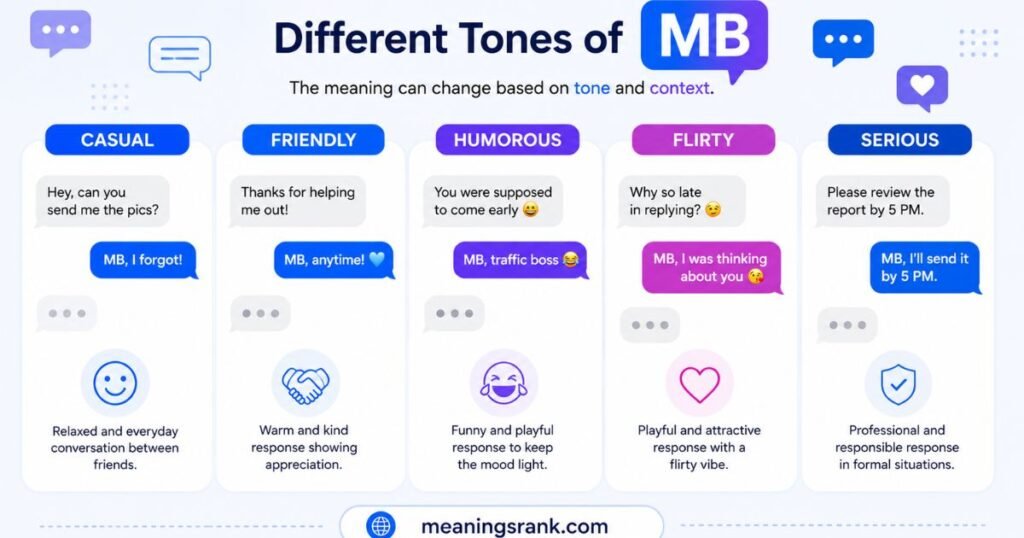
MB is informal by nature. It’s built for quick, casual conversations rather than serious or formal ones.
Why It’s Not Rude:
MB actually shows accountability. It’s a quick way of admitting fault without making excuses, which usually comes across as polite rather than dismissive.
Example: “MB, I should’ve double-checked before sending that.”
Why It’s Not Considered Formal:
Because MB is an abbreviation for a casual phrase, it doesn’t fit well in formal writing, official emails, or professional documents.
Example: Instead of “MB, I’ll fix this,” a formal email would say, “My apologies, I’ll correct this shortly.”
Could MB Ever Feel Dismissive?
In rare cases, if a mistake is serious, using MB alone without any real acknowledgment might feel too casual for the situation.
Example: If someone missed an important deadline, simply texting “mb” without further explanation might feel too brief for the size of the issue.
Quick Summary:
| Situation | Is MB Appropriate? |
| Small mix-ups with friends | Yes, totally fine |
| Casual mistakes in group chats | Yes, works well |
| Missing a work deadline | No, needs a fuller apology |
| Formal emails or documents | No, avoid entirely |
| Gaming or Discord slip-ups | Yes, very common |
Overall, MB fits best in low-stakes situations. The more serious the mistake, the more explanation and sincerity a message usually needs beyond just MB alone.
MB vs Similar Texting Abbreviations
MB often gets compared to other apology-related or clarifying abbreviations. Here’s how they stack up.
| Term | Meaning | When to Use |
| MB | My Bad | Casual acknowledgment of a small mistake |
| SRY | Sorry | Slightly more direct apology |
| NP | No Problem | Responding to an apology or favor |
| NVM | Never Mind | Dismissing or canceling a previous statement |
| OOPS | Mistake acknowledgment | Reacting to an obvious error |
| IMO | In My Opinion | Sharing a personal viewpoint, not an apology |
MB vs SRY: Both express apology, but SRY feels slightly more direct, while MB feels more relaxed and casual.
Example: “sry, my mistake” (slightly more formal tone) “mb, my mistake” (very casual tone)
MB vs NP: These aren’t interchangeable. MB is used by the person who made the mistake, while NP is used by the person responding to it.
Example: Person A: “MB, I was late.” Person B: “NP, all good.”
MB vs OOPS: OOPS reacts to a mistake in the moment, often with more surprise, while MB is a calmer acknowledgment after the fact.
Example: “Oops, wrong button!” (immediate reaction) “MB, wrong button earlier.” (acknowledgment afterward)
Knowing these small differences helps you pick the right word depending on whether you’re apologizing, reacting, or replying to someone else’s mistake.
Common Mistakes and Misunderstandings About MB
Even though MB is simple, a few mix-ups happen regularly, especially among people less familiar with texting slang.
Misunderstanding 1: MB Always Means a Serious Apology
Not true. MB is meant for small, low-stakes mistakes. Serious situations usually need a fuller, more sincere apology instead.
Misunderstanding 2: MB Is Always “My Bad”
While this is the most common meaning, context matters. In tech conversations, MB might simply mean megabyte, not an apology at all.
Misunderstanding 3: MB Is Only Used by Teens
This isn’t accurate. MB is used across many age groups, especially in casual texting and workplace chat tools with a relaxed culture.
Misunderstanding 4: Saying MB Alone Is Always Enough
For minor mistakes, yes. But for bigger issues, MB alone can feel too brief, and a proper explanation or apology works better.
Misunderstanding 5: MB Is Rude If Used Without Explanation
Not usually. In fast-paced chats, like gaming or Discord, MB alone is completely normal and doesn’t need extra detail.
Misunderstanding 6: MB and Sorry Mean Exactly the Same Thing
They’re similar, but MB feels more casual and lighthearted, while “sorry” can carry a heavier, more sincere tone depending on the situation.
Clearing up these small misunderstandings helps prevent awkward moments, especially in mixed-age group chats or professional conversations where tone matters more.
When Should You Avoid Using MB?
While MB works well in many casual situations, there are clear moments when it’s better to avoid it.
1. After a Serious Mistake
If the error caused real problems, like missing an important deadline or sharing wrong information that affected someone, MB alone feels too casual.
2. In Formal Emails or Documents
MB is texting slang. Professional writing calls for a full apology instead, like “I apologize for the oversight.”
3. When Talking to Someone Unfamiliar With Slang
Older relatives, new coworkers, or people from different backgrounds might not immediately understand MB, leading to confusion.
4. During Sensitive or Emotional Conversations
If someone is upset or hurt, a quick “mb” can feel dismissive rather than genuinely apologetic.
5. In Client or Customer Communication
Businesses should avoid MB in messages to clients or customers, since it can come across as unprofessional.
6. When the Mistake Needs a Real Explanation
If more context is needed to clear up confusion, relying on MB alone might leave the other person with unanswered questions.
Knowing when to skip MB and use a fuller explanation instead shows stronger communication skills, especially in situations where tone and clarity matter more than speed.
Frequently Asked Questions About MB
What does MB mean in a text message?
MB usually means “my bad,” a casual way of admitting a small mistake without a lengthy apology.
Does MB always mean “my bad”?
Mostly, yes. In tech contexts, MB can also mean megabyte, so context always matters.
Is MB appropriate for workplace chats?
Yes, for minor mistakes in casual company cultures. Bigger issues need a more detailed, formal apology.
Is MB the same as “sorry”?
They’re similar, but MB feels more casual and lighthearted compared to a full, sincere apology.
Can MB be used alone without explanation?
Yes, especially in fast-paced chats like gaming or Discord, where the mistake is already obvious.
Is MB rude to use?
No, MB usually sounds polite since it shows quick accountability for a small error.
Where is MB most commonly used?
MB appears often in texting, gaming chats, Discord, Snapchat, and casual workplace messaging apps.
Final Thoughts on the Meaning of MB
At its core, the MB meaning in text comes down to a quick, casual way of owning a small mistake. Whether you’re texting a friend, chatting during a game, or messaging a coworker, this short abbreviation keeps conversations moving without unnecessary explanations.
We’ve covered what MB stands for, how it shows up across different platforms, how it compares to similar terms like SRY and NVM, and when it’s better to skip it in favor of a fuller apology.
The next time you see MB in a message, you’ll know exactly what it means and how to respond naturally. Small texting habits like this one make everyday conversations faster, while understanding them fully helps you communicate with more confidence.