
Saw “LWK” in a text and had no idea what it meant? You’re not alone. The LWK meaning in text is short for “low key,” and people use it to describe something they feel quietly, without making a big deal out of it. It shows up everywhere online texting, Instagram captions, TikTok comments, Discord chats, even casual work messages.
It’s become one of those small abbreviations that carries a lot of tone in just three letters. Once you understand how LWK works, you’ll notice it pops up way more often than you thought, and you’ll know exactly how to read it in any conversation. Let’s break it down clearly.
What Does LWK Meaning in Text?
LWK is used to describe a feeling, opinion, or fact that someone wants to share without sounding too intense about it. It softens whatever comes after it.
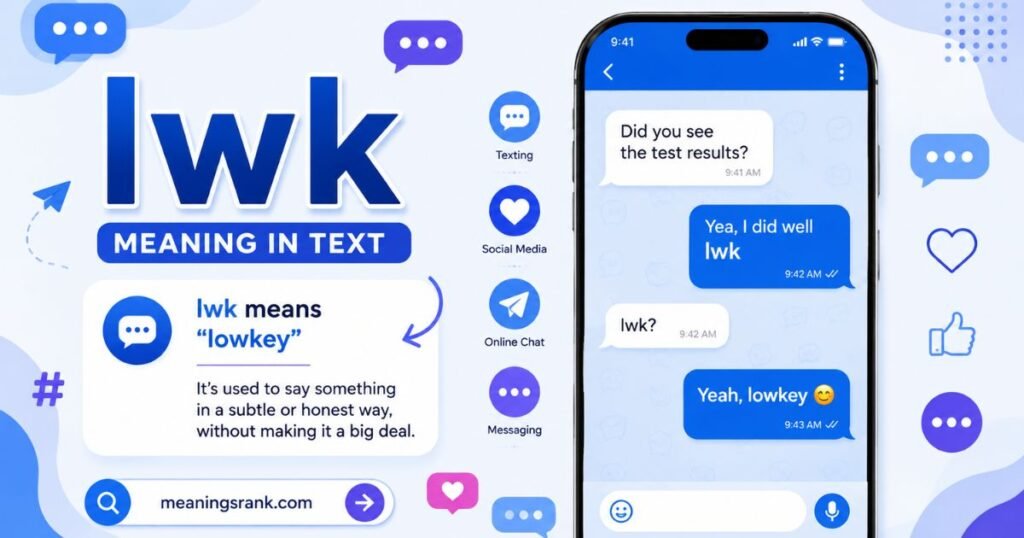
Think of it as the opposite of shouting something from the rooftops. It’s more like leaning in and saying it quietly.
Here’s a simple example:
Person A: “Do you like the new album?”
Person B: “LWK it’s pretty good.”
Person B isn’t hyping the album up. They’re admitting they like it, but in a low-pressure, casual way. That’s the whole point of LWK it keeps things chill.
This abbreviation is common because not every opinion needs to sound bold or dramatic. Sometimes people want to admit something small without making it a big statement.
A few quick things to know about how LWK behaves in a sentence:
- It usually comes before the main statement
- It can soften both positive and negative feelings
- It’s casual and works best in informal chats
- It doesn’t carry sarcasm on its own
For example, “LWK I’m nervous about tomorrow” feels more personal and quiet than just saying “I’m nervous about tomorrow.” The LWK adds a layer of hesitation, almost like the person is admitting it under their breath.
Once you get used to spotting this pattern, LWK becomes easy to understand in almost any type of message.
What Does LWK Stand For?
LWK stands for “Low Key.” It’s a shortened version of a phrase that’s been part of everyday English for a long time, long before texting even existed.
Originally, “low key” described something done quietly or without much attention, like a low-key party or a low-key celebration. Over time, internet slang borrowed this phrase and turned it into an abbreviation people could type fast.
A few notes on where LWK comes from and how it spread:
- It grew popular through texting and social media captions
- It became common because typing “LWK” is faster than “low key”
- It’s closely related to “highkey,” which means the opposite being obvious or intense about something
Read More: OTP Meaning in Text: What It Means in Texting, Social Media & Online Chats (2026 Guide)
You’ll often see LWK written in lowercase (“lwk”) since capitalization rarely matters in casual texting. Both versions carry the exact same meaning.
Sometimes people spell out “low key” instead of using the abbreviation, especially in captions where they want the phrase to stand out more. Both forms are used interchangeably, and neither one is considered more “correct” than the other.
LWK is also sometimes combined with other slang, like “lwk ngl” (low key, not gonna lie) or “lwk kinda” (low key kind of). These combinations don’t change what LWK means they just add extra texture to how someone phrases their thought.
Because “low key” already existed in regular English, LWK feels natural and easy to understand once someone knows what the letters stand for. It doesn’t require much explanation beyond that.
How Is LWK Used in Text Messages and Social Media?
LWK almost always shows up at the beginning of a sentence, right before the feeling or opinion being shared. This makes it simple to recognize once you know the pattern.
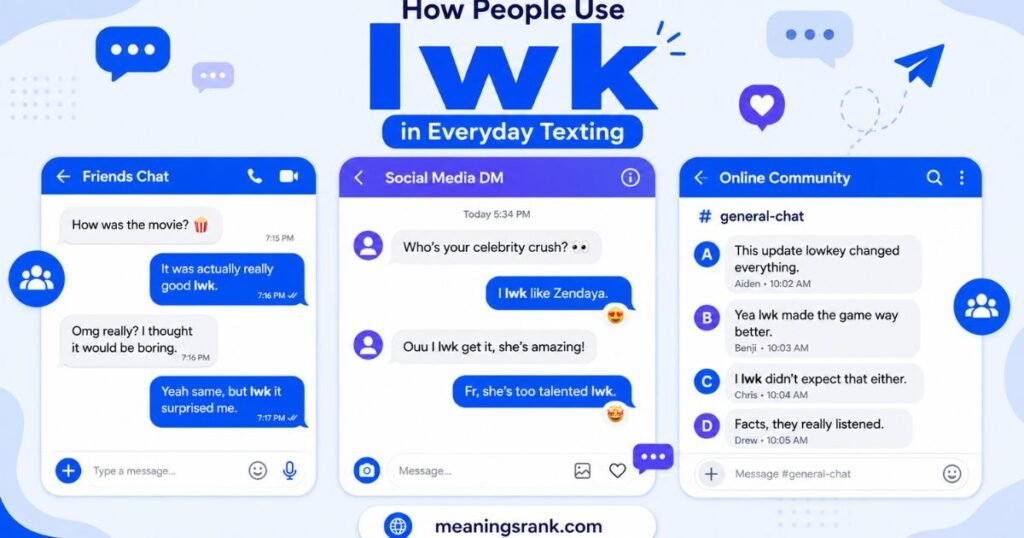
Typical Structure:
“LWK + [opinion or feeling]”
Example: “LWK this song is stuck in my head.”
Here’s how LWK looks across different platforms:
Text Messages:
“LWK I miss the old app design.”
WhatsApp:
“LWK this weather is kind of nice today ☀️”
Instagram Comments:
“LWK this is one of your best posts.”
Snapchat:
“lwk this filter is actually cute”
TikTok Comments:
“LWK this trend needs to end lol”
Gaming Chats:
“LWK we should’ve picked a different map.”
Discord Servers:
“LWK this update fixed a lot of bugs.”
Workplace Chats:
“LWK I think we should push the deadline back a bit.”
Across every platform, LWK does the same job: it softens a statement so it feels more relaxed and less forceful. In workplace chats, it can even help someone share a suggestion without sounding too pushy or overly confident.
On TikTok and Instagram, LWK often shows up in captions when someone wants to admit something casually, like enjoying a guilty pleasure show or liking a trend they claimed to hate.
Because LWK fits so naturally into short sentences, people use it constantly without even thinking about it, the same way they’d casually say “kinda” or “sorta” out loud.
LWK Examples in Real Conversations
Seeing LWK across different real-life situations makes its meaning even clearer. Below are realistic examples from everyday digital conversations.
Text Message:
Person A: “Are you excited for the trip?”
Person B: “LWK yeah, I can’t wait.”
WhatsApp Group Chat:
Person A: “Should we try the new restaurant?”
Person B: “LWK I’m down, I’ve heard good things.”
Read More: DW Meaning in Text: What It Means, How to Use It, and How to Reply (2026 Guide)
Instagram Comment:
“LWK your dog is the cutest thing I’ve seen today 🐾”
Snapchat Caption:
“lwk today was actually a good day”
TikTok Comment Section:
“LWK I’ve watched this video like five times now.”
Gaming Voice/Text Chat:
“LWK that last play was actually really smart.”
Discord Message:
“LWK I didn’t expect this update to be this good.”
Workplace Slack Message:
“LWK I think the new tool is easier to use than the old one.”
In every example, LWK adds a soft, honest tone to the sentence. It feels like someone quietly admitting a thought rather than announcing it with confidence.
Notice how LWK works just as well with excitement as it does with everyday observations. It doesn’t require a strong emotion behind it sometimes it’s just a casual way to share a small opinion without making it feel like a big deal.
This flexibility is exactly why LWK fits so easily into so many different types of chats, from gaming servers to work messages.
Is LWK Positive, Rude, or Flirty?
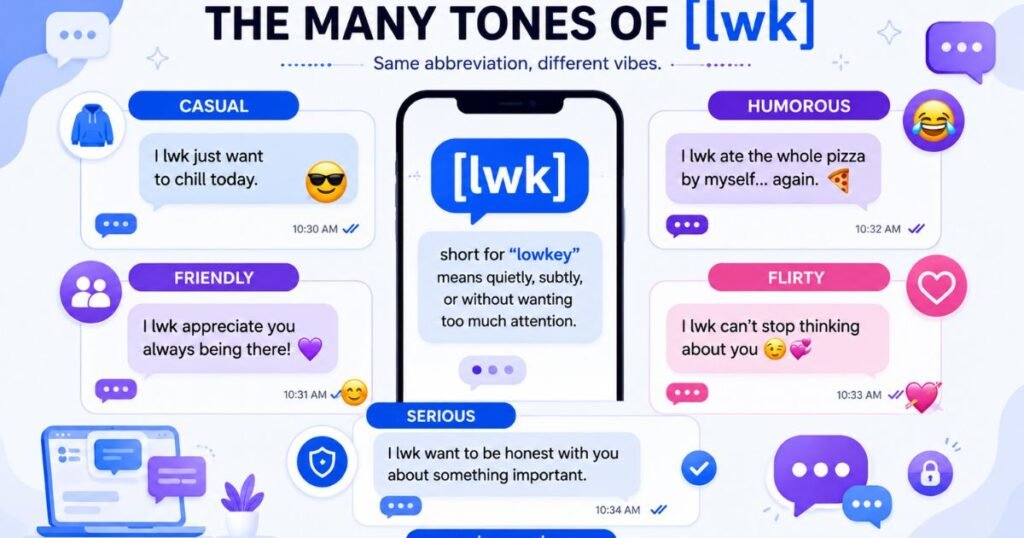
LWK is one of the more neutral and friendly texting abbreviations out there. It’s rarely rude and almost never offensive.
Why It’s Usually Positive or Neutral:
LWK softens a statement, which makes it feel more approachable. It rarely comes across as harsh, even when it introduces a slightly negative opinion.
Example: “LWK I didn’t love the ending” feels much gentler than “I hated the ending.”
Can LWK Ever Sound Dismissive?
In rare cases, yes, especially if it’s used to downplay something that actually matters a lot to the other person.
Example:
Person A: “I worked really hard on this project.”
Person B: “LWK it’s decent.”
Here, the tone feels underwhelming, not because of LWK itself, but because the compliment feels small compared to the effort mentioned. Context matters more than the abbreviation.
Is LWK Ever Flirty?
It actually shows up quite often in flirty texts, more than some other slang terms.
Example: “LWK you have really nice eyes 😳”
Here, LWK adds a shy, understated tone to the compliment, almost like the person is admitting something they weren’t planning to say out loud. This makes it a popular choice in flirty or slightly nervous conversations.
Quick Summary:
- In casual chats: friendly and easygoing
- In compliments: soft and genuine
- In criticism: tone depends on context, not the word itself
- In flirty texts: common and often feels shy or sincere
Because LWK naturally softens whatever follows it, it tends to keep conversations feeling relaxed, making it one of the more emotionally safe abbreviations in everyday texting.
How to Reply When Someone Says “LWK”
Replying to an LWK message is usually easy since it’s meant to keep things casual, not start a debate.
If You Agree:
“Lwk same, I feel that.” “Right? I was thinking that too.”
If You Want to Know More:
“Wait really? Why?” “Lwk explain, I need details.”
If It’s a Compliment:
“Aww thank you!” “Lwk that means a lot, thanks.”
If You Want to Keep It Light:
“Haha fair enough.”
Here’s a quick example from a gaming chat:
Person A: “LWK we should’ve rotated earlier.”
Person B: “Yeah true, my bad.”
Notice how Person B doesn’t overreact or argue. Since LWK already softens the original message, replies usually stay just as relaxed.
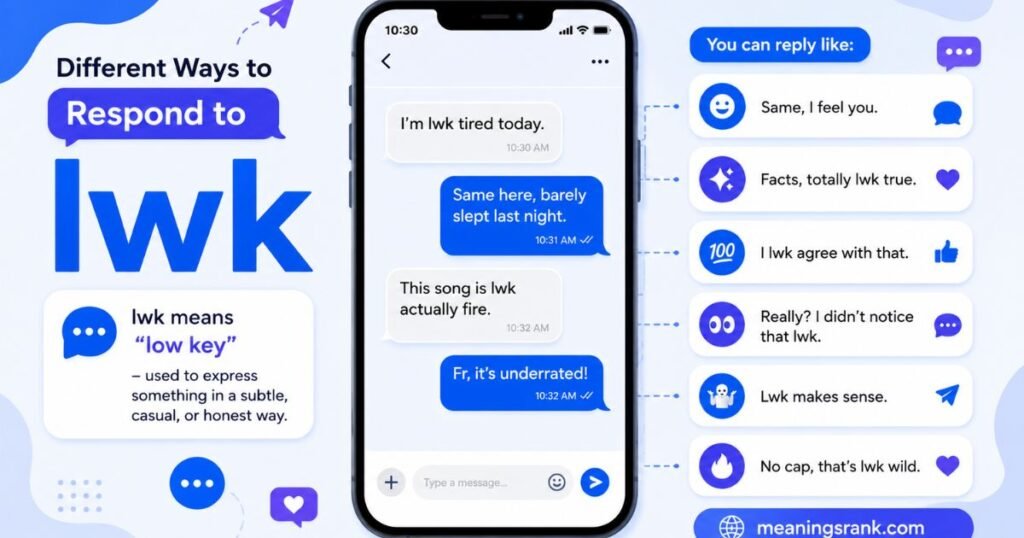
In flirty or personal conversations, replies often match the shy, honest tone that LWK brings into the message.
Example:
Person A: “LWK I had a really good time today.”
Person B: “Me too, lwk I didn’t want it to end.”
The key with LWK replies is matching energy. Since the term keeps things low-pressure, responses tend to stay casual and warm rather than overly serious, which helps keep the overall conversation feeling comfortable.
LWK vs Similar Texting Slang
LWK is often compared to a few similar slang terms. While they can feel alike, each one carries a slightly different tone.
| Term | Meaning | When to Use |
| LWK | Low Key | Sharing a quiet, casual opinion |
| HWK | High Key | Sharing an obvious, strong opinion |
| TBH | To Be Honest | Being direct or blunt |
| IMO | In My Opinion | Sharing a personal viewpoint neutrally |
| KINDA | Kind Of | Softening a statement slightly |
| NGL | Not Gonna Lie | Admitting something honestly |
LWK vs HWK (Highkey):
These two are almost opposites. LWK downplays a feeling, while HWK makes it obvious and strong.
Example: “LWK I like this song.” (quiet admission) “HWK I love this song.” (bold, obvious statement)
LWK vs TBH:
TBH usually introduces a more direct or blunt opinion, while LWK feels softer and more casual.
Example: “TBH this movie was boring.” (direct) “LWK this movie was kind of boring.” (soft)
LWK vs NGL:
Both admit something honestly, but NGL often feels like a small confession, while LWK feels more like a quiet, ongoing feeling.
Example: “NGL I forgot your birthday.” (one-time confession) “LWK I’ve liked this show for a while.” (ongoing feeling)
Knowing these small differences helps you choose the right slang depending on how strong or subtle you want your message to sound.
When Should You Avoid Using LWK?
While LWK is common in casual chats, there are moments when it’s better left out of a conversation.
In Formal Emails or Documents
LWK is casual internet slang, so it doesn’t fit well in professional writing where a clear, formal tone is expected.
During Serious or Emotional Conversations
If someone is sharing something important or emotional, adding LWK can accidentally make the moment feel smaller than it should.
When Giving Clear Instructions
LWK can add unnecessary softness to messages that need to be direct, like deadlines, warnings, or safety information.
With People Unfamiliar With Slang
Not everyone recognizes LWK, especially older relatives or new coworkers. In these cases, spelling out “low key” avoids confusion.
In Situations Requiring Honesty Without Softening
Sometimes a message needs to be taken seriously without any casual tone attached, like giving honest feedback on something important.
When Talking About Facts, Not Opinions
LWK works best with feelings or opinions. Using it with hard facts can accidentally make information seem uncertain when it isn’t.
Being aware of when to skip LWK helps keep your communication clear, especially in situations where tone really matters.
Frequently Asked Questions About LWK
What does LWK mean in a text message?
LWK means “low key.” It softens an opinion or feeling, making it sound casual instead of bold or dramatic.
What’s the opposite of LWK?
The opposite is HWK, short for “high key,” which means expressing something obviously and with more intensity.
Can LWK be used in flirty texts?
Yes, LWK often appears in flirty messages since it adds a shy, honest tone to compliments or feelings.
Is LWK appropriate for work chats?
It depends on the workplace. Casual teams may use it in chat apps, but formal emails should avoid it entirely.
Does LWK always mean something negative?
No, LWK works with both positive and negative feelings. It simply softens the tone, not the meaning itself.
Final Thoughts on the Meaning of LWK
At its core, the LWK meaning in text comes down to one simple idea it’s a soft, casual way to share a feeling or opinion without making it feel like a big statement. Whether it shows up in a text, an Instagram comment, or a gaming chat, its job stays the same.
We’ve covered what LWK stands for, how it’s used across different platforms, how it compares to similar slang like HWK and TBH, and when it’s smart to avoid using it.
The next time you see LWK in a message, you’ll know exactly what it means and how to respond naturally. Small abbreviations like this one make everyday conversations feel more relaxed, and understanding them makes your own texting even smoother.