
Seen “WLC” pop up in a text and wondered what your friend was trying to say? You’re not the only one. The WLC meaning in text usually points to one simple word: “Welcome.” People type it as a short, casual way to respond after someone says thanks. You’ll spot it in text messages, WhatsApp chats, Instagram comments, and even gaming lobbies. Because typing full words takes time, especially on a small phone keyboard, short forms like WLC have become second nature for many texters.
Knowing what it means, and how it changes slightly depending on where you see it, helps you keep up with fast-moving conversations without missing a beat. Let’s dig into everything WLC really covers.
What Does WLC Mean in Text & Chat?
In most everyday texting, WLC means “Welcome.” People type it as a quick, casual reply after someone says “thanks” or “thank you.”
It works the same way as saying “you’re welcome,” just shorter and faster to type. Since texting favors speed over full sentences, WLC fits perfectly into quick back-and-forth chats.
Here’s a simple example:
Person A: “Thanks for helping me move that furniture!”
Person B: “WLC, anytime.”
In this exchange, Person B isn’t introducing anything new. They’re simply acknowledging the thanks in the fastest way possible, without sounding cold or robotic.
A few quick things worth knowing about WLC in this context:
- It almost always follows a “thanks” or “thank you” message
- It’s casual, so it fits best in friendly or informal chats
- It rarely appears at the start of a conversation
- It carries a warm, friendly tone despite being so short
You’ll usually see it written in all caps (“WLC”) or lowercase (“wlc”), and capitalization doesn’t change the meaning at all.
Some people add a little extra warmth by pairing it with emojis or short phrases, like “wlc 😊” or “wlc anytime!” These additions don’t change the core meaning they just add personality to an already simple response.
Once you spot this pattern, WLC becomes easy to recognize no matter what platform or conversation you’re reading.
WLC Full Form: What Does WLC Stand For?
WLC most commonly stands for “Welcome.” It’s a shortened version of the word itself, not an acronym built from multiple separate words like some other texting slang.
This makes WLC a little different from terms like “IMO” or “BTW,” which stand for full phrases. Instead, WLC simply drops a few letters from “Welcome” to save time while typing.
A few quick facts about how this shorthand works:
- It removes vowels from the middle of the word, keeping the meaning recognizable
- This style of abbreviation is common in texting, similar to how “TXT” stands for “text”
- It’s mostly used as a reply, rarely as a greeting on its own
You may also come across WLC used to mean “We Love Christmas,” especially around the holiday season on social media captions or hashtags. This version shows up far less often than the “Welcome” meaning, but it’s worth knowing if you see WLC in a festive post.
Context almost always makes the meaning obvious. If WLC follows a “thanks” message, it means “Welcome.” If it appears in a holiday caption or hashtag, it likely refers to Christmas-related content.
Because texting relies so heavily on quick replies, shorthand like WLC helps conversations move faster without losing the warmth of a proper response. It’s a small typing shortcut that still gets the message across clearly.
Also Read: HBS Meaning in Text: What Does HBS Mean in Chat & Social Media? (2026)
Origin, History & First Known Use of WLC
WLC follows a texting pattern that became common in the early days of SMS messaging, back when phones had limited character counts and typing on small keypads was slow and clunky.
During this period, people started dropping vowels from common words to save time and effort. Words like “text” became “txt,” “please” became “plz,” and “welcome” became “wlc.” This habit carried over naturally into instant messaging apps and, eventually, social media platforms.
A few points about how WLC developed over time:
- It grew out of early 2000s texting culture, when character limits mattered
- It became more common as instant messaging apps like MSN Messenger and early chatrooms gained popularity
- Smartphones and predictive typing reduced the need for shortcuts, but many habits, including WLC, stuck around out of convenience and habit
Unlike newer slang that spreads through TikTok trends or viral memes, WLC didn’t come from a single event or moment. It developed gradually, shaped by simple typing convenience rather than internet culture trends.
This is part of why WLC feels so universal. It’s used across many age groups, largely because its use predates most modern social media slang. Even people who don’t follow current internet trends often recognize WLC instantly, since it mirrors a habit many texters picked up decades ago.
Today, WLC remains a small but steady part of digital communication, proving that not all slang needs a viral origin story to stay relevant.
How People Use WLC in Daily Conversations
WLC almost always follows a “thank you” message. Its placement is predictable, which makes it easy to recognize the moment you see it.
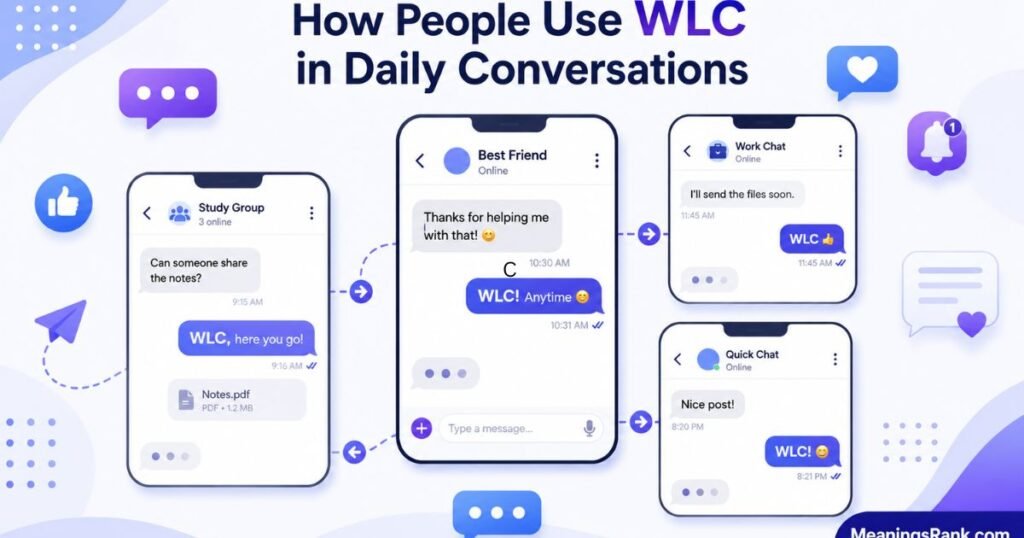
Typical Structure:
“[Thanks message]” → “WLC”
Example: Person A: “Thanks for covering my shift today!”
Person B: “WLC, no problem at all.”
Here’s how WLC typically shows up in daily conversations:
Text Messages:
“Thanks for the ride home!” “WLC, see you tomorrow.”
WhatsApp:
“Thank you so much for the birthday gift! 🎉” “WLC! Happy birthday again.”
Gaming Chats:
“Thanks for reviving me back there.” “wlc, watch your back next time.”
Workplace Chats:
“Thanks for sending the file so quickly.” “WLC, let me know if you need anything else.”
Notice how WLC keeps its meaning consistent no matter the setting. Whether it’s a casual chat between friends or a quick exchange at work, WLC functions as a fast, friendly acknowledgment.
In group chats, WLC often appears multiple times in a row when several people say thanks for the same thing, like after someone shares helpful information or organizes an event.
Because it’s so short, WLC works well in fast-paced conversations where typing full replies would slow things down. It keeps the tone warm without requiring much effort, which is exactly why it has remained a steady part of everyday texting habits.
WLC Meaning Across WhatsApp, Instagram, TikTok & Snapchat
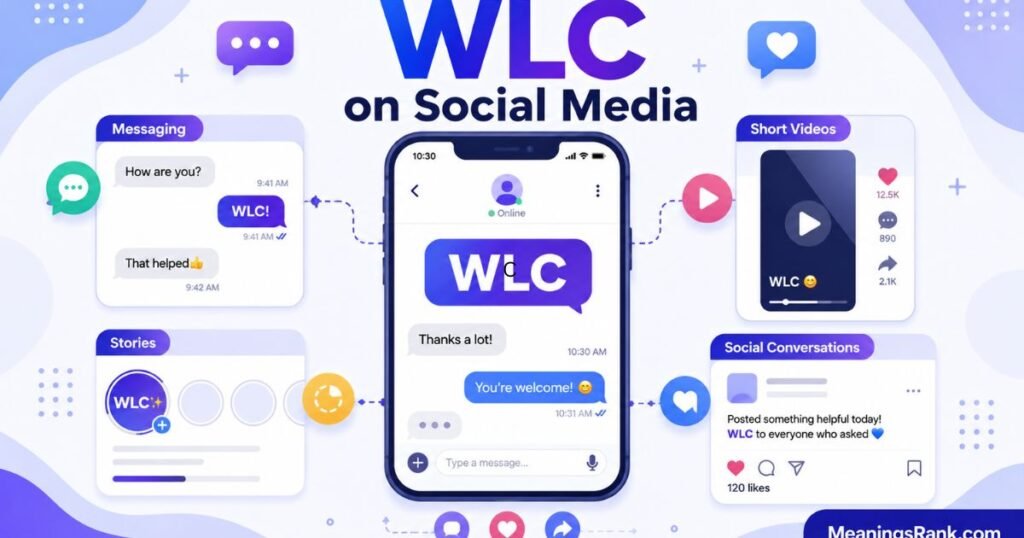
While WLC keeps the same core meaning everywhere, the way it’s used can shift slightly depending on the platform.
WhatsApp:
WLC appears often in personal and group chats, usually right after someone expresses thanks for help, advice, or a favor.
Example: “Thanks for the recipe!” → “WLC, let me know how it turns out.”
Instagram Comments:
WLC shows up under posts when someone thanks a creator for content, tips, or shoutouts.
Example: “Thanks for featuring my art! 🎨” → “WLC, your work deserved it.”
TikTok Comments:
WLC is less common here but still appears, especially when creators reply to comments thanking them for tutorials or advice.
Example: “Thanks for this tutorial, it helped a lot!” → “WLC, glad it worked for you.”
Snapchat:
WLC tends to appear in quick, casual captions or replies, often paired with emojis for extra warmth.
Example: “thanks for the snap 😂” → “wlc lol”
Here’s a quick comparison of how WLC tends to appear across platforms:
| Platform | Common Usage | Typical Tone |
| Personal thank-you replies | Warm, casual | |
| Comment replies to fans/followers | Friendly, appreciative | |
| TikTok | Creator responses in comments | Casual, quick |
| Snapchat | Short captions or replies | Playful, informal |
Across every platform, WLC keeps its core purpose intact: acknowledging thanks quickly and warmly. The setting might shift the tone slightly, but the meaning stays reliable, which is part of why it’s so easy to understand no matter where you encounter it.
Different Meanings of WLC in Other Fields
Outside of texting and social media, WLC can stand for a few different things depending on the industry or context. It’s worth knowing these to avoid mixing them up.
Military & Training:
In some military contexts, WLC refers to “Warrior Leader Course,” a training program for developing leadership skills among service members.
Also Read: TSK Meaning in Text: What Does TSK Mean in Chat & Social Media? (2026)
Wildlife & Conservation:
WLC sometimes appears as shorthand for “Wildlife Conservation” in environmental or nonprofit contexts, especially in organization names or campaign hashtags.
Finance & Business:
In rare cases, WLC may appear in financial shorthand or company names, though this usage is far less common and usually specific to certain industries or brands.
Holiday Hashtags:
As mentioned earlier, WLC can also mean “We Love Christmas” during the holiday season, especially in captions or trending hashtags.
Here’s a quick breakdown:
| Context | WLC Meaning |
| Texting & Chat | Welcome |
| Military Training | Warrior Leader Course |
| Environmental Groups | Wildlife Conservation |
| Holiday Social Posts | We Love Christmas |
Context is everything here. If you see WLC in a casual text after someone says thanks, it almost certainly means “Welcome.” If it shows up in a professional, military, or nonprofit setting, the meaning likely shifts entirely.
This is a good reminder that abbreviations rarely have just one fixed meaning. Reading the surrounding conversation or content helps you figure out which version applies, especially when WLC pops up somewhere unexpected.
Common Confusions, Mistakes & Wrong Interpretations
Even though WLC seems simple, a few common mix-ups happen, especially among people less familiar with texting shorthand.
Mistake 1: Confusing WLC with “Welcome” as a Greeting
WLC almost always functions as a reply to thanks, not as a greeting when meeting someone for the first time or welcoming them to a group.
Mistake 2: Assuming WLC Always Means the Same Thing
As covered earlier, WLC can shift meaning outside casual texting, especially in military, environmental, or holiday-related contexts.
Mistake 3: Thinking WLC Sounds Cold or Dismissive
Because it’s so short, some people assume WLC feels less sincere than typing out “you’re welcome.” In most casual conversations, though, it’s read as friendly and normal, not distant.
Mistake 4: Using WLC in Very Formal Writing
WLC is casual shorthand. Using it in a professional email or formal document can come across as too relaxed for the setting.
Mistake 5: Expecting WLC in Every “Thanks” Reply
Not everyone uses WLC, even in casual chats. Some people prefer “np” (no problem), “anytime,” or simply an emoji instead.
Mistake 6: Misreading WLC as an Unrelated Acronym
Because it’s less common than terms like LOL or BRB, some readers unfamiliar with texting slang might misread WLC entirely or overlook its meaning.
Clearing up these small misunderstandings helps prevent confusion, especially in group chats or online spaces where people from different backgrounds and age groups are chatting together.
Similar Terms, Alternatives & Related Slang
WLC isn’t the only shorthand people use to reply to thanks. Several similar terms serve the same basic function with slightly different tones.
| Term | Meaning | When to Use |
| WLC | Welcome | Casual, quick reply to thanks |
| NP | No Problem | Casual, implies it wasn’t a hassle |
| YW | You’re Welcome | Slightly more formal than WLC |
| Anytime | Anytime | Warm, implies willingness to help again |
| Ofc | Of Course | Casual, implies helping was obvious or expected |
WLC vs YW:
Both mean the same thing, but YW keeps closer to the full phrase “you’re welcome,” while WLC feels more like typing shorthand.
Example: “YW, glad I could help.” (slightly more polished) “WLC, glad I could help.” (more casual)
WLC vs NP:
NP shifts the focus slightly, suggesting that helping wasn’t a big deal, while WLC focuses purely on acknowledging thanks.
Example: “NP, it was easy.” (downplays effort) “WLC, happy to help.” (acknowledges thanks warmly)
Knowing these alternatives helps you understand the small tone differences between similar replies, especially in casual conversations where word choice can subtly shift how a message feels.
Examples of WLC in Real Chat Situations
Seeing WLC across different real-life situations makes its everyday use even clearer.
Text Message:
Person A: “Thanks for picking up my prescription!”
Person B: “WLC, hope you feel better soon.”
WhatsApp Group Chat:
Person A: “Thanks for organizing the trip, everyone loved it!”
Person B: “WLC! It was fun planning it.”
Instagram Comment:
“Thanks for the shoutout! 🙏” → “WLC, you deserved it!”
Snapchat:
“thanks for the notes from class” → “wlc, hope they help!”
Gaming Chat:
“Thanks for carrying us that match.” “wlc, gg well played.”
Discord Message:
“Thanks for explaining that so clearly!” “WLC, happy to help anytime.”
Workplace Slack Message:
“Thanks for reviewing my draft so quickly.” “WLC, let me know if you need more edits.”
Across all these examples, WLC keeps its function steady: a quick, warm way to acknowledge thanks without slowing down the conversation. Whether the setting is playful, professional, or somewhere in between, WLC adapts naturally without feeling out of place.
How to Reply When Someone Says WLC
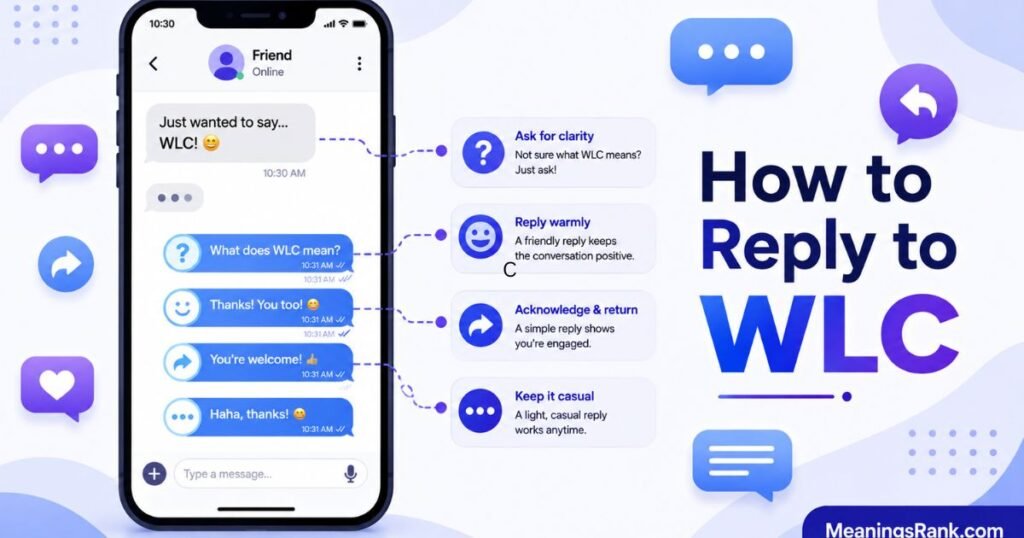
Since WLC usually wraps up a “thanks” exchange, replying to it is simple and often optional.
If You Want to Keep the Conversation Going:
“WLC! So, what are you up to today?”
If You Just Want to Acknowledge It:
“😊” or “👍”
If You Want to Add Warmth:
“WLC, anytime you need help!”
If the Conversation Is Naturally Ending:
Often, no reply is needed at all. WLC frequently signals the natural end of a short exchange.
Here’s a quick example from a casual chat:
Person A: “Thanks again for today!”
Person B: “WLC, it was fun.”
Person A: “😊”
Notice how the conversation wraps up naturally without needing extra replies. WLC often marks a soft ending point in a conversation, especially in casual texting.
In workplace chats, a short acknowledgment is still polite, even if it’s brief.
Example:
Person A: “WLC, let me know if anything else comes up.”
Person B: “Will do, thanks again!”
The key takeaway here is that WLC rarely requires a detailed response. A simple emoji, short reply, or even silence is often perfectly acceptable, since the conversation has usually reached its natural conclusion.
Also Read: WSG Meaning in Text: What It Means in Chat, Snapchat & Social Media (2026 Guide)
Is WLC Still Popular? Trends & Online Usage
WLC remains a steady, if quiet, part of everyday texting. It doesn’t trend the way newer slang does, but it hasn’t disappeared either.
A few observations about its current usage:
- It’s more common in personal texting and WhatsApp than on trend-driven platforms like TikTok
- Predictive typing and autocorrect have reduced the need for shortcuts like WLC, but many people still use it out of habit
- It’s especially common among users who grew up during the early SMS texting era, though younger users still recognize and use it casually
Compared to newer slang that spreads quickly through viral trends, WLC has stayed consistent because its purpose is simple and functional. It doesn’t rely on internet culture moments to stay relevant.
That said, alternatives like “np,” “yw,” and simple emoji reactions have become increasingly common, especially among younger texters who favor even shorter responses.
Here’s a simple comparison of usage patterns:
| Term | Popularity Trend |
| WLC | Steady, slightly old-school |
| NP | Very common, casual |
| YW | Common, slightly more formal |
| Emoji only | Increasingly popular, fastest option |
While WLC may not be the flashiest texting abbreviation, it remains reliable and widely understood, making it a safe choice whenever you want a quick, friendly reply to thanks.
FAQs About WLC Meaning in Text
What does WLC mean in a text message?
WLC means “Welcome,” used as a short reply after someone says thanks. It’s casual, friendly, and common across texting and social media platforms.
Is WLC the same as YW?
Yes, both mean “you’re welcome.” WLC feels more like typing shorthand, while YW stays closer to the full phrase and sounds slightly more polished.
Can WLC mean something other than “Welcome”?
Yes, WLC can mean “Warrior Leader Course,” “Wildlife Conservation,” or “We Love Christmas,” depending on the context outside casual texting.
Is WLC appropriate for workplace chats?
Yes, especially in casual chat tools like Slack. However, formal emails should use “you’re welcome” instead for a more professional tone.
Do people still use WLC in 2026?
Yes, though less often than shorter options like “np” or emoji replies. WLC remains common, especially among users familiar with earlier texting habits.
Conclusion
At its core, the WLC meaning in text comes down to one friendly idea: acknowledging thanks quickly and warmly. Whether you’re texting a friend, replying on Instagram, or chatting during a workplace project, WLC keeps conversations moving without losing that personal touch.
We’ve covered what WLC stands for, where it came from, how it shows up across different platforms, and how it compares to similar replies like YW and NP. We also looked at its lesser-known meanings outside casual texting, from military training to holiday hashtags.
The next time WLC shows up in your messages, you’ll know exactly what it means and how naturally it fits into everyday digital conversations. Small shortcuts like this one prove that good communication doesn’t always need full sentences to feel genuine.