
Seen “SFS” pop up in your DMs or under an Instagram post and wondered what it actually means? You’re not alone. The SFS meaning changes slightly depending on where you spot it, but it almost always has something to do with mutual support think shoutouts, follows, or sharing content back and forth. It shows up most on Instagram, Snapchat, TikTok, and even in gaming or Discord chats.
Since this short acronym carries a few different meanings depending on the app, knowing the context helps you avoid replying the wrong way. This guide breaks down every version of SFS you’ll actually run into online, with real examples so you never have to guess again.
💬 What Does “SFS” Mean?
SFS most commonly stands for “Shoutout For Shoutout.” It’s a request or agreement between two social media users to promote each other’s accounts, posts, or pages.
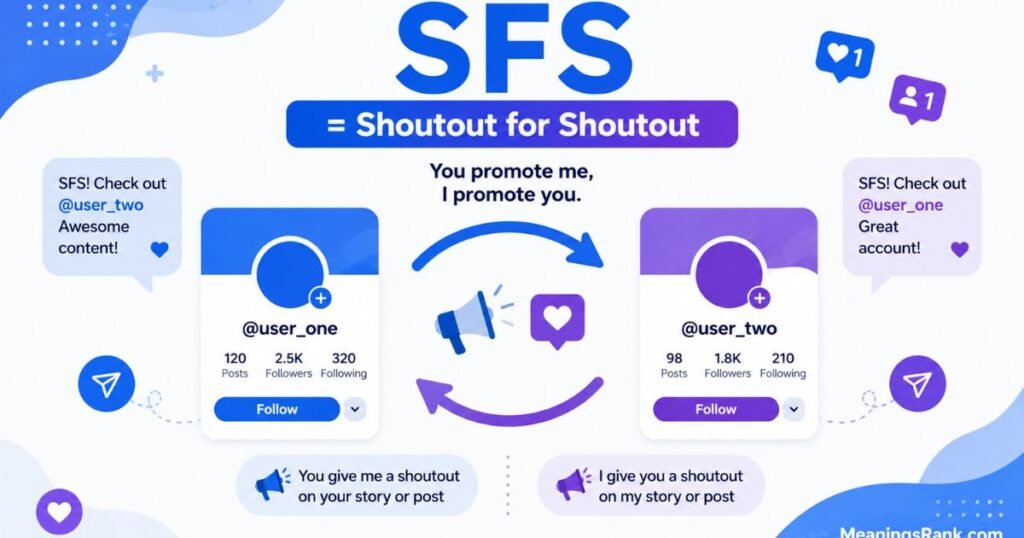
The idea is simple: you mention me, I mention you. Both people benefit by reaching each other’s followers.
Here’s a basic example:
Person A: “Doing SFS today, comment below!”
Person B: “Count me in 🙋♀️”
In this exchange, Person A is offering to shout out anyone who shouts them out in return. Person B is agreeing to the trade.
SFS can also mean a few other things depending on the platform and context:
- Sad For Sure – used to react to disappointing news
- So F*ing Sad** – a stronger, more emotional reaction
- Screenshot – occasionally used in gaming or Discord chats
Most of the time, though, especially on Instagram and Snapchat, SFS refers to the shoutout exchange. That’s the version you’ll see the most, and it’s the one this guide focuses on primarily.
A few quick facts about how SFS functions:
- It’s mostly used by content creators, small businesses, and everyday users trying to grow their following
- It works as both a request (“Let’s do SFS”) and a confirmation (“SFS done, thanks!”)
- It’s almost always tied to some kind of exchange or trade
Once you know this core meaning, spotting SFS across different posts and comments becomes much easier.
🌐 SFS Meaning in Different Contexts
While “Shoutout For Shoutout” is the most common meaning, SFS shifts slightly depending on where and how it’s used. Context matters a lot here.
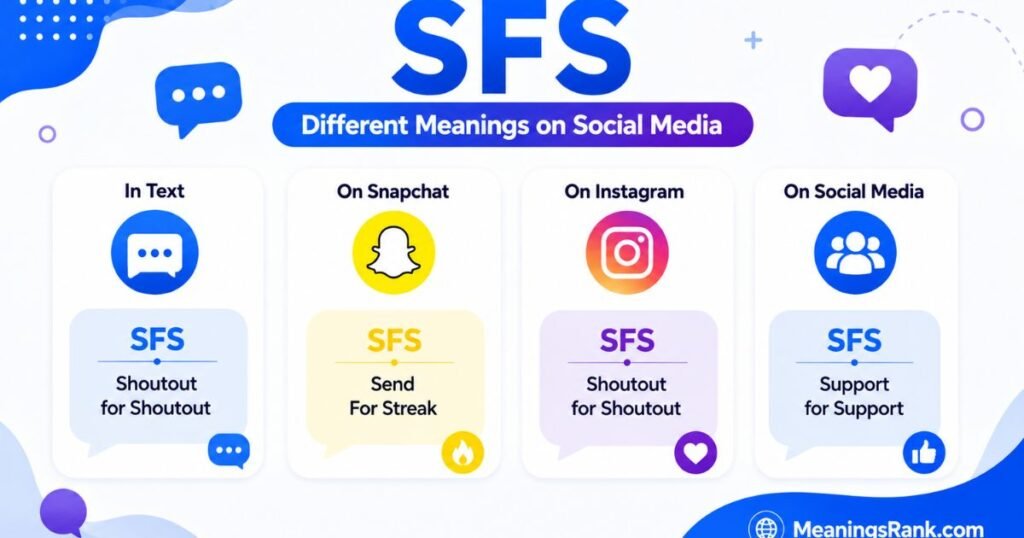
On Social Media (Instagram, Snapchat, TikTok):
SFS almost always means shoutout for shoutout. Creators use it to grow their audience by promoting each other.
Example: “SFS with anyone who likes this post!”
In Emotional Reactions:
SFS can mean “sad for sure” when replying to bad news, especially in texting or casual comment sections.
Example: Person A: “My flight got cancelled.” Person B: “SFS, that’s the worst.”
In Gaming or Discord:
SFS occasionally stands for “screenshot,” usually when someone wants proof of something in a game or chat.
Example: “SFS that clip, that was insane.”
In Business or Influencer Marketing:
Small business owners sometimes use SFS to build partnerships without paying for ads, exchanging visibility with other brands instead.
Example: “Looking for SFS with local coffee shops!”
Here’s a quick breakdown:
| Context | Meaning |
| Instagram/Snapchat/TikTok | Shoutout For Shoutout |
| Casual texting reactions | Sad For Sure |
| Gaming/Discord | Screenshot |
| Influencer marketing | Mutual promotion |
Because SFS carries multiple meanings, reading the surrounding message is key. If someone’s talking about growing followers, it’s almost certainly a shoutout request. If it follows sad news, it’s an emotional reaction instead.
This flexibility is part of why SFS has stuck around across so many different corners of the internet.
Also Read: What Does Charizarding Mean? Meaning, Slang & Examples
🕰️ Origin and Popularity of “SFS”
SFS grew out of early social media culture, back when Instagram and Twitter users first started trading shoutouts to grow their pages organically.
Before paid ads became common, creators relied heavily on community-driven growth. Shoutout exchanges were one of the easiest ways to reach new followers without spending money.
Here’s how SFS developed over time:
- Early 2010s:
Instagram users began posting “S4S” (shoutout for shoutout), which later evolved into “SFS.”
- Mid 2010s:
As Instagram grew, SFS became a common hashtag and comment request, especially among smaller accounts and meme pages.
- Late 2010s to now:
SFS expanded to Snapchat and TikTok, where creators use it the same way trading visibility for visibility.
The acronym stuck around because it solved a real problem. New accounts needed exposure, and SFS gave people an easy, free way to help each other grow.
Interestingly, the emotional meaning (“sad for sure”) developed separately, mostly through texting culture where quick reactions became popular. This version isn’t tied to marketing at all it’s simply a fast way to respond to disappointing news.
Today, SFS remains widely used, especially among:
- Small content creators and influencers
- Meme pages and fan accounts
- Local businesses building community partnerships
- Teens and young adults reacting casually in chats
Unlike some slang terms that fade quickly, SFS has stayed relevant because it serves a clear, ongoing purpose in social media growth. As long as creators keep building audiences organically, this acronym isn’t going anywhere.
🔗 Similar or Related Terms
SFS isn’t the only acronym tied to shoutouts and mutual promotion. A few related terms show up in similar situations.
| Term | Meaning | When to Use |
| SFS | Shoutout For Shoutout | Trading promotion between accounts |
| S4S | Shoutout For Shoutout (older version) | Same meaning as SFS, less common now |
| F4F | Follow For Follow | Trading follows instead of shoutouts |
| L4L | Like For Like | Trading likes on posts |
| C4C | Comment For Comment | Trading comments to boost engagement |
| DM4DM | Direct Message For Direct Message | Trading DMs, usually to build connections |
SFS vs F4F:
SFS focuses on shoutouts, meaning one account promotes another publicly. F4F is simpler it’s just about following each other back.
Example: “SFS with my last post!” (shoutout trade) “F4F, just follow and I’ll follow back!” (follow trade)
SFS vs L4L:
L4L only involves liking posts, while SFS usually includes an actual mention or repost, making it a bigger commitment.
SFS vs C4C:
C4C is about boosting engagement through comments, often used to help posts perform better in an app’s algorithm, while SFS focuses on audience growth.
Knowing these related terms helps you understand the wider world of social media growth slang, especially if you’re active in creator communities or trying to grow your own page.
🌐 Where Is SFS Commonly Used?
SFS shows up across several platforms, though its exact use can shift slightly depending on where you see it.
Instagram:
This is where SFS is most common. Creators post SFS requests in captions, stories, or comment sections to find shoutout partners.
Example: “SFS! Drop your page below 👇”
Snapchat:
SFS trades are common in Snapchat stories, especially among teens promoting each other’s accounts.
Example: “sfs today, dm me your snap”
TikTok:
While less common than Instagram, SFS still appears in comments, especially among smaller creators trying to grow together.
Example: “SFS? I’ll duet your next video.”
Discord:
Here, SFS sometimes refers to screenshots instead of shoutouts, especially in gaming servers.
Example: “SFS that error message so I can help.”
Gaming Chats:
Similar to Discord, gamers occasionally use SFS to ask for proof or a screenshot of gameplay.
Also Read: What Does WDYM Mean in Text? Meaning, Uses & Examples
Workplace Chats:
SFS rarely appears here, since it’s tied to social media growth or casual gaming slang, not professional communication.
Texting Between Friends:
This is where the emotional meaning shows up most, usually as a quick reaction to sad news.
Example: “My dog is sick.” → “SFS, hope he feels better soon.”
Quick summary of platform usage:
- Instagram: Shoutout trades (most common use)
- Snapchat: Shoutout trades among teens
- TikTok: Occasional shoutout requests
- Discord/Gaming: Sometimes means screenshot
- Texting: Sometimes means “sad for sure”
- Workplace: Rarely used at all
Because SFS carries different weight on different platforms, paying attention to where you see it makes understanding the message much easier.
💬 Examples of “SFS” in Conversations
Seeing SFS in action across different platforms makes its meaning even clearer. Here are realistic examples from everyday digital conversations.
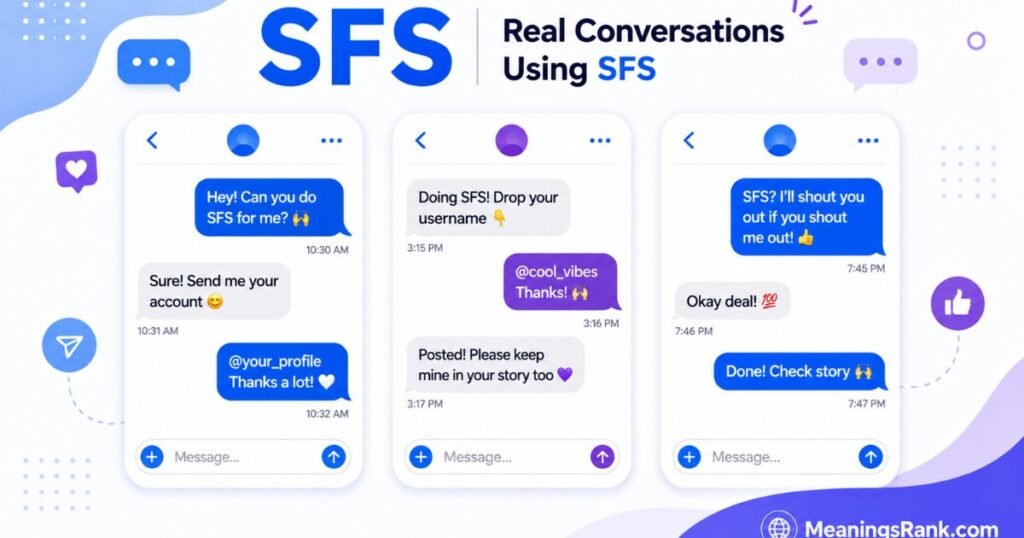
Instagram Comment:
“SFS with anyone who likes and comments below!”
Instagram DM:
Person A: “Wanna do SFS? I’ll post you in my story.”
Person B: “Yes! Send me your handle.”
Snapchat Story Caption:
“sfs 🔥 comment ur snap and I’ll add u”
TikTok Comment:
“SFS? Your content is amazing, let’s grow together.”
Discord Message (Gaming Server):
“SFS that bug, I need to report it to the mods.”
Texting Between Friends:
Person A: “I failed my driving test again.”
Person B: “SFS, that’s rough. You’ll get it next time though.”
WhatsApp Group Chat:
Person A: “Did you hear the concert got cancelled?”
Person B: “SFS, I was so excited for that one.”
Workplace Slack Message (Rare Case):
“Not really an SFS platform, but if you’re running a side hustle, feel free to share it in the community channel.”
Each example shows how SFS adapts to its surroundings. On Instagram and Snapchat, it’s almost always about growing an audience. In texting, it often shifts into a quick emotional reaction instead.
This dual meaning is exactly why context matters so much. The same three letters can mean something completely different depending on what platform you’re using and what the conversation is about.
⚠️ Common Mistakes or Misinterpretations
Even though SFS seems simple, a few mix-ups happen regularly, especially among people newer to social media slang.
Mistake 1:
Assuming SFS Always Means the Same Thing Many people assume SFS only means “shoutout for shoutout,” but the emotional meaning (“sad for sure”) is just as valid depending on the conversation.
Mistake 2:
Confusing SFS With F4F These aren’t identical. SFS usually involves an actual shoutout or mention, while F4F is simply about following each other, with no promotion involved.
Mistake 3:
Using SFS in Professional Settings Since SFS is tied to social media growth and casual slang, using it in workplace emails or formal messages can come across as confusing or out of place.
Mistake 4:
Expecting Instant Results From SFS Trades Some newer creators think SFS guarantees fast follower growth. In reality, results vary widely depending on both accounts’ engagement and audience overlap.
Mistake 5:
Not Following Through After Agreeing to SFS A common frustration in creator communities happens when one person shouts out the other, but the favor isn’t returned. This can damage trust in future SFS trades.
Mistake 6:
Misreading SFS as “Screenshot” Outside Gaming Contexts This meaning is rare outside gaming and Discord servers, so assuming it applies everywhere can lead to confusion in regular social media conversations.
Avoiding these common mix-ups helps you use SFS correctly and understand it faster when you see it in comments, DMs, or casual texts.
When to Use and When Not to Use SFS
Knowing when SFS fits naturally, and when it doesn’t, helps you use it effectively without confusing your audience.
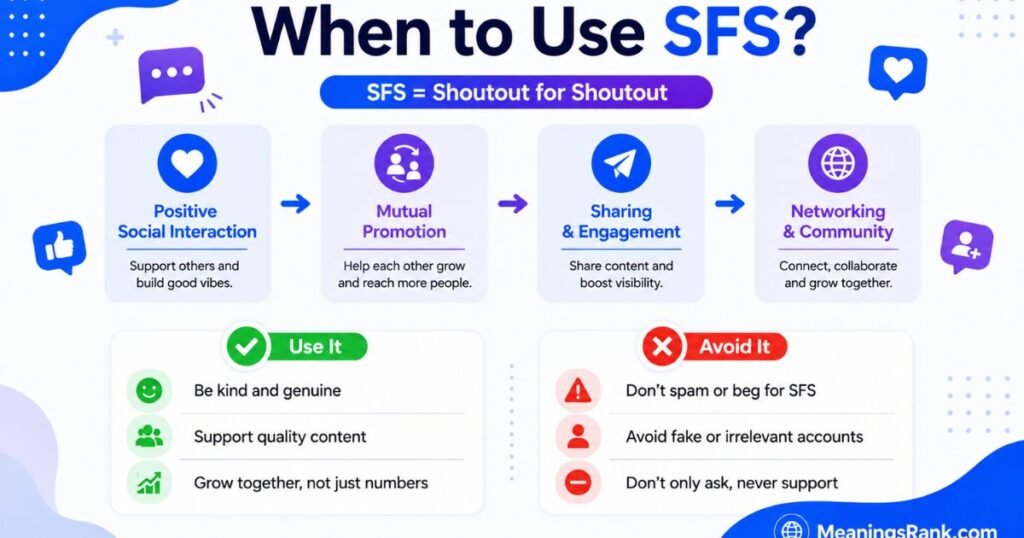
When to Use SFS:
- Growing a social media page organically through shoutout trades
- Reacting quickly and casually to disappointing news in texting
- Asking for a screenshot in gaming or Discord communities
- Building small business partnerships through mutual promotion
When to Avoid SFS:
- In professional emails or formal business communication
- When talking to someone unfamiliar with social media slang
- In situations requiring clear, direct language, like instructions or contracts
- When the emotional tone of a conversation calls for more thoughtful wording than a quick acronym
A Quick Tip for Creators:
Before agreeing to an SFS trade, check the other account’s engagement and audience size. A shoutout only helps if the other page has real, active followers.
A Quick Tip for Texting:
If you’re using SFS to react to sad news, make sure the relationship and context make a short reply appropriate. For serious situations, a fuller response often feels more genuine.
Here’s a simple reference table:
| Situation | Use SFS? |
| Instagram shoutout trade | Yes |
| Snapchat growth exchange | Yes |
| Reacting to a friend’s bad day | Yes, casually |
| Professional email | No |
| Serious emotional conversation | No |
| Gaming screenshot request | Yes, contextually |
Reading the setting and audience before using SFS keeps your communication clear and appropriate, no matter which meaning you’re going for.
❓ FAQ: SFS Meaning Explained
What does SFS mean on Instagram?
On Instagram, SFS means “Shoutout For Shoutout,” a common way creators trade promotion to grow their followers.
Does SFS always mean shoutout for shoutout?
No, SFS can also mean “sad for sure” in casual texting, depending on the context of the conversation.
Is SFS used in gaming chats too?
Yes, in gaming or Discord, SFS sometimes means “screenshot,” especially when asking for proof.
Is SFS the same as F4F?
No, SFS involves an actual shoutout, while F4F simply means trading follows with no promotion involved.
Can businesses use SFS for marketing?
Yes, many small businesses use SFS to build partnerships and reach new audiences without paid advertising.
🏁 Conclusion
The SFS meaning really depends on where you spot it, but most of the time, it’s about mutual support, whether that’s shoutouts on Instagram, follower growth on Snapchat, or a quick emotional reaction in a text thread. We’ve covered its most common use as “Shoutout For Shoutout,” its emotional meaning as “sad for sure,” and its occasional gaming use as “screenshot.”
We also looked at where SFS shows up most, how it compares to similar terms like F4F and L4L, and when it’s smart to use it versus when to skip it altogether.
Next time SFS shows up in your comments or messages, you’ll know exactly which meaning fits. Small acronyms like this one keep online conversations quick and simple, but understanding them fully makes you a much sharper digital communicator.