
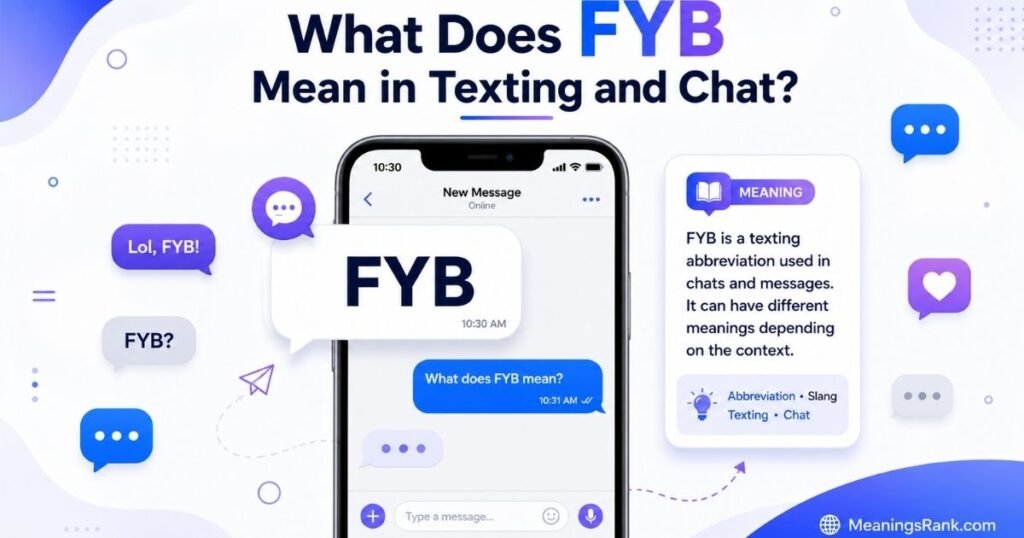
Seen “FYB” pop up in a text and wondered what your friend was really trying to say? In most casual texting and social media chats, the FYB meaning in text is “Forget You, Bro.” It’s a lighter, more toned-down way to brush someone off or show mild annoyance without sounding harsh.
You’ll spot it in text messages, group chats, gaming lobbies, and comment sections, usually when someone’s teasing a friend or reacting to something mildly annoying. Because it sounds a lot like other rougher acronyms, knowing exactly what FYB means here helps you read the tone correctly and respond the right way. Here’s everything you need to know.
FYB – Quick Meaning
FYB stands for “Forget You, Bro.” It’s a casual, softened way to dismiss someone or push back on something they said, usually between friends.
Quick breakdown:
- Full phrase: Forget You, Bro
- Tone: Light, joking, mildly annoyed
- Common users: Friends, gamers, group chat regulars
- Seriousness level: Low rarely meant as a real insult
Think of it as the texting version of rolling your eyes at a friend. It’s brushing someone off, but in a way that stays friendly rather than hostile.
Example: “You lost us the game again.” “FYB, it wasn’t even my fault.”
Here, FYB isn’t a real attack. It’s a quick, joking way to push back without starting an actual argument. That tone is what makes this version of FYB so different from harsher texting acronyms that look similar on the surface.
Keep this quick meaning in mind as you go through the rest of this guide, since every section builds on this same idea FYB as a mild, friendly brush-off.
What Does FYB Mean in Texting and Chat?
In everyday texting, FYB works as a casual way to say “forget you” to someone, almost always aimed at a friend rather than a stranger. Adding “bro” softens it even further, keeping the tone playful instead of genuinely angry.
Example: “You’re just mad I won.” “FYB, rematch right now.”
In this exchange, FYB doesn’t end the conversation on a sour note. It actually keeps things going, almost like a challenge or a joke between friends.
This is one of the biggest things people misunderstand about FYB. It’s not usually meant to shut someone down. It’s meant to react quickly, often with a bit of humor mixed in.
A few quick patterns to notice:
- FYB usually follows a joke, tease, or minor complaint
- It’s rarely used with someone you don’t know well
- It fits naturally into fast-paced group chats and gaming lobbies
- It almost never appears in serious or emotional conversations
Because “bro” is baked right into the phrase, FYB carries a built-in friendliness that harsher acronyms don’t have. It signals annoyance, sure, but it also signals that the relationship is still fine.
That’s really the core of understanding FYB in texting: it’s a small, quick reaction, not a big statement.
Where Does FYB Come From? Origin & Background
FYB, as “Forget You, Bro,” grew out of the same texting culture that shortened plenty of other everyday phrases. People needed a fast way to type casual pushback without spelling out a full sentence every time.
The word “bro” plays a big role here. It’s been part of casual slang for decades, especially in group chats, gaming communities, and sports culture, where friends use it constantly when talking to each other.
Combining “forget you” with “bro” created a version of dismissal that feels light rather than serious. It fits the same pattern as other softened phrases people use to avoid sounding too harsh in text.
A few things that shaped how FYB caught on:
- Gaming culture:
Friends often type quick reactions during matches, and FYB fits perfectly into that fast back-and-forth
- Group chat habits:
Short acronyms save time, especially during busy, joke-heavy conversations
- Sports and competitive banter:
“Bro” culture already leaned toward trash talk that stays friendly
- General texting shorthand:
Once one version of an acronym catches on, similar softened versions tend to follow
Because this phrase leans so heavily on friendly slang like “bro,” it naturally spread through casual, close-knit conversations rather than formal or professional ones. That’s also why it still feels lighthearted today, even when it’s technically brushing someone off.
Also Read: FLM Meaning in Text: The Ultimate Guide to What FLM Means
How Is FYB Used in Conversations?
FYB usually shows up as a quick reply, right after someone gets teased, challenged, or lightly called out. It rarely opens a conversation and almost always responds to something specific.
Typical Pattern:
“[Something said]” → “FYB, [quick comeback]”
Example: “You always pick the worst movies.” “FYB, my picks are elite.”
Here’s how it tends to show up across different platforms:
- Text Messages:
Used between close friends reacting to teasing or banter
- Group Chats:
Common when multiple friends are joking around at once
- Gaming Chats:
Frequently typed after losing a round or getting blamed for a mistake
- Discord Servers:
Shows up in casual friend servers, rarely in formal or public ones
- Instagram/Snapchat DMs:
Used in playful back-and-forth conversations between friends
FYB almost never shows up in workplace chats or formal messages, since the phrase leans so casual and depends on an existing friendly relationship to land the right way.
The key pattern here is reaction speed. FYB works best as a fast, in-the-moment reply, not something typed after long thought. That quick, snappy delivery is part of what keeps its tone light instead of genuinely hostile.
FYB Examples in Real Conversations
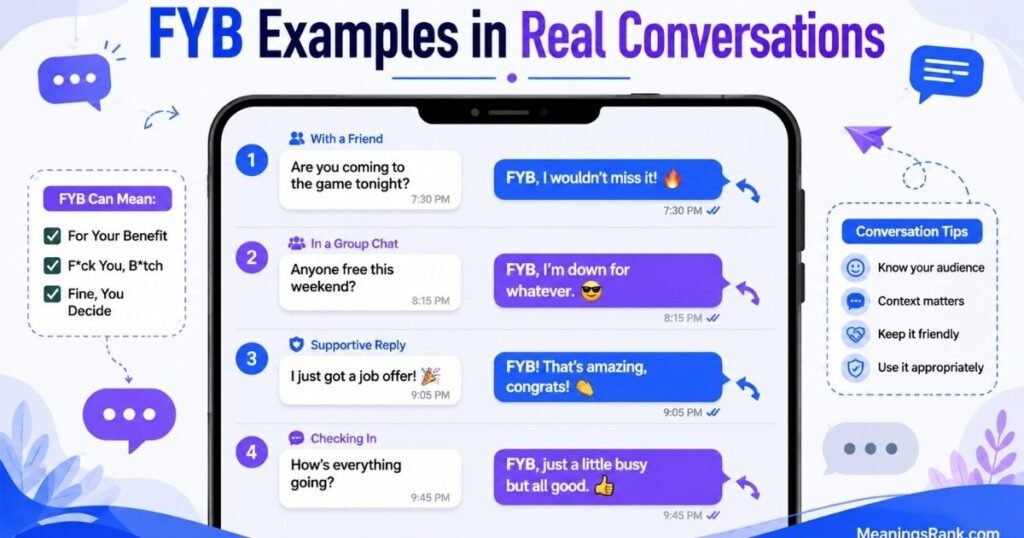
Text Message:
Person A: “You’re never on time.”
Person B: “FYB, traffic wasn’t my fault.”
Group Chat:
Person A: “Who ate the last slice?”
Person B: “FYB, it was clearly labeled mine 😂”
Gaming Chat:
Person A: “You threw that round.”
Person B: “FYB, the lag was insane.”
Discord Message:
“FYB, I’m still better at this game than all of you.”
Snapchat:
“lol FYB, I’m not apologizing for winning”
Instagram DM:
Person A: “You didn’t even watch the whole show before judging it.” Person B: “FYB, the first episode was enough.”
TikTok Comment:
“FYB, this trend was mine before it blew up 😂”
Workplace Chat:
FYB doesn’t really belong here. Even in casual work chats, this phrase reads as too informal and could come across as unprofessional, even as a joke.
Across every example, FYB keeps the same job: reacting quickly to a small tease or complaint, without turning the conversation into a real conflict.
Is FYB Rude, Offensive, or Just Playful?
As “Forget You, Bro,” this version of FYB sits firmly on the playful side, especially compared to harsher acronyms that look similar.
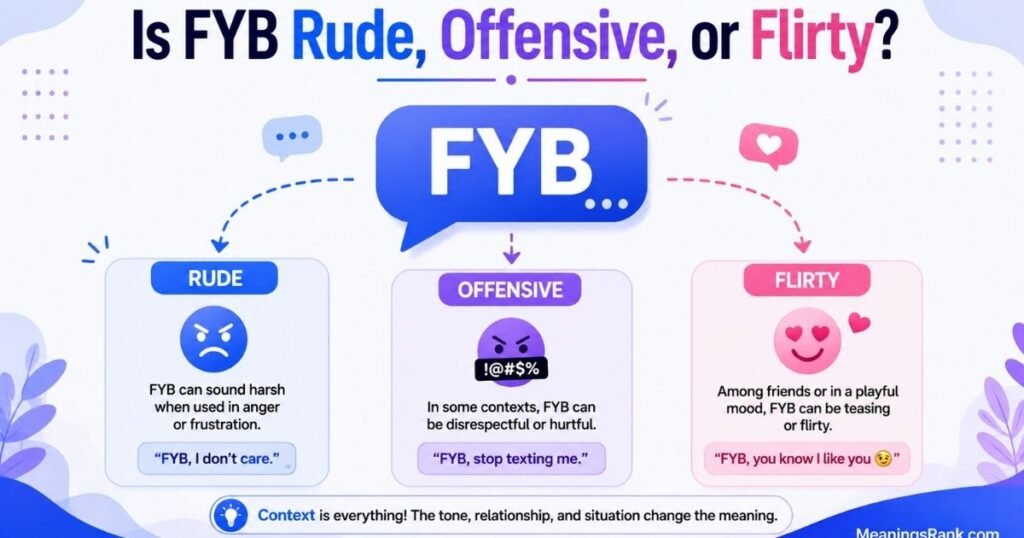
Why It Usually Feels Playful:
The word “bro” softens the whole phrase. It signals familiarity and comfort, which is why FYB works so well between close friends.
Example: “FYB, I’m still the better player” sounds like friendly trash talk, not a real insult.
When It Could Feel a Little Sharp:
Tone still depends on the relationship and situation. If FYB follows a genuinely hurtful comment, it might land differently than intended.
Example:
Person A: “You always mess everything up.”
Person B: “FYB.”
Here, the short reply might feel more defensive than playful, depending on how the conversation started.
Quick Summary:
| Situation | Tone |
| Friendly teasing or banter | Playful |
| Gaming trash talk | Light, competitive |
| Following a harsh comment | Can feel more defensive |
| Used with strangers | Confusing or oddly casual |
Overall, FYB as “Forget You, Bro” rarely aims to genuinely hurt anyone. It works best as a quick, joking comeback rather than a serious jab, especially among people who already talk this way regularly.
When Should You Use FYB?
Good Times to Use FYB:
- Responding to lighthearted teasing from a close friend
- Reacting to blame during a game or competitive activity
- Keeping a joke-filled group chat conversation going
- Showing mock annoyance without actually being upset
Example: “FYB, I’m winning the next round no matter what.”
FYB Works Best When:
- You already have a casual, joking relationship with the person
- The conversation has a playful tone already
- You want a quick, low-effort reaction that still feels personal
Because this phrase depends so heavily on tone and relationship, it works best in conversations that are already relaxed and familiar, rather than serious or sensitive ones.
Also Read: TT Meaning in Text: What Does TT Mean in Chat & Social Media? (2026)
When Should You NOT Use FYB?
Avoid FYB In These Situations:
- With People You Don’t Know Well:
The casual tone can come across as confusing or oddly familiar
- In Workplace or Professional Chats:
It’s far too informal, even for relaxed office culture
- During Serious Conversations:
If someone’s genuinely upset, FYB can feel dismissive instead of playful
- In Formal Writing:
This phrase has no place in emails, reports, or official messages
- With Older Relatives or Unfamiliar Audiences:
They may not recognize the phrase or its lighter tone
If there’s any chance the other person might take it the wrong way, it’s safer to skip FYB and reply with something clearer instead.
How to Respond When Someone Says FYB
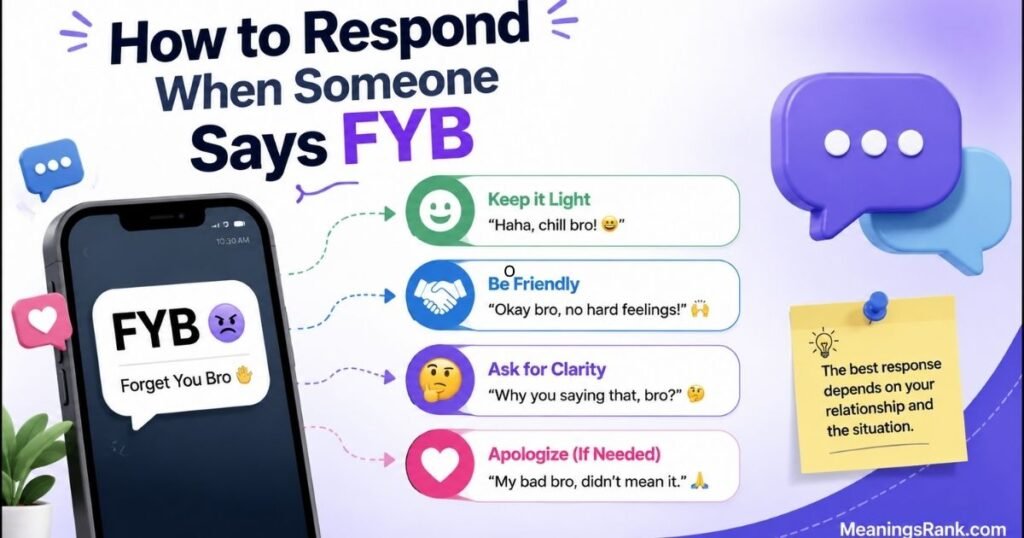
Since FYB is usually playful, replying in the same tone keeps the conversation smooth.
Match the Playful Energy:
“Lol okay tough guy.” “We’ll see about that.”
Keep Teasing Back:
“FYB yourself, you started it.”
If You Want to Ease the Tone:
“Haha fair enough.”
Example from a gaming chat:
Person A: “You threw that round.”
Person B: “FYB, the lag was insane.”
Person A: “Sure, blame the lag again 😂”
Notice how Person A keeps the joke going instead of taking it seriously. That’s usually the best way to respond to FYB, since it keeps the conversation light and avoids turning a joke into an actual disagreement.
Common Misunderstandings About FYB
Misunderstanding 1: FYB Always Means Something Harsh
Since FYB meaning looks similar to other rougher acronyms, people sometimes assume the worst. As “Forget You, Bro,” it’s usually much lighter than it looks.
Misunderstanding 2: FYB Is Meant to End a Conversation
In most cases, it actually keeps things going, especially in gaming chats and group texts full of back-and-forth banter.
Misunderstanding 3: Anyone Can Use FYB the Same Way
Tone depends heavily on the relationship. What sounds playful between close friends can feel confusing or blunt with someone you barely know.
Misunderstanding 4: FYB Is Appropriate Everywhere
Even though it’s casual, FYB still doesn’t fit workplace chats or formal writing, no matter how relaxed the setting feels.
Clearing up these small misunderstandings helps prevent awkward replies, especially when FYB shows up in a new or unfamiliar group chat.
FYB vs Similar Texting Expressions
| Term | Meaning | Tone |
| FYB | Forget You, Bro | Light, playful pushback |
| SMH | Shaking My Head | Mild disapproval |
| NVM | Never Mind | Neutral, dismissive |
| IDC | I Don’t Care | Casual, sometimes blunt |
| W/L | Win/Loss | Neutral reaction |
FYB vs SMH:
SMH shows disappointment without much humor, while FYB usually carries a joking, competitive edge, especially in gaming and group chats.
FYB vs NVM:
NVM cancels or drops a topic entirely, while FYB pushes back on something without necessarily ending the conversation.
FYB vs IDC:
IDC signals indifference, while FYB is more reactive and playful, often responding directly to teasing or blame.
Also Read: WSG Meaning in Text: What It Means in Chat, Snapchat & Social Media (2026 Guide)
FAQs About FYB Meaning
What does FYB meaning in a text message?
FYB usually means “Forget You, Bro,” a light, joking way to push back on teasing or blame between friends.
Is FYB rude to say to a friend?
Not usually. Among close friends, FYB is playful and often used during casual banter or gaming trash talk.
Can FYB be used with someone I just met?
It’s best to avoid this. FYB relies on familiarity, so it can feel confusing or oddly casual with new acquaintances.
Is FYB appropriate for work chats?
No, FYB is too informal for workplace communication, even in relaxed or casual company chat channels.
Does FYB always mean someone is upset?
Not really. It’s often used jokingly, especially in gaming and group chats, rather than showing real anger.
Conclusion
The FYB meaning in text, when it stands for “Forget You, Bro,” is all about light, friendly pushback rather than a real insult. It shows up most often in gaming chats, group texts, and casual banter between close friends who already know the tone won’t be taken seriously.
Throughout this guide, we’ve covered where this phrase likely comes from, how it’s used across different chats, and when it fits best. We’ve also looked at when to skip it entirely, especially in workplace or unfamiliar conversations.
The next time FYB meaning shows up in your messages, you’ll know it’s probably just a friend joking around, and you’ll know exactly how to joke right back.