
Seen “bou” pop up in a text or comment and wondered what it means? You’re definitely not alone. The Bou meaning in text is simple at its core it’s a short, affectionate way to refer to a romantic partner, similar to “babe” or “boo.” You’ll spot it in texting, Instagram captions, TikTok comments, and casual DMs, mostly among younger users.
It’s warm, playful, and used to show closeness. But it isn’t always romantic, which is exactly why it trips people up. Understanding when “bou” is affectionate and when it’s just friendly slang helps you read tone correctly and avoid awkward mix-ups. Let’s break it all down.
What Does “Bou” Mean in Text?
“Bou” is a casual, affectionate term most often used to describe a romantic partner a boyfriend, girlfriend, or someone you’re seeing. It works a lot like “babe,” “boo,” or “bae.”
Here’s a simple example:
Person A: “Who were you texting all night?”
Person B: “My bou, obviously.”
In this exchange, Person B is referring to their partner. The word instantly signals a romantic connection without needing to explain further.
“Bou” carries warmth and closeness. It’s rarely used for someone you’re not close to, which is part of what makes it feel personal rather than generic.
Some quick facts about how “bou” functions in texting:
- It’s almost always used to describe or address a romantic partner
- It can be used as a nickname directly to someone (“hey bou”)
- It sometimes gets used playfully between close friends
- It’s more common in spoken-style texting than formal writing
For example, someone might text “miss you bou” to a partner, or caption an Instagram photo “me and my bou.” Either way, the tone stays affectionate and casual.
Once you recognize this pattern, spotting “bou” in different conversations becomes much easier, even when the relationship isn’t stated outright.
“Bou” – Quick Meaning & Definition
For a fast answer: “Bou” is slang for a romantic partner, short for “boo” or derived from “beau,” meaning boyfriend or girlfriend.
Quick definition breakdown:
- Part of speech: Noun
- Primary meaning: Boyfriend or girlfriend
- Tone: Affectionate, casual, playful
- Common platforms: Texting, Instagram, TikTok, Snapchat
Think of “bou” as sitting in the same family as words like “boo,” “bae,” and “shorty.” They all serve a similar purpose a cute, informal way to refer to someone you’re romantically involved with.
Example: “That’s my bou right there 😍” (pointing out a partner) “Bou said he’s coming over later.” (referring to a partner in conversation)
This quick definition covers the most common use, but as you’ll see in the next sections, context can shift its meaning slightly depending on who’s using it and where.
Also Read: WYD Meaning in Text: The Complete Guide to WYD Slang, Uses & Examples 2026
Where Does “Bou” Come From?
“Bou” most likely comes from the French word “beau,” meaning handsome or boyfriend, which has been used in English slang for over a century in phrases like “having a beau.”
It also closely connects to “boo,” a well-known term of endearment that’s been popular in slang for decades, especially within hip-hop and R&B culture.
Over time, especially through social media and texting shorthand, “boo” got shortened and respelled as “bou” meaning partly as a stylistic choice, and partly because shorter spellings spread quickly online.
A few key points about its background:
- It shares roots with the older term “beau” (French origin)
- It overlaps heavily with “boo,” an already popular slang term
- It gained more visibility through TikTok and Instagram captions
- It spread quickly because of its short, catchy spelling
Unlike acronyms like “BTW” or “IMO,” “bou” isn’t an abbreviation of multiple words. It’s more of a stylized respelling, which is common in internet slang, similar to how “you” sometimes becomes “u” or “though” becomes “tho.”
This background explains why “bou” feels natural even to people who’ve never seen the exact spelling before it sounds almost identical to words already familiar in everyday slang.
How Is “Bou” Used in Text Messages and Chat?
“Bou” typically appears in two ways: as a direct nickname when talking to someone, or as a reference when talking about someone.
As a Direct Nickname:
“Hey bou, you up?”
As a Reference:
“My bou surprised me with flowers today.”
Here’s how it shows up across different platforms:
Text Messages:
“Goodnight bou, talk tomorrow 💕”
WhatsApp:
“Bou said he’ll call after work.”
Instagram Comments:
“That’s my bou in the photo 😍”
Snapchat:
“bou made dinner tonight, so sweet”
TikTok Comments:
“POV: your bou surprises you at work”
Gaming Chats:
“Can’t play tonight, hanging with my bou.”
Discord Servers:
Rarely used here, since Discord conversations tend to be less relationship-focused, though it can appear in casual chit-chat channels.
Workplace Chats:
Almost never appropriate here, since it’s a personal, romantic term unsuited for professional messaging.
Across these platforms, “bou” keeps the same warm, casual tone. It’s rarely used sarcastically or negatively, which makes it easy to recognize once you understand its meaning.
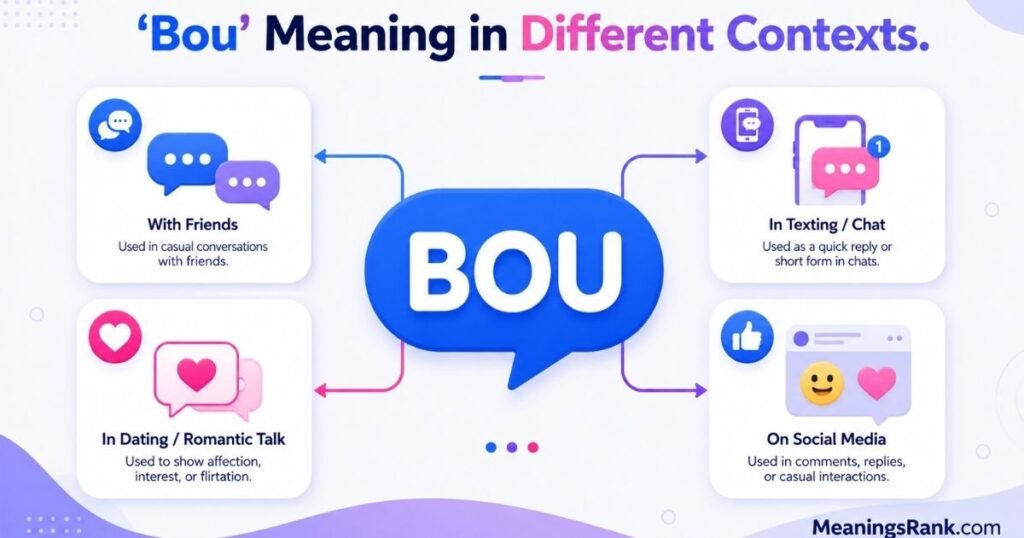
“Bou” Meaning in Different Contexts
Friends & Casual Chats
Among close friends, “bou” sometimes gets used jokingly, even without romantic meaning. It can playfully refer to a close friend as a way of teasing or showing affection.
Example: “Come on bou, let’s go get food” (said to a close friend, not a partner)
Romantic Conversations
This is where “bou” appears most naturally, referring directly to a boyfriend or girlfriend.
Example: “I love you, bou” or “Can’t wait to see my bou this weekend.”
Social Media
On Instagram and TikTok, “bou” often appears in captions showing off a relationship or tagging a partner in a cute post.
Example: “Date night with my bou 🥰”
Gaming & Online Communities
In gaming spaces, “bou” is used less often, but when it appears, it usually refers to a partner who also games or is mentioned casually during conversation breaks.
Example: “Gotta log off, my bou just got home.”
What Does “Bou” Mean in a Relationship?
Inside an actual relationship, “bou” functions as a term of endearment, similar to calling someone “babe” or “honey.” It signals closeness and affection.
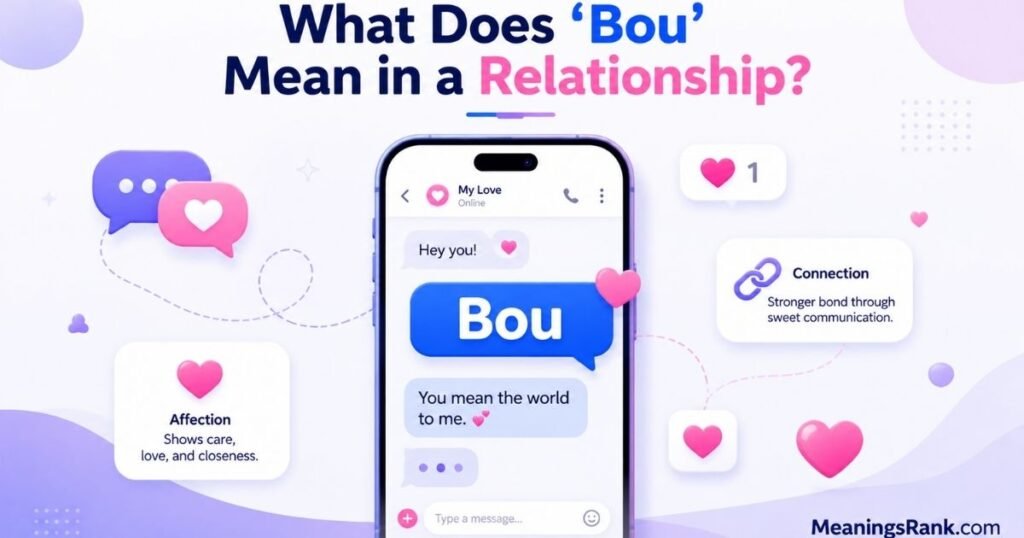
Using “bou” in a relationship often shows:
- Comfort and familiarity between partners
- A playful, informal way of addressing each other
- Public acknowledgment of the relationship, especially on social media
Example: “My bou always knows how to make me laugh.”
It’s worth noting that “bou” doesn’t necessarily indicate relationship seriousness on its own. Some people use it early in a relationship, while others reserve it for long-term partners. The word itself doesn’t set that boundary — the people using it do.
Is “Bou” Flirty, Romantic, or Friendly?
“Bou” can be all three, depending on context, though romantic is by far its most common use.
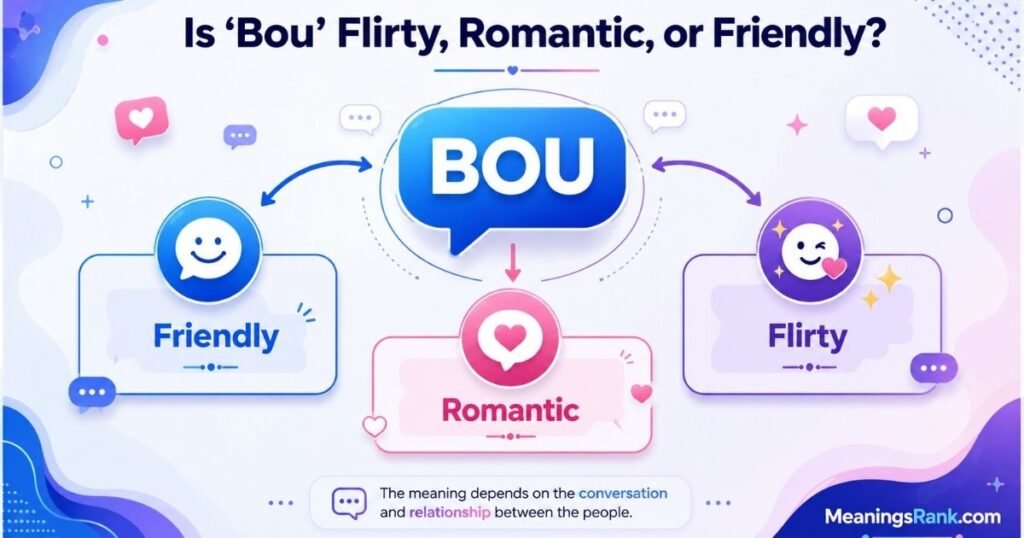
Why It’s Usually Romantic:
Most of the time, “bou” directly refers to a boyfriend or girlfriend, making it inherently romantic in nature.
Example: “My bou took me out for my birthday.”
Why It Can Feel Flirty:
When used early in a budding relationship or during playful teasing, “bou” can carry a flirty undertone, almost testing the waters of a relationship label.
Example: “Careful, you’re starting to sound like my bou 😉”
Can It Be Just Friendly?
Occasionally, yes, especially among close friends who use pet names jokingly without romantic meaning.
Example: “Let’s go bou, I’m starving” (said between friends)
Quick Summary:
- In relationships: romantic
- In new or flirty situations: playful and testing
- Among friends: occasionally friendly, non-romantic
- On social media: usually romantic, showing off a partner
Reading the relationship between the two people talking matters more than the word itself when figuring out the real tone.
Common Misunderstandings About “Bou”
Misunderstanding 1: “Bou” Always Means a Serious Relationship
Not true. It can be used casually, even in newer or less defined relationships.
Misunderstanding 2: “Bou” Is the Same as “Bro”
These are completely different. “Bou” leans romantic, while “bro” is platonic and typically used between friends.
Also Read: What Does 🥰 Meaning From a Girl in Text?Meaning, Signs & Replies (2026)
Misunderstanding 3: Only Women Use “Bou”
This isn’t accurate. Both men and women use “bou” to refer to partners, regardless of gender.
Misunderstanding 4: “Bou” Is a New Word
While the spelling feels modern, the term borrows from much older slang like “beau” and “boo.”
Misunderstanding 5: “Bou” Can’t Be Used Platonically
While rare, some close friend groups use it jokingly without romantic meaning at all.
Clearing up these mix-ups helps prevent awkward assumptions, especially when reading a text out of context.
“Bou” vs. Similar Slang Terms
| Term | Meaning | Typical Use |
| Bou | Boyfriend/girlfriend | Romantic partner, affectionate |
| Boo | Boyfriend/girlfriend | Nearly identical meaning to “bou” |
| Bae | “Before anyone else,” romantic partner | Affectionate, widely used |
| Bro | Close male friend | Platonic, friendly |
| Shorty | Romantic interest or partner | Casual, flirty |
Bou vs Boo:
These two are essentially interchangeable. “Boo” is the more traditional spelling, while “bou” is a newer stylized version popular in texting and captions.
Bou vs Bae:
Both are affectionate, but “bae” often implies top priority (“before anyone else”), while “bou” simply labels the relationship itself.
Example: “You’re my bae” (emphasizing importance) “That’s my bou” (simply identifying the partner)
How to Respond When Someone Says “Bou”
Responding to “bou” depends on whether it’s directed at you or used to describe someone else.
If Someone Calls You “Bou”:
“Aww, hey bou 🥰” “That’s so sweet, hi!”
If Someone Talks About Their “Bou”:
“Aww that’s cute, how long have you two been together?” “Your bou sounds so sweet!”
Example: Person A: “My bou surprised me with breakfast today.” Person B: “Aww that’s adorable, he really loves you.”
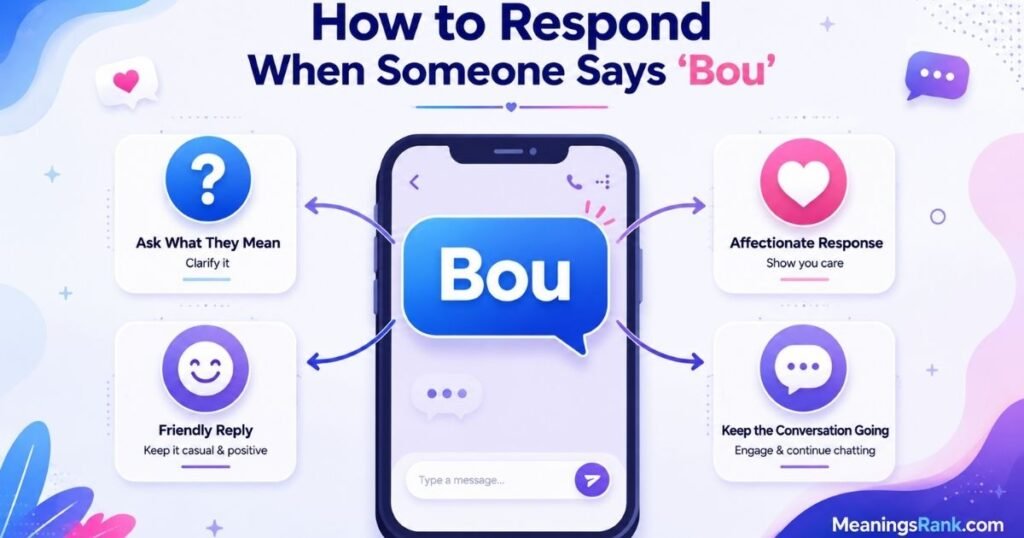
If the term feels too forward or unfamiliar coming from someone you’re not dating, it’s completely fine to respond with light humor or gently clarify the relationship status.
Example: “Haha, bou? We’re just friends lol”
Regional & Cultural Usage of “Bou”
“Bou” is especially popular in African American Vernacular English (AAVE) and has strong ties to hip-hop and R&B culture, where terms like “boo” have been common for decades.
It has also spread widely through TikTok trends, where stylized spellings often replace traditional slang words to feel fresh or catchy.
Some regional notes:
- Common in U.S. urban slang, especially in youth culture
- Popularized further through music lyrics and social media trends
- Spelling variations (“bou,” “boo,” “bu”) often depend on personal texting style rather than strict regional rules
Because slang spreads so quickly through social media today, “bou” has moved far beyond any single region and is now recognized in casual texting culture across many English-speaking countries.
When Should You NOT Use “Bou”?
- In professional or workplace messages
It’s far too personal and casual for office communication.
- With someone you’re not romantically involved with
Unless it’s a joke among close friends, it can send the wrong signal.
- In formal writing
Always use full words like “boyfriend” or “girlfriend” instead.
- Early in a friendship
Using it too soon with new people can feel confusing or overly familiar.
- When talking to older relatives
Many may not recognize the slang and could misunderstand your intention.
Also Read: TSK Meaning in Text: What Does TSK Mean in Chat & Social Media? (2026)
FAQs About “Bou” Meaning in Text
What does “bou” meaning in a text message?
“Bou” means boyfriend or girlfriend, used as an affectionate nickname for a romantic partner.
Is “bou” the same as “boo”?
Yes, “bou” is basically a stylized spelling of “boo,” meaning the same thing.
Can “bou” be used for friends?
Occasionally, yes, though it’s mostly reserved for romantic partners.
Is “bou” flirty or serious?
It can be both, depending on the relationship and context between two people.
Should I use “bou” in professional messages?
No, it’s too casual and personal for workplace or formal communication.
Conclusion
The Bou meaning in text comes down to one simple idea: it’s an affectionate nickname for a romantic partner, closely related to “boo” and “bae.” Whether it shows up in a text message, an Instagram caption, or a quick TikTok comment, its purpose stays the same showing closeness and affection.
We’ve covered where the word came from, how it’s used across different platforms, and how it compares to similar slang like “bae” and “boo.” We’ve also looked at when it fits naturally and when it’s better left out of the conversation entirely.
Next time you see “bou” in a message, you’ll know exactly what it means and how to respond with the right tone.