
You open a chat and see one odd word: “mmcht.” No emoji. No explanation. Just that.
If you froze for a second and wondered what it meant, you’re not alone. MMCHT meaning in text is simple once you know the trick. It is not an acronym. It is a typed version of a sound. People make it by smacking their lips or sucking their teeth, and it usually shows disbelief, annoyance, or a playful “yeah, right.”
In this guide, you’ll learn where MMCHT came from, how people use it on WhatsApp, TikTok, Discord, and more, and how to reply without making things awkward. You’ll also see when it’s best to skip it. Let’s break it down in plain English.
What Does MMCHT Mean in Text? – Quick Meaning
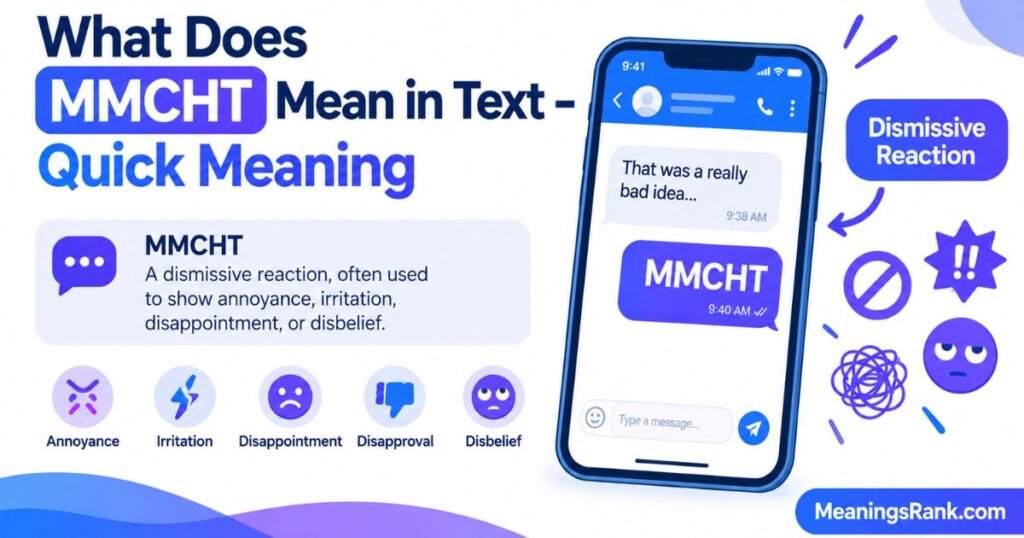
MMCHT is a text version of the sound people make when they smack their lips or suck their teeth. It usually means “I don’t believe you,” “come on,” or “that’s annoying.”
That’s the short answer. Here is the longer one.
The Sound Behind the Word
Say “mm” with your lips closed. Then pop your lips apart, or click your tongue off your teeth. That small “tchh” noise is what “mmcht” tries to show on a screen. Nobody has to explain it out loud because most people have made that sound themselves.
The Three Main Meanings
- Disbelief: “Mmcht, you did not do all that.”
- Annoyance: “Mmcht, I told you already.”
- Playful teasing: “Mmcht, stop playing.”
The tone depends on who sends it and what came before it. Between close friends, it’s often a joke. In a heated chat, it can feel sharp.
Origin & Background of MMCHT
MMCHT doesn’t have one clean, proven origin story. Slang that grows out of sounds rarely does.
Where the Sound Comes From
Lip-smacking and teeth-sucking are old habits in speech. In many Caribbean, African, and African American communities, people have long used a drawn-out teeth-suck to show displeasure or doubt. Online, similar sounds have been typed as “steups,” “chups,” “tsk,” or “kiss teeth.” “Mmcht” looks like another spelling of that same family of sounds.
How It Showed Up Online
Urban Dictionary entries for “mmcht” go back to at least 2019. Those entries describe it as the noise you make when someone accuses you of something or says something that sounds unbelievable. Some entries credit specific Twitter users for popularizing the spelling. Others point to different creators. Since those claims don’t match, it’s safer to say the exact starting point is unclear.
What we do know is that the spelling spread through social media, group chats, and short videos, where people wanted a quick way to show attitude without typing a full sentence.
Also Read: PCB Meaning in Text: Complete Guide to Its Definition, Usage & Examples
Why Do People Use MMCHT in Texting?
Text has one big weakness. It can’t carry your voice, your face, or your eye roll. MMCHT fixes part of that.
It Adds Tone Fast
One word can do the job of a whole sentence. “Mmcht” tells the reader, “I’m not buying that,” without a long explanation.
It Feels Natural and Human
When you read it, you can almost hear it. That makes a chat feel more like a real conversation. People like slang that sounds like how they actually talk.
It Keeps Things Playful
Used with a smile or a laughing emoji, it softens a hard comment. It lets you disagree while keeping the mood light.
It Signals You’re Part of the Group
Slang works like a small handshake. If you use “mmcht” correctly, friends see that you speak the same online language.
MMCHT Meaning on Social Media
Each platform shapes the way people use it.
TikTok
In comments, “mmcht” often shows up under videos where someone makes a bold or silly claim. Creators also say the sound out loud in skits, then viewers type it in the comments.
Example: A video says, “I never procrastinate.” A comment reads: “mmcht sure you don’t 😭”
On Instagram, you’ll see it in DMs and story replies. A friend posts a “gym selfie” after skipping the gym for weeks. Another friend replies: “mmcht who are you fooling.”
Snapchat
Snaps are quick, so short reactions work well. “Mmcht” might be typed over a photo as a caption to show attitude.
X (Twitter)
It appears in replies to hot takes. It works as a one-word eye roll.
Discord and Gaming Chats
Gamers use it after a teammate blames lag or claims they “weren’t trying.” Quick, short, and clear in a fast voice-and-text chat.
MMCHT Meaning in Different Contexts
The same word can feel different depending on the setting.
Between Close Friends
This is where it fits best. It’s teasing and relaxed. Nobody takes it too seriously.
In Couples’ Chats
Partners use it to tease each other. “Mmcht, you always say that” can be cute or a little annoyed. A smiley or heart emoji usually tells you which one.
In Arguments
Here it can feel dismissive. If someone is already upset, “mmcht” may sound like you aren’t taking them seriously.
In Group Chats
It’s common when someone brags, makes excuses, or tells a story that sounds exaggerated. Others may reply with laughing emojis or add their own “mmcht.”
At Work
It almost never belongs here. More on that in a later section.
Real-Life Conversations Using MMCHT
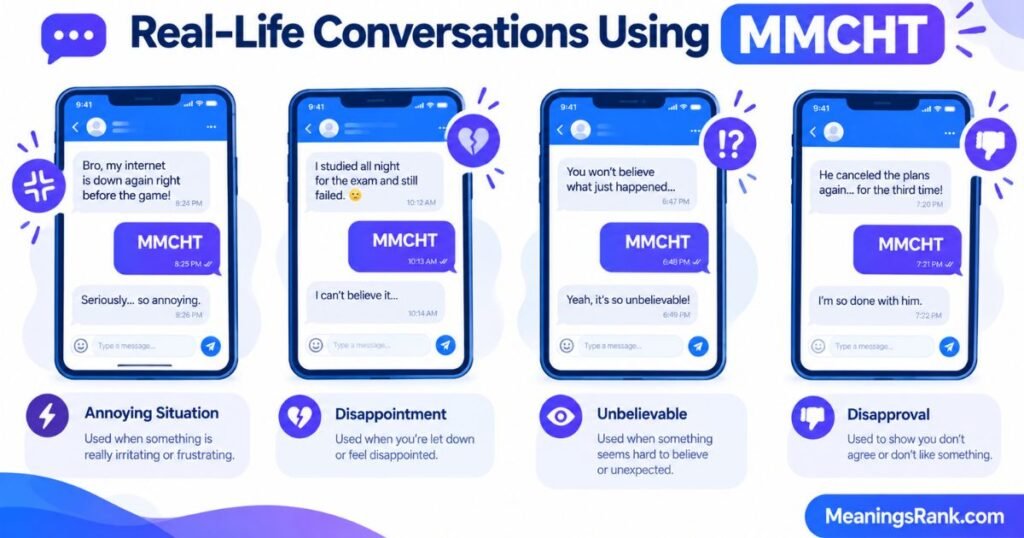
Here are examples of how it looks in real chats.
WhatsApp: Friends
Aisha: I’ll be there in 5 minutes.
Zara: Mmcht, you said that 30 minutes ago 😂
Aisha: Okay okay, 15 minutes.
Instagram DM: Teasing
Sam: I cooked dinner all by myself.
Leo: mmcht your mom helped, I know it Sam: She only chopped the onions 😭
Discord: Gaming
Player 1: I wasn’t even trying that round.
Player 2: mmcht you’ve been sweating all night
Snapchat: Caption Style
A friend sends a photo of an untouched homework page with the caption “almost done.” You reply: “mmcht.”
TikTok Comment Section
Video: “I’m a morning person now.”
Comment: “mmcht until your alarm rings 😭”
Workplace Chat (Not Recommended)
Manager: The report will be ready by noon.
Coworker: mmcht
This one lands badly. The coworker may think they’re joking, but the manager could read it as rude.
Emotional & Psychological Meaning of MMCHT
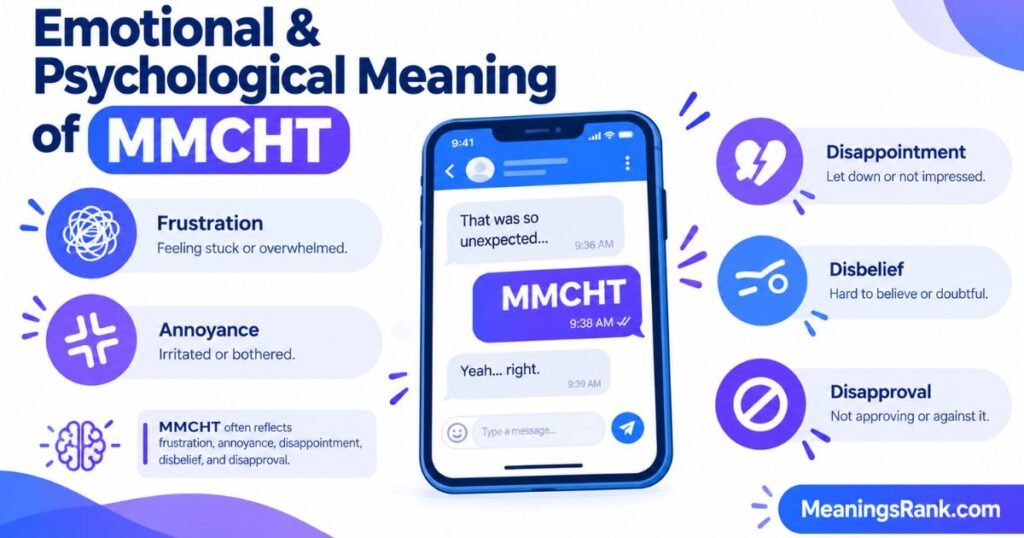
Small sounds say a lot about how we feel.
What It Shows About the Sender
When someone types “mmcht,” they usually feel one of these:
- Skeptical: They doubt what you said.
- Irritated: Something bothered them, but not enough for a long reply.
- Amused: They think you’re being funny or dramatic.
- Unimpressed: They’ve heard it before.
Why It Can Sting
A sound like this is a social signal. In real life, a teeth-suck can feel like a quiet “no.” Online, the same signal still gets through. That’s why it can hurt when it isn’t expected, especially if you were being honest.
Why It Can Also Bond People
Among friends, teasing shows closeness. You only tease people you feel safe with. A well-timed “mmcht” can say, “I know you too well.”
If a “mmcht” ever leaves you feeling uneasy, it’s fine to ask, “Are you joking or upset?” A quick check beats guessing.
Also Read: RM Meaning in Text: The Ultimate Guide to Its Meaning in Chats & Social Media
Is MMCHT Formal or Informal?
MMCHT is very informal. It’s a slang sound word meant for casual chats among people who know each other well.
Quick Guide
| Setting | Okay to Use? |
| Text with close friends | Yes |
| Social media comments | Yes |
| Gaming chat | Yes |
| Texting a new acquaintance | Use caution |
| School emails or messages to teachers | No |
| Work emails or professional chats | No |
| Messages to elders or authority figures | No |
If you’d write “Dear Sir or Madam,” don’t use “mmcht.”
Common Misunderstandings About MMCHT
Because it looks like random letters, people guess wrong all the time.
“It’s an Acronym”
It isn’t. People sometimes try to spell it out as “Message Me Chat” or something similar. That’s not what it means. It’s a sound, like “hmm” or “ugh.”
“It’s Always an Insult”
Not true. Plenty of people use it as light teasing. Tone, emojis, and your relationship with the sender matter.
“It Means the Same as ‘MM’ or ‘Mm-hmm'”
Plain “mm” or “mm-hmm” usually shows agreement or that someone is thinking. “Mmcht” is different. It adds the lip-smack at the end, which shifts the meaning toward doubt or attitude.
“It Has One Official Spelling”
Since it’s a sound, people spell it many ways. That brings us to the next section.
MMCHT Variations & Related Forms
You may see these spellings in chats:
- Mmcht: the most common version
- Mmchhht or Mmchhhtt: extra letters stretch the sound for more attitude
- Mmmcht: a longer “mm” at the start
- Mcht: a shorter, quicker version
- Mmch: a softer version
- MMCHT with emojis: 🙄, 😒, 😭, or 😂 added to set the tone
Related Sound Words
- Tsk or tsk tsk: mild disapproval
- Steups: a Caribbean spelling of the teeth-suck
- Chups: another spelling of the same sound
- Kiss teeth: a plain-English description of the action
More letters usually means more feeling.
MMCHT vs. Similar Terms – Comparison Table
| Term | What It Means | Tone | Example |
| MMCHT | Lip-smack or teeth-suck sound showing doubt or annoyance | Sassy, playful, or irritated | “Mmcht, you did not clean your room.” |
| Mm / Mm-hmm | Agreement or “I’m listening” | Neutral or calm | “Mm-hmm, I got it.” |
| Hmm | Thinking or mild doubt | Neutral, thoughtful | “Hmm, not sure about that.” |
| Tsk | Mild disapproval | Light, a bit scolding | “Tsk, you’re late again.” |
| Steups / Chups | A drawn-out teeth-suck of disapproval | Strong attitude | “Steups, I’m not doing that.” |
| SMH | Shaking my head in disappointment | Disappointed | “SMH, he forgot again.” |
| Bruh | Disbelief or frustration | Casual, can be funny | “Bruh, are you serious?” |
| Yeah, right | Sarcastic disbelief | Sarcastic | “Yeah right, you ran five miles.” |
Quick takeaway: MMCHT sits between “tsk” and “steups.” It has more attitude than “hmm,” but it can still be playful.
How to Respond When Someone Uses MMCHT
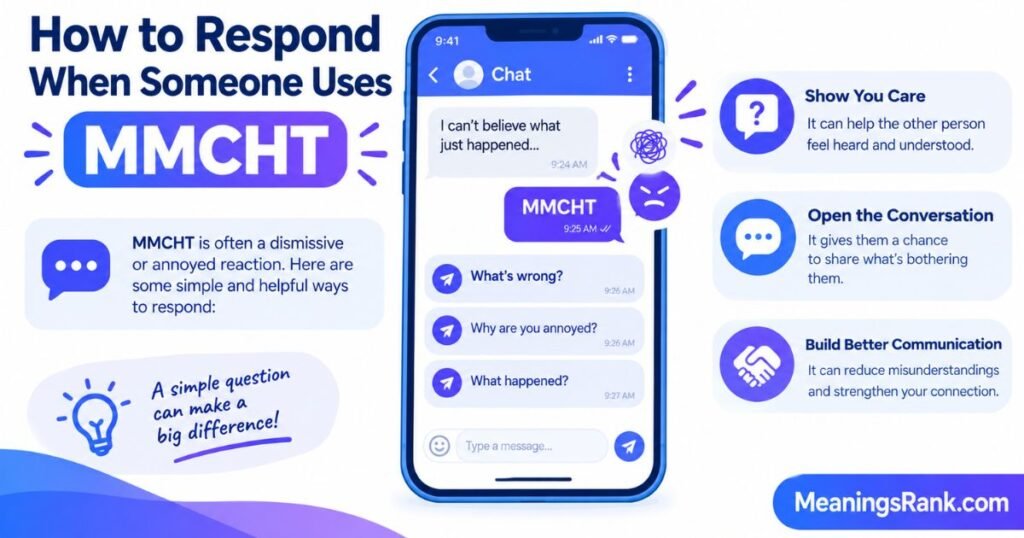
Your reply depends on what they meant. Read the tone first.
Step 1: Check the Context
Look at the last message you sent. Did you make a big claim, run late, or tease them? That usually explains the “mmcht.”
Step 2: Match the Mood
If they’re joking:
- “Okay, okay, you caught me 😂”
- “Why you always doubting me?”
- “I’m serious this time!”
If they seem annoyed:
- “Wait, did I say something wrong?”
- “Sorry, I didn’t mean it like that.”
- “Let me explain.”
If you’re not sure:
- “Is that a joke ‘mmcht’ or a real one?”
Step 3: Prove Your Point (If Needed)
If they don’t believe you, a photo, screenshot, or quick voice note can settle it fast.
Tips for a Smooth Reply
- Don’t get defensive right away.
- Add an emoji so your tone is clear.
- If the chat is getting tense, move it to a call.
When NOT to Use MMCHT
Skip it in these situations:
- Work chats and emails: It can look unprofessional or rude.
- With teachers or school staff: It sounds disrespectful.
- When someone is sharing something painful: A lip-smack after “my pet is sick” is cruel, even by accident.
- In serious arguments: It can pour fuel on the fire.
- With people who don’t know the slang: They may be confused or hurt.
- When someone is telling the truth about something important: If they’re being honest, doubting them with a sound word can damage trust.
A Simple Rule
Before you hit send, ask: “Would this feel fun or hurtful to the person reading it?” If you’re unsure, write a full sentence instead.
Regional & Cultural Usage of MMCHT
The sound behind “mmcht” is global. The way people type it varies.
Caribbean Communities
Teeth-sucking is a well-known part of everyday speech in many Caribbean countries. It’s often spelled “steups” or “chups” in text.
African and African Diaspora Communities
Lip-smacking and teeth-sucking are common in many African and African American communities to show doubt, disapproval, or sass. “Mmcht” often shows up in Black social media spaces and spreads outward from there.
South Asian and Other Communities
Many cultures have their own version of a click or tongue sound that shows annoyance. For example, people in different regions use a “tch” sound in speech. Online, they may write it differently or use another slang word.
Respect the Culture
Because this sound has roots in specific communities, it’s good to use it naturally and kindly rather than as a joke about how people talk. Context matters, and so does respect.
Also Read: MYH Meaning in Text: What It Means, How to Use It, and Real Examples (2026 Guide)
Is MMCHT Safe for Kids?
Yes, MMCHT itself is safe. It’s just a sound. It contains no bad words, no hidden meaning, and no adult content.
What Parents Should Know
The word is harmless. The attitude behind it, though, can come across as sassy or disrespectful. Kids may use it with friends in the same way they’d roll their eyes.
Tips for Parents and Guardians
- Explain the meaning: Tell kids it’s a sound, not a secret code.
- Talk about tone: Teasing a friend is different from using it with a teacher or grandparent.
- Watch the surrounding chat: Some online definitions of the word mention rude language, so check what else is in the conversation.
- Encourage kindness: If it’s being used to put someone down or bully them, step in.
Tips for Teens
Use it with friends and keep it out of school messages. If a friend seems hurt by it, apologize and explain you meant it as a joke.
FAQs About MMCHT
What does MMCHT meaning in text when someone texts it to you?
It’s a typed lip-smack or teeth-suck sound. It usually shows disbelief, annoyance, or playful teasing, depending on the tone and the chat.
Is MMCHT a real word or just a sound?
It’s a sound written out in letters. It’s not an acronym or a dictionary word, so spellings can vary.
Is MMCHT rude to send in a text?
It can be. With close friends it’s usually playful, but it may feel dismissive in serious or formal conversations.
How do you say MMCHT out loud correctly?
Close your lips for a short “mm,” then smack your lips or click your tongue off your teeth.
Can MMCHT mean something different from kissing your teeth?
Mostly no. Some people use it just to tease or react, but the core idea of doubt or attitude stays the same.
What is a good reply to MMCHT in chat?
Match their mood. Joke back if they’re teasing, or ask “Are you okay?” if they seem upset.
Conclusion
MMCHT meaning in text comes down to one idea: it’s a written lip-smack. It tells the reader you doubt, dislike, or are amused by what was just said. It isn’t a hidden acronym, and it isn’t always an insult. Most of the meaning comes from tone, emojis, and who you’re talking to.
Among friends, it’s a quick way to tease and keep a chat lively. In formal or emotional situations, it can come across as rude, so a full sentence is the safer pick. The sound has deep roots in many communities, which is a good reason to use it with care and respect.
Next time someone sends you “mmcht,” read the mood first. If it’s a joke, play along. If it feels sharp, ask politely what they meant. Understanding small slang like this helps you read chats better and avoid mix-ups. For more slang and text meanings explained in plain English, keep exploring MeaningsRank.