
Scrolling through a TikTok comment or a group chat and spotted “ASF” attached to a random word? You’re not the only one who paused to figure it out. The ASF meaning in text comes down to one simple job: making a feeling or description sound extreme. It’s a small word with a big punch, and you’ll see it everywhere texting, Instagram captions, Snapchat stories, Discord servers, and gaming chats. Because it’s so short and easy to type, it has become a go-to way for people to express strong emotions fast.
Knowing exactly what ASF means, and when it fits, helps you read online conversations more clearly and avoid sounding out of place yourself.
What Does ASF Mean in Text?
ASF works as an intensifier. It’s tacked onto a sentence to make whatever is being described sound bigger, stronger, or more extreme than usual.
Think of it as a louder version of “very” or “extremely.” It’s built for casual conversations, not formal writing.
Here’s a quick example:
Person A: “How was the concert?”
Person B: “It was lit ASF.”
Person B isn’t just saying the concert was good. They’re saying it went far beyond good, straight into unforgettable territory. ASF adds that extra jolt of energy to the sentence.
This slang term is especially popular among younger internet users, though it has spread widely thanks to social media exposure. It shows up in memes, captions, comment threads, and everyday texting.
A few quick facts about how ASF behaves:
- It functions as an intensifier, similar to “so” or “extremely”
- It fits almost any adjective or feeling, positive or negative
- It’s built for casual settings, not professional ones
- It doesn’t change meaning based on where it’s placed
For example, “hungry ASF” and “hyped ASF” both use the same formula just plug ASF in right after the feeling you want to boost. Once you spot this pattern, ASF becomes easy to recognize in any sentence.
What Does ASF Stand For?
ASF stands for “As F*”** a censored, shortened version of a stronger curse word used purely for emphasis. Because it’s abbreviated, it reads as mild slang rather than something harsh or shocking.
It works the same way as saying something is “ridiculously” or “insanely” something. The full, uncensored phrase carries more shock value, which is exactly why the letter version became so popular it keeps the punch without spelling everything out.
A few background notes on ASF:
- It grew out of texting culture and early social media slang
- Its short, three-letter format made it quick and easy to type
- It carries similar energy to words like “hella” or “super,” just sharper
Because it’s rooted in a curse word, some people still see it as slightly edgy, even in its censored form. That’s part of why it fits casual chats far better than professional messages.
You’ll often spot it in lowercase (“asf”), since capitalization rarely matters in texting or comments. Both versions carry the exact same meaning.
People sometimes combine ASF with other slang for extra emphasis, like “asf fr” (as f***, for real) or “asf ngl” (as f***, not gonna lie). These combos don’t shift the core meaning they just stack more casual flavor on top.
Understanding where ASF comes from explains why it feels so much stronger than plain words like “very” or “really.” It borrows intensity from the word it’s replacing, even in shortened form.
Read More: WTV Meaning in Text: What It Means, How People Use It, and How to Reply (2026 Guide)
How Is ASF Used in Text Messages and Social Media?
ASF almost always follows right after the word it’s emphasizing. This consistent placement makes it easy to spot once you know the pattern.
Basic Structure:
“[Adjective] + ASF”
Examples: “tired ASF,” “funny ASF,” “hot ASF,” “annoyed ASF”
Here’s how it plays out across platforms:
- Text Messages: “This traffic is bad ASF today.”
- WhatsApp: “I’m hungry ASF rn 😩”
- Instagram Comments: “This edit is clean ASF 🔥”
- Snapchat: “lol that fail was funny ASF”
- TikTok Comments: “This song hits different ASF”
- Gaming Chats: “That last round was intense ASF.”
- Discord Servers: “This new update is buggy ASF.”
- Workplace Chats: Best avoided ASF is almost never appropriate here, even in casual company cultures, because of the word it stands for.
The tone shifts slightly depending on the platform, but the function stays constant: boosting the emotional weight of whatever comes before it.
On Instagram and TikTok, ASF often shows up in captions or quick comment reactions to something impressive, funny, or unexpected. In gaming and Discord chats, it tends to pop up during intense or frustrating moments, like a close match or a buggy update.
Because it’s such a flexible intensifier, people drop it into almost any sentence without overthinking it, which explains how quickly it spread across so many different platforms.
ASF Meaning in Different Contexts (With Examples)
ASF shifts slightly in feel depending on the emotion it’s attached to, even though its core function never changes. Here are some real-world style examples.
Expressing Excitement:
Person A: “Are you going to the game tonight?”
Person B: “Yes, I’m hyped ASF!”
Expressing Frustration:
Person A: “How was your day?”
Person B: “Long ASF, I’m exhausted.”
Expressing Attraction:
Instagram comment: “This outfit is fire ASF 🔥”
Expressing Boredom:
Snapchat caption: “This class is boring ASF.”
Expressing Shock:
TikTok comment: “That plot twist was crazy ASF.”
Expressing Approval:
Discord message: “This new skin looks clean ASF.”
Expressing Annoyance in Gaming:
“That lag spike was annoying ASF, I lost the round.”
ASF doesn’t change its meaning based on context it simply amplifies whatever comes before it. Whether the feeling is good or bad, ASF cranks up the intensity.
This flexibility explains why it shows up in so many different types of conversations, from light TikTok banter to venting in a group chat after a rough day. It adapts instantly to whatever mood the sentence needs.
Is ASF Rude, Offensive, or Flirty?
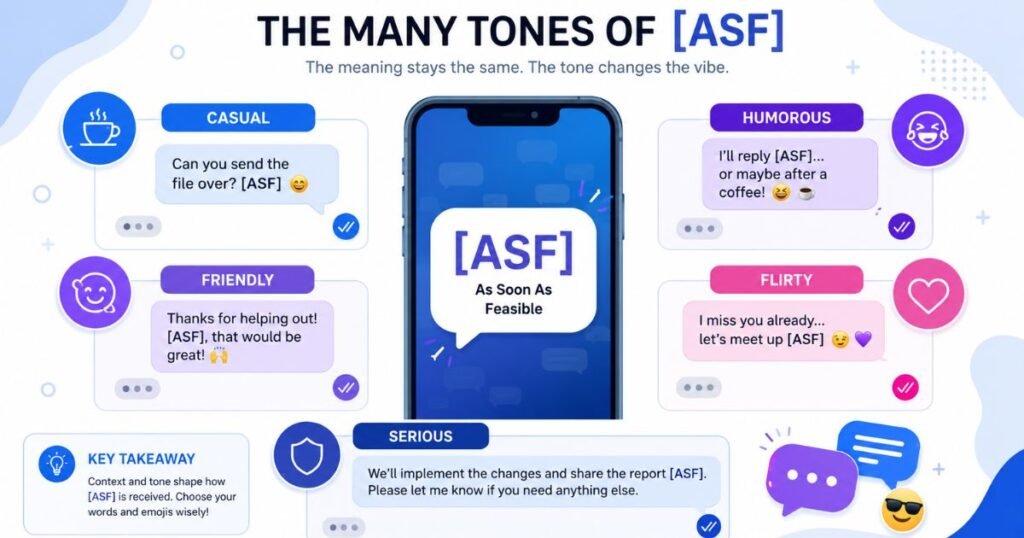
ASF lands in a gray zone. It’s not automatically rude, but it’s also not something you’d want to use in every setting without thinking twice.
Why It’s Usually Fine Among Friends:
In casual texting or comment sections, ASF is just normal slang. Most people barely register it.
Example: “This burger is good ASF” simply means the burger is really, really good.
Why It Can Feel Inappropriate Sometimes:
Since ASF is based on a curse word, it can come across as unprofessional or out of place around older relatives, teachers, or coworkers.
Example: Telling a coworker “This meeting was boring ASF” could land as unprofessional, even if it was meant lightly.
Is ASF Ever Flirty?
It can carry a flirty undertone depending on what it’s paired with, especially in DMs.
Example: “You looked good ASF in that photo 😍”
The flirty feeling here comes from the compliment and emoji, not ASF itself. It’s simply making the compliment feel bigger.
Quick summary:
- With close friends: totally normal
- With strangers online: depends on platform and tone
- With coworkers or elders: best to skip it
- In flirty texts: fine, but the romance comes from surrounding words
Like most slang, the real impact of ASF depends on who’s reading it and where the conversation is happening.
How to Reply When Someone Says ASF
Replying to an ASF message is usually easy, since it’s mostly used to express strong emotion rather than start a debate.
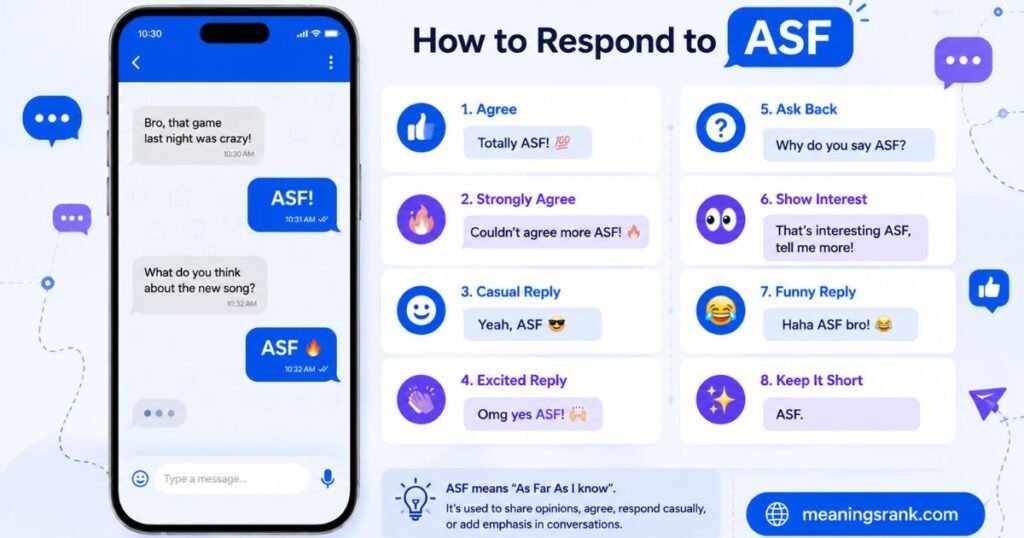
- If you agree: “Fr, it was wild ASF 😂” or “Same, I felt that.”
- If you want more detail: “Why, what happened?” or “That bad huh?”
- If you want to match the energy: “Lol same, today was rough ASF too.”
- If you want to keep it simple: “Haha I feel you.”
Example from a Discord chat:
Person A: “This game update is broken ASF.”
Person B: “Fr, I lost connection three times already.”
Person B doesn’t need to repeat ASF to match the energy. A short, natural reaction keeps things flowing.
On fast platforms like Snapchat or Instagram DMs, a quick emoji reaction often works just as well:
Person A: “This weather is cold ASF.”
Person B: “Literally 🥶”
The main rule with ASF replies is tone matching. Since the term carries strong emotional weight, your response should either validate that feeling or ask a quick follow-up. There’s rarely a need to overanalyze these conversations tend to stay light.
Read More: OFC Meaning in Text: What It Means, How People Use It & How to Reply (2026 Guide)
ASF vs AF: What’s the Difference?
ASF and AF are almost identical, and plenty of people use them interchangeably. Still, there’s a small difference worth knowing.
| Term | Meaning | When to Use |
| ASF | As F*** | Strong emphasis, common in texting and TikTok/Snapchat culture |
| AF | As F*** | Same meaning, more mainstream and widely recognized |
Key differences:
- AF shows up more often in mainstream slang, even in meme culture or casual branding.
- ASF leans slightly more toward texting and Gen Z-heavy platforms.
- Both terms mean exactly the same thing and can usually be swapped freely.
Example comparison: “This pizza is good AF.” “This pizza is good ASF.”
Both carry the same intensity. The choice between them usually comes down to personal texting habits rather than any real difference in meaning. Many people mix both without even noticing, treating them as basically the same word with slightly different popularity depending on the platform.
Similar Slang Terms You Should Know
ASF isn’t the only intensifier floating around online. Here are a few related terms worth knowing.
| Term | Meaning | When to Use |
| ASF | As F*** | Strong emphasis in casual chats |
| AF | As F*** | Same meaning, more mainstream |
| Hella | Very / a lot | Casual emphasis, especially West Coast slang |
| Mad | Very / extremely | Casual intensifier, common in East Coast slang |
| Lowkey | Somewhat, secretly | Softer emphasis, gentler than ASF |
| Highkey | Very obviously | Stronger, more open version of lowkey |
Each term adds emotional weight, but the intensity varies quite a bit. ASF and AF sit near the top of the scale, while “lowkey” feels much gentler in comparison.
Example: “I’m lowkey tired” sounds softer than “I’m tired ASF,” even though both describe the same basic feeling.
Knowing these related terms makes slang-heavy conversations easier to follow, especially on platforms where several intensifiers often show up in the same sentence or comment thread.
When Should You Avoid Using ASF?
ASF is common, but there are clear moments where it’s better left out of the conversation.
- Professional emails or documents: Too casual, and its origin as a censored curse word makes it a poor fit.
- Conversations with teachers or elders: Even in texting, this audience may not appreciate casual slang.
- Customer service or business messages: Can come across as careless or unprofessional.
- Serious or emotional conversations: Adding ASF for emphasis can feel dismissive when someone is sharing something difficult.
- Public or formal social posts: Brands and professionals should be cautious about tone here.
- With people unfamiliar with slang: Simpler words communicate more clearly across generations.
- When clarity matters more than emphasis: Instructions and explanations don’t need the extra casual flair.
Skipping ASF in these situations shows solid communication awareness. Reading the audience matters more than trying to sound relatable in every single message.
Frequently Asked Questions About ASF
What does ASF mean in a text message?
ASF means “As F***,” a slang intensifier used to boost a feeling or description, similar to saying “extremely” but with more casual energy.
Is ASF the same as AF?
Yes, they mean the same thing. ASF and AF are used interchangeably, though AF is slightly more mainstream and widely recognized.
Is ASF appropriate for work chats?
No. ASF is too casual for professional messaging, since it’s based on a censored curse word best kept out of workplace communication.
Does ASF always mean something negative?
No. ASF can emphasize both positive and negative feelings, working equally well with words like “amazing,” “boring,” or “hyped.”
Can ASF be used to flirt?
It can add intensity to a flirty message, but the romantic tone usually comes from the surrounding words, not ASF itself.
Final Thoughts on ASF Meaning in Text
The ASF meaning in text really boils down to one idea: it’s an intensifier that makes feelings and descriptions sound bigger and stronger. Whether it shows up in a TikTok comment, a gaming chat, or a quick text between friends, its job stays exactly the same.
This guide covered what ASF stands for, how it’s used across different platforms, how it compares to AF and similar slang terms, and when it’s smarter to leave it out altogether.
Slang trends move fast, but the logic behind ASF is simple once you break it down. Next time it shows up in your messages, you’ll know exactly what it means and how to use it naturally, without missing a beat.