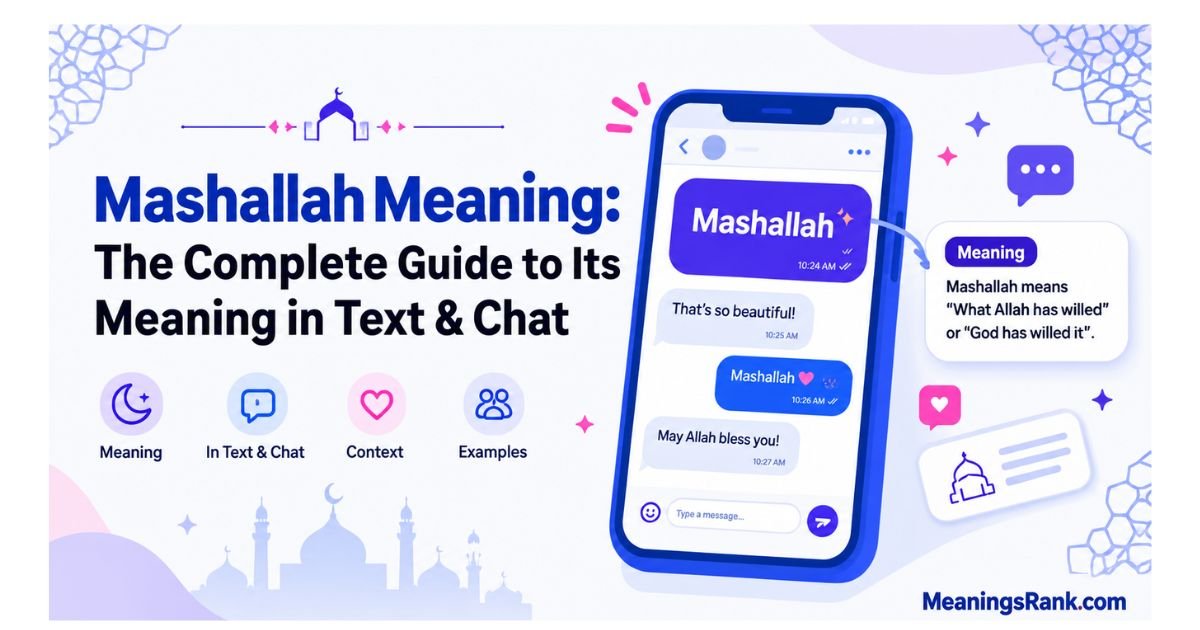

If you’ve seen the word “Mashallah” pop up in a text, an Instagram comment, or even a group chat, you’re probably wondering what it actually means. It’s not slang made up for the internet, though it gets used online all the time now. The Mashallah meaning comes from Arabic, and it carries a message of admiration mixed with gratitude toward God. People say it when they see something good and want to acknowledge that the good thing happened because of God’s will, not just luck or coincidence.
This guide breaks down everything you need to know. You’ll learn what Mashallah stands for, how it’s used in texting and social media, when it fits a conversation, when it doesn’t, and how to reply when someone sends it to you. No confusing definitions here, just a clear, simple explanation of a word that shows up more often than you’d think.
What Does Mashallah Mean?
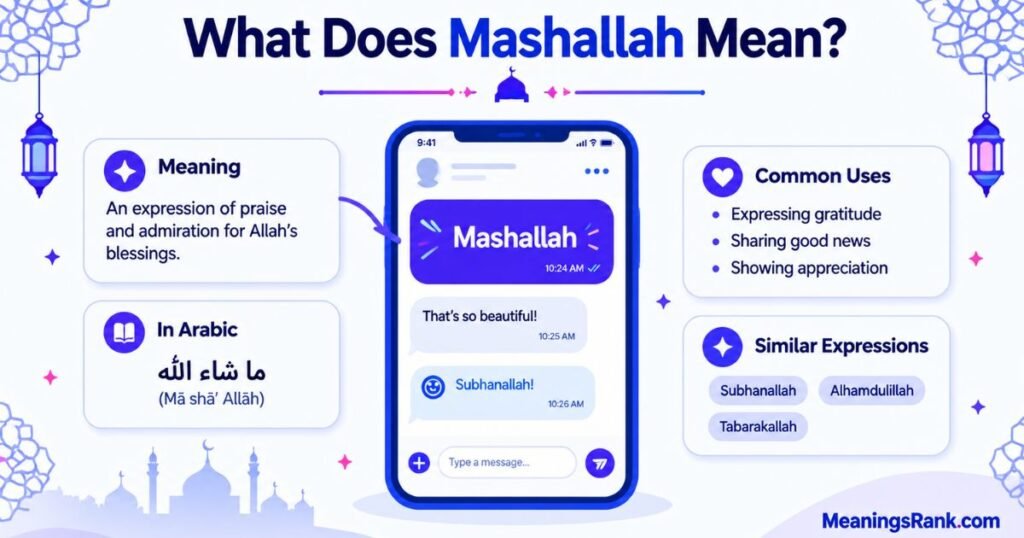
Mashallah (sometimes written as MashaAllah or Masha’Allah) is an Arabic phrase that roughly translates to “what God has willed” or “God has willed it.” It’s used to express joy, appreciation, or awe about something positive, while also giving credit to God for that good thing.
Think of it like saying “that’s amazing” but with a spiritual layer added on top. When someone says Mashallah meaning about a baby, a new house, good grades, or even a nice meal, they’re saying two things at once:
- This is genuinely impressive or beautiful.
- I recognize that this blessing came from God, not just human effort or chance.
It’s a word rooted in Islamic tradition, but it’s used widely across Muslim communities and has slowly made its way into everyday internet language, even among people who aren’t religious themselves. Many use it now simply as an expression of admiration, similar to saying “wow” or “so proud of you,” without necessarily thinking about the deeper religious meaning every time.
Why the Word Carries Extra Weight
In many cultures where Mashallah is common, there’s also a belief tied to protection. Saying Mashallah after praising something is thought to guard against the “evil eye,” a concept found in many traditions where jealousy or excessive praise without acknowledging God can bring bad luck. So when someone compliments a baby and immediately adds “Mashallah,” they’re not just being polite. They’re following a custom meant to protect what they’re praising.
What Does Mashallah Stand For?
Mashallah isn’t an acronym, so it doesn’t “stand for” letters the way internet abbreviations like LOL or BRB do. Instead, it’s a full Arabic phrase compressed into one word when transliterated into English.
Breaking it down:
- Masha relates to “what” or “that which”
- Allah means “God”
Put together, Mashallah means “what God has willed” or “as God has willed it.” It’s a declaration, not a question. You’re not asking what God wants. You’re stating that whatever good thing you’re looking at exists because God willed it to be that way.
Some people also use the longer spelling, MashaAllah, which is closer to the original Arabic pronunciation. Both spellings mean the same thing, so you don’t need to worry about picking the “correct” one when texting.
Mashallah Meaning in Text and Chat
Online, Mashallah usually keeps its original meaning but gets used more casually. People type it after seeing:
- A cute photo of someone’s kid
- A glow-up picture
- Good news, like a promotion or engagement
- A nicely decorated home
- A tasty-looking meal someone posted
Also Read: Endeavor Meaning: The Complete Guide to Its Definition, Uses & Examples
In texting, it often shows up short and quick, sometimes even without capitalization, like “mashallah so cute” or “omg mashallah 😍.” It’s rarely written out in a long, formal sentence. Instead, it fits naturally into casual texting rhythm, right alongside emojis and abbreviations.
Common Texting Variations
| Variation | Where It’s Used |
| Mashallah | Standard spelling, most common |
| MashaAllah | Slightly more formal or traditional |
| Masha Allah | Split into two words, common in older generations |
| mshallah / mshaallah | Quick, casual shorthand in fast texting |
None of these are “wrong.” They’re just different styles depending on who’s typing and how fast they’re going.
When Do People Say Mashallah?
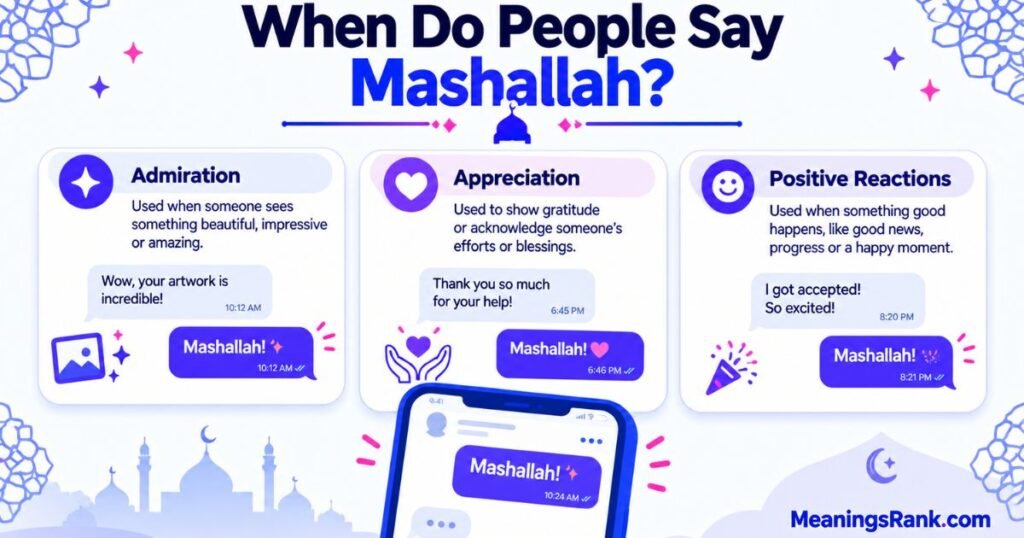
Mashallah shows up in a lot of everyday moments, not just religious ones. Here are the most common situations:
- Seeing a baby or child – This is one of the biggest uses. People say it almost automatically when they see a cute baby photo, partly out of habit and partly to ward off the evil eye.
- Congratulating achievements – New job, graduation, wedding, pregnancy announcement.
- Complimenting appearance – Someone looks great in a photo, so a friend comments “Mashallah” instead of just “you look good.”
- Praising skills or talent – Good singing, good cooking, good art.
- Reacting to good fortune – A new car, a new house, a successful business.
Basically, any time something good happens and a person wants to acknowledge it while giving thanks, Mashallah fits.
How Context Changes the Mashallah Meaning
Like most expressions, Mashallah doesn’t mean the exact same thing in every situation. The tone and context shift its emotional weight.
In Religious or Family Settings
Here, Mashallah carries its full, traditional meaning. It’s said with sincerity, often by older relatives or in more formal Muslim households, as a genuine acknowledgment of God’s blessing.
In Casual Friend Group Chats
Among younger users, especially teens and young adults, Mashallah meaning can become more playful. It might get used sarcastically, jokingly, or just as a habit picked up from friends, without deep religious reflection behind it every single time.
In Online Comments From Strangers
On public posts, Mashallah is often just a quick, genuine compliment. Someone scrolling through Instagram might type it under a stranger’s photo simply because that’s the phrase that naturally comes to mind for praise, especially within Muslim online communities.
Sarcastic or Ironic Use
Occasionally, people use Mashallah sarcastically, almost like an eye-roll comment, especially if someone is bragging too much. This is less common but does happen in some online spaces, similar to how “must be nice” can be genuine or sarcastic depending on tone.
Mashallah on Social Media and Different Platforms
Different platforms bring out slightly different uses of Mashallah. Here’s how it typically shows up:
Instagram comments are probably where Mashallah appears most. Under photos of babies, weddings, new homes, or fitness progress, you’ll often see it paired with emojis like 😍🤍✨.
Example comment: “Mashallah she’s grown so much 🥹❤️”
In WhatsApp family groups, Mashallah meaning is extremely common, especially when someone shares a photo or good news. It often appears alongside prayers or well-wishes.
Example: “Mashallah, congratulations on the new job! May Allah bless you more 🤲”
Snapchat
On Snapchat, where messages are quick and casual, Mashallah often appears short and simple, sometimes just as a caption reply to a snap showing good news or a nice outfit.
TikTok
In TikTok comments, Mashallah frequently appears under videos showing transformations, talent, cute pets, or family moments. It blends into the fast-scroll comment culture as a quick positive reaction.
Discord and Gaming Chats
This is less common but does happen, especially in gaming communities with diverse, multicultural members. Someone might type Mashallah after a teammate pulls off an impressive play, half-joking, half-genuine.
Example: “yo that clutch was mashallah 🔥”
Workplace Chats
In more professional settings, Mashallah tends to appear only when colleagues share personal good news, like a new baby or an achievement, rather than in strictly work-related conversations.
Also Read: Elope Meaning: The Complete Guide to What It Means to Elope
Is Mashallah a Compliment?
Yes, at its core, Mashallah is a compliment. It’s a positive expression meant to celebrate or admire something. However, it’s a compliment with intention behind it. Unlike saying “nice” or “cool,” Mashallah adds a layer of humility, acknowledging that the good thing being praised isn’t just the result of the person’s own effort, but a blessing.
So when someone says Mashallah about your success, they’re complimenting you while also expressing genuine happiness for you, often with a spiritual undertone of gratitude.
Is Mashallah Rude or Offensive?
No, Mashallah is not rude or offensive. It’s actually the opposite. It’s meant to be respectful and protective. Saying it shows that the speaker cares enough to acknowledge a blessing properly instead of just praising something without thought.
That said, context still matters:
- If someone uses it sarcastically to mock a person’s beliefs, that would be disrespectful, though the word itself isn’t the problem in that case.
- Using it without understanding its meaning, just because it “sounds cool,” isn’t offensive, but it can come across as odd to people who use it seriously and know its full weight.
If you’re not Muslim and want to use it, that’s generally fine as long as it’s used sincerely and not mockingly. Many non-Muslims pick it up naturally from friends or online culture and use it respectfully.
How to Reply to Mashallah
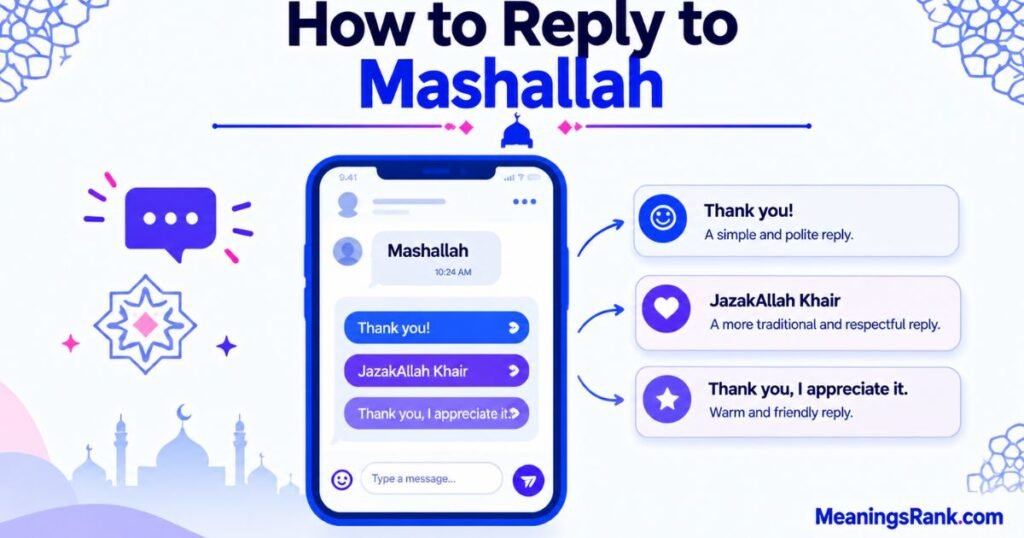
If someone says Mashallah to you, a simple thank you is usually enough. But there are a few common ways people respond depending on the setting:
- “Jazakallah khair” – This means “may God reward you with good” and is a common, appreciative response.
- “Thank you so much!” – Perfectly fine in casual or mixed conversations.
- “Ameen” – Often used if the Mashallah came with a prayer attached, like “Mashallah, may you have continued success.”
- A simple heart emoji or “🙏” – Common in fast-paced texting or social media replies.
You don’t need to overthink your reply. The goal is just to acknowledge the kindness behind the word.
When to Use Mashallah
Here’s a quick guide for when Mashallah fits naturally:
- When someone shares good news
- When complimenting a baby or child
- When praising someone’s appearance, talent, or hard work
- When reacting to something beautiful or impressive
- When you genuinely want to express gratitude alongside admiration
When to Avoid Mashallah
There are moments where using Mashallah might feel out of place or insincere:
- In situations involving sadness or bad news, since it’s meant for positive moments
- When mocking someone’s religion or culture
- In strictly formal business emails where casual expressions generally don’t fit
- If you’re unsure of the meaning and just using it to seem trendy without understanding it, which can feel hollow to people who use it sincerely
Real Conversation Examples Using Mashallah
Text message between friends:
“Just got my acceptance letter!! 🎓” “MASHALLAH!! So proud of you 🥹”
WhatsApp family group:
“Here’s a picture from the wedding yesterday 💍” “Mashallah, everyone looks beautiful. May Allah bless their marriage 🤲”
Instagram comment:
“Mashallah your skin is glowing ✨”
Discord gaming chat:
“bro that headshot was mashallah 😭🔥” “lmaooo appreciate it”
Workplace chat:
“Just found out I’m expecting! 👶” “Mashallah!! Huge congratulations 🎉”
Common Mistakes About Mashallah
Confusing it with “Inshallah.”
These are different. Inshallah means “God willing” and is used for future hopes, while Mashallah is used for things that have already happened or are currently seen.
Using it for bad news.
Mashallah is reserved for good things, not sympathy or condolences.
Treating it as just internet slang with no meaning.
While it’s used casually online, it still holds real religious and cultural significance for many people.
Overusing it without sincerity.
Repeating it constantly without meaning it can come across as performative rather than genuine.
Origin and Meaning of Mashallah in Islamic Usage
Mashallah has roots in the Quran and Islamic tradition. It reflects a core belief that everything good comes from God’s will. Historically, it’s been used for centuries across Muslim communities, especially when witnessing something beautiful, impressive, or blessed.
The phrase also connects to humility. Instead of simply saying “wow, amazing,” the speaker acknowledges a higher source behind that “amazing” outcome. This is why it’s traditionally paired with compliments, particularly toward children, since children are seen as especially vulnerable to envy or the evil eye, and elders often teach younger generations to say Mashallah meaning as a form of protective praise.
Over time, as Muslim communities grew online and globally connected, the phrase naturally moved into digital communication, keeping its meaning largely intact while adapting to modern texting habits.
Mashallah vs. Similar Expressions: What’s the Difference?
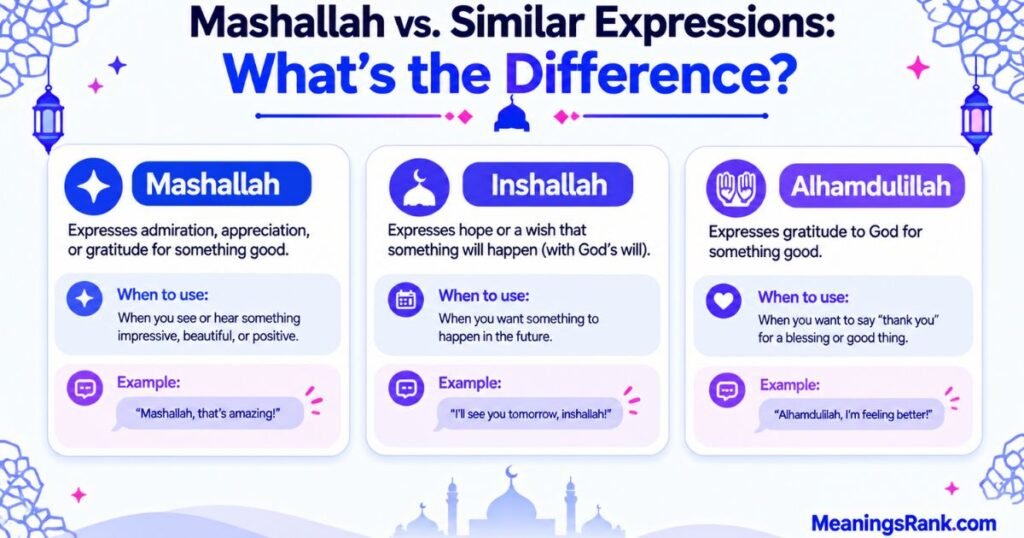
People often mix up Mashallah with a few other common Arabic expressions. Here’s a simple breakdown:
| Phrase | Meaning | When It’s Used |
| Mashallah | “What God has willed” | Praising something happening now or already happened |
| Inshallah | “God willing” | Talking about future hopes or plans |
| Alhamdulillah | “Praise be to God” | Expressing gratitude, often after good news or relief |
| SubhanAllah | “Glory be to God” | Expressing awe, often about nature or something impressive |
| Jazakallah Khair | “May God reward you with good” | Thanking someone |
Knowing the difference helps avoid awkward mix-ups, like saying “Inshallah” about something that already happened, which wouldn’t quite make sense.
Mashallah Meaning From a Girl or Guy
The meaning of Mashallah doesn’t actually change based on gender. Whether a girl or guy says it, the definition stays the same: admiration paired with acknowledgment of God’s will.
That said, tone can shift slightly depending on the relationship:
- From a friend (any gender): Usually casual and warm, like a supportive compliment.
- From a family member: Often paired with prayers or well-wishes, feeling more heartfelt.
- From a romantic interest: If a guy says Mashallah about a girl’s photo, or vice versa, it’s often seen as a respectful and thoughtful compliment, since it avoids anything overly forward while still being genuinely admiring.
- From an older relative: Often said with more seriousness and sincerity, tied closely to tradition.
So while the word itself doesn’t change meaning by gender, the emotional context around it can shift depending on who’s saying it and to whom.
Quick Recap
- Mashallah means “what God has willed” and is used to express admiration with gratitude.
- It’s commonly used for babies, achievements, good news, and beauty.
- It’s not an acronym; it’s a transliterated Arabic phrase.
- It’s widely used across WhatsApp, Instagram, Snapchat, TikTok, Discord, and even workplace chats.
- It’s a genuine compliment, not rude or offensive when used sincerely.
- It differs from Inshallah (future hopes) and Alhamdulillah (gratitude after good news).
- A simple “thank you” or “Jazakallah khair” works as a reply.
Also Read: WYLL Meaning in Text: What It Means, How to Use It, and How to Reply (2026 Guide)
Frequently Asked Questions
What does Mashallah mean in simple words?
It means “what God has willed,” used to praise something good sincerely.
Is Mashallah only used by Muslims?
Mostly, but non-Muslims sometimes use it respectfully in mixed communities too.
Can I say Mashallah about myself?
Yes, some people say it about their own blessings out of humility.
Is Mashallah the same as Inshallah?
No, Inshallah is for future hopes, Mashallah is for present blessings.
What’s the best reply to Mashallah?
“Thank you” or “Jazakallah khair” are both appropriate responses.
Why do people say Mashallah to babies specifically?
It’s believed to protect children from envy or the evil eye.
Final Thoughts
The Mashallah meaning goes far beyond just another word floating around in texts and comments. It’s a phrase rooted in gratitude, humility, and genuine admiration, used to celebrate good things while recognizing something bigger than luck or effort behind them. Whether it shows up in a WhatsApp family group, an Instagram comment, or even a gaming chat after an impressive play, its core message stays the same: this is good, and it’s appreciated.
Understanding when and how to use Mashallah helps you communicate more thoughtfully, especially in multicultural or mixed friend groups where the phrase naturally comes up. You don’t need to be an expert in Islamic tradition to use it respectfully. Just remember it’s meant for positive moments, said with sincerity rather than as an empty trend.
Next time you see something worth celebrating, whether it’s a friend’s big win or an adorable baby photo, you’ll know exactly what Mashallah means, and exactly how to respond when someone says it to you.