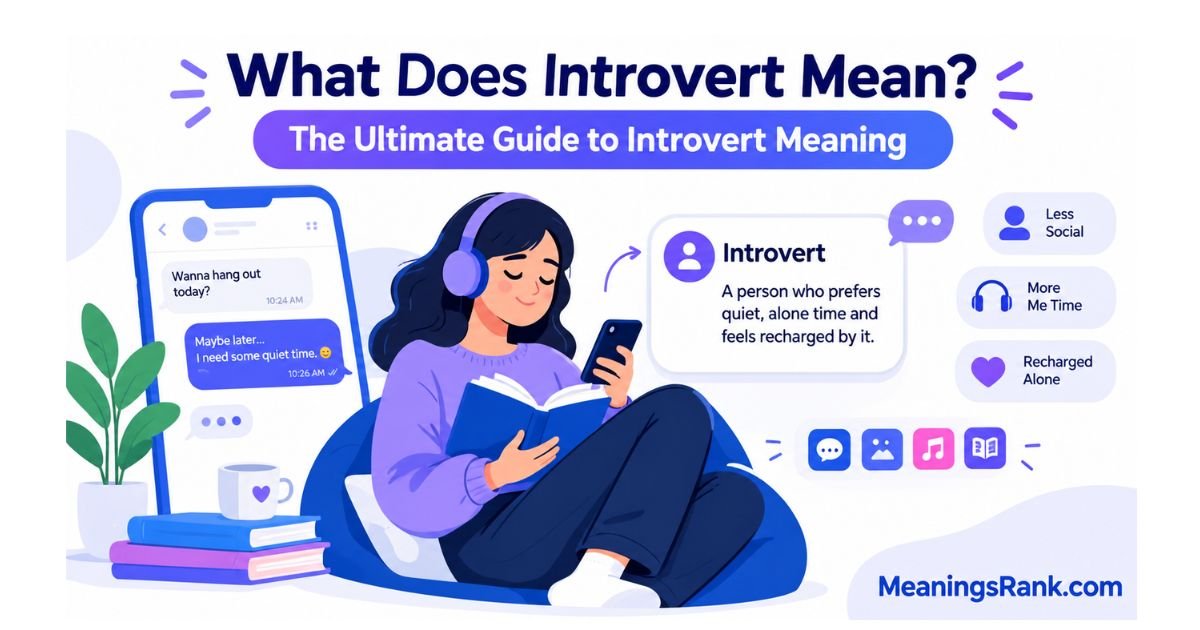

You’ve probably seen someone type “sorry, I’m just an introvert” in a group chat, or maybe you’ve called yourself one after skipping a party to stay home. But what does introvert mean beyond the label people throw around online? It’s more than just “shy person who hates people.” An introvert is someone whose energy comes from being alone rather than being around others.
This guide breaks down the real introvert meaning, how it shows up in texts, social media, and everyday talk, and how to use the word correctly without offending anyone. By the end, you’ll know exactly what it means when someone calls themselves or someone else an introvert.
What Does Introvert Mean?
At its core, the word introvert describes a person who feels more comfortable focusing on their own thoughts and inner world than on outside activity and social interaction. It’s not a mood or a bad day. It’s a personality trait that shapes how someone recharges their energy.
If you’ve ever wondered what does introvert mean in a simple sentence, here it is: an introvert is someone who gains energy from quiet, alone time and often feels drained after too much socializing.
This doesn’t mean introverts hate people. Many introverts have close friends, enjoy deep conversations, and even like parties just not all the time, and usually in small doses. The key difference is where their energy comes from and where it goes.
What Is an Introvert?
The term comes from psychology, first made popular by Swiss psychiatrist Carl Jung in the early 1900s. He used “introversion” to describe people who direct their focus inward, toward their own thoughts, feelings, and ideas, rather than outward toward the external world.
In simple terms, an introvert is someone who:
- Prefers small groups or one-on-one time over large crowds
- Needs alone time to feel refreshed after socializing
- Thinks before speaking, often processing internally first
- Enjoys deep, meaningful conversations over small talk
- Can feel tired or overstimulated in loud, busy environments
Introversion sits on a spectrum. Some people are extremely introverted and need lots of solo time. Others lean introverted but still enjoy regular social contact. It’s not a strict box it’s more like a sliding scale.
Introvert Is Not the Same as Antisocial
A common mix-up is thinking introverts don’t like people. That’s not true. Antisocial usually means avoiding or disliking social contact altogether, sometimes with a lack of concern for others. Introverts, on the other hand, often enjoy people they just need breaks from social energy to recharge.
Introvert Personality Traits and Characteristics
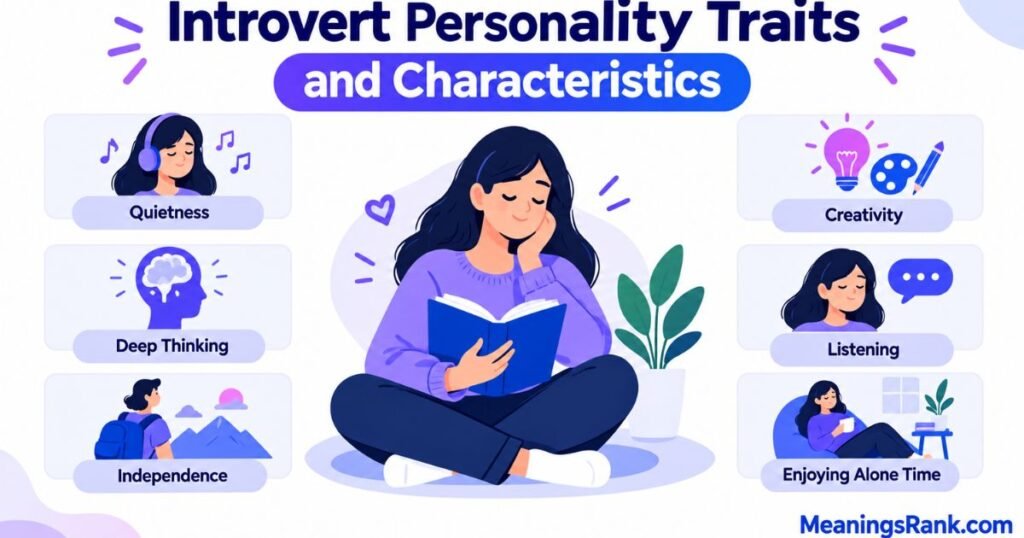
Not every introvert looks the same, but there are common traits that show up again and again. Here’s a quick list of typical introvert characteristics:
- Enjoys solitude: Alone time feels peaceful, not lonely.
- Thinks before talking: Prefers to process ideas internally before sharing them out loud.
- Prefers deep talks over small talk: Small talk can feel draining; real conversations feel energizing.
- Gets tired after socializing: Even fun events can leave an introvert needing a “recovery day.”
- Observant: Notices small details others might miss because they’re watching more than talking.
- Comfortable with silence: Doesn’t feel the need to fill every quiet moment with chatter.
- Selective with friendships: Prefers a few close friends over a large friend group.
- Creative inner world: Often has rich thoughts, ideas, or imagination happening internally.
Types of Introverts
Not all introverts are the same. Researchers often break introversion into a few sub-types:
- Social introvert: Prefers small gatherings over big parties, but still enjoys people.
- Thinking introvert: Spends a lot of time in their own head, daydreaming or reflecting.
- Anxious introvert: Avoids social situations partly due to social anxiety, not just preference.
- Restrained introvert: Takes time to warm up, acts more reserved before diving into activities.
Introvert vs. Shy: Are They the Same?
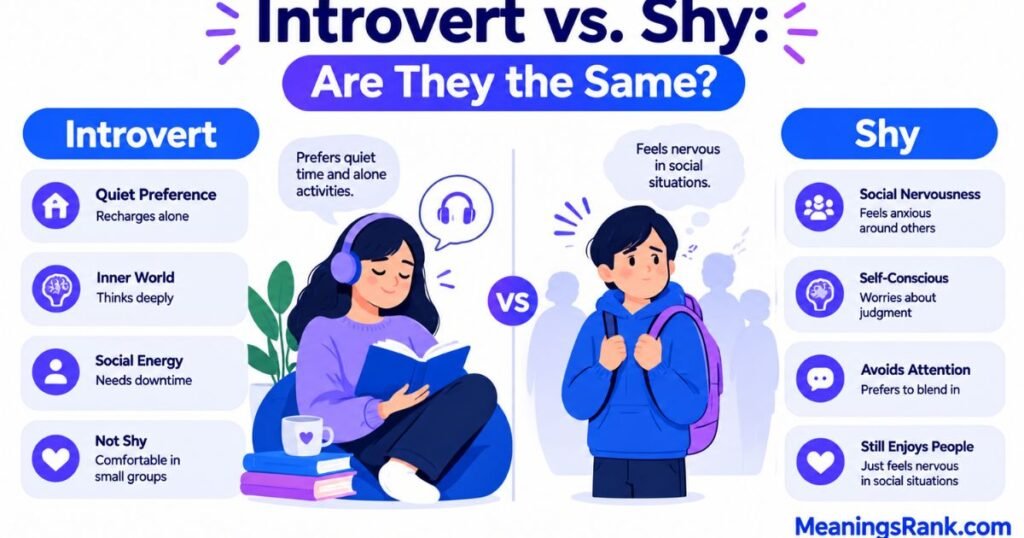
No, and this is one of the biggest misunderstandings about the word. Shyness is about fear or nervousness in social situations. Introversion is about where you get your energy from. You can be shy and extroverted, or confident and introverted; they’re two completely different things.
| Introvert | Shy Person |
| Prefers alone time to recharge | May want social contact but feels anxious about it |
| Chooses solitude by preference | Avoids social situations out of fear or discomfort |
| Can be confident and social in small doses | Often feels nervous even in small groups |
| Talking to people isn’t scary, just tiring | Talking to people can feel scary or stressful |
| A personality trait, not a fear | Often linked to social anxiety |
Someone can be an outgoing introvert who loves talking to people but still needs quiet time afterward. Meanwhile, a shy extrovert might crave social interaction but feel nervous starting conversations. The two words get confused constantly, but they describe different things entirely.
How Context Changes the Introvert Meaning
Like a lot of personality words, “introvert” can shift meaning slightly depending on where and how it’s used. Online, it’s often used casually or even as a joke. In psychology, it has a more precise, research-based definition. In everyday conversation, people sometimes stretch the word to mean “quiet” or “antisocial,” even when that’s not technically accurate.
Here’s how the meaning can shift:
- In psychology: A defined personality trait based on where mental energy is directed.
- In casual conversation: Often used loosely to mean “quiet” or “prefers staying home.”
- On social media: Sometimes used humorously, like a personality badge people wear with pride.
- In dating or relationships: Used to explain communication style or need for alone time.
- At work: Used to describe someone who prefers independent tasks over group brainstorming.
Understanding the context helps you read the real meaning behind the word instead of assuming the worst (or the best).
Also Read: Chopped Meaning in Slang: The Complete Guide to Its Meaning, Uses & Examples
Introvert Meaning in Different Contexts
In Psychology
Introversion is one half of the introvert-extrovert scale used in personality psychology, including well-known models like the Big Five and the Myers-Briggs Type Indicator (MBTI). It’s treated as a spectrum, not a fixed label.
In Friendships
Among friends, calling someone an introvert usually just means they need more downtime and prefer smaller hangouts. It’s often said with understanding, not judgment.
In Dating
In dating contexts, someone might say “I’m an introvert” to explain why they need quiet nights in, or why they take time to open up. It’s a way of setting expectations early.
In the Workplace
At work, “introvert” often describes someone who does their best thinking alone, prefers written communication over meetings, and may need quiet space to focus. Many workplaces now design “quiet zones” specifically for introverted employees.
In Pop Culture
Online, introversion is sometimes turned into a meme or personality aesthetic cozy nights, coffee, books, and cancelled plans. This casual usage is popular but doesn’t always match the clinical definition.
Introvert Meaning in Chat and Social Media
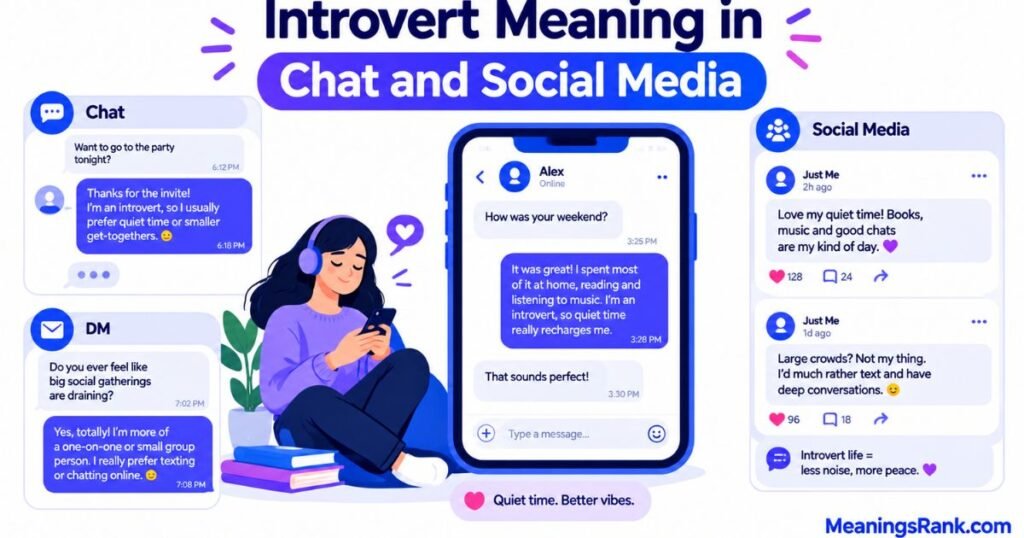
Online, “introvert” pops up constantly in bios, captions, and casual chats. Here’s how it typically shows up across platforms:
- Instagram bios: “Certified introvert 🖤” or “Professional homebody” often signal a preference for quiet time.
- TikTok: Introvert-themed content is huge, from “day in the life of an introvert” videos to relatable skits about cancelling plans.
- Discord: Gamers often describe themselves as introverts to explain why they prefer text chat over voice calls.
- WhatsApp/Group chats: Someone might type “I’m an introvert, count me out 😅” to politely decline an event.
- Snapchat: Streaks and DMs are common among introverts who prefer one-on-one digital chats over big group hangouts.
- Workplace Slack/Teams: “Sorry, more of an introverted mind if I answer over chat instead of a call?” is a common polite message.
Common Introvert Hashtags and Phrases
- #IntrovertProblems
- #IntrovertLife
- “Introvert energy only”
- “Cancel plans, gain peace”
- “Big introvert energy”
These aren’t official definitions, they’re cultural shorthand people use to bond over shared experiences of needing alone time.
Real Conversation Examples
Seeing the word in action makes the meaning click faster. Here are some real-style examples from different platforms:
Text message:
Friend: “Party tonight?? 🎉”
You: “Nah, I’m feeling introvert mode. Rain check?”
Instagram comment:
“This looks amazing but also sounds exhausting lol, big introvert energy over here 😂”
Discord chat (gaming group):
Player1: “Wanna hop on voice chat?”
Player2: “I’m good with text, kinda an introvert when it comes to calls 😅”
Workplace Slack message:
“I work better solo on this one total introverted brain when it comes to brainstorming out loud. Mind if I send my ideas in writing?”
WhatsApp group chat:
“Guys I love you but I need a weekend alone lol. Introvert battery is at 2%.”
TikTok caption:
“POV: you’re an introvert and someone invited you to a group hangout 💀”
These examples show the word is flexible; it can explain a decision, set a boundary, or just add humor to everyday chats.
Is Calling Someone an Introvert Rude or Offensive?
Generally, not calling someone an introvert isn’t rude. It’s a recognized personality trait, not an insult. Most people who identify as introverts don’t mind the label at all; many even embrace it proudly.
However, tone and intent matter. It can come across as rude if:
- It’s said in a mocking or dismissive way (“ugh, you’re such an introvert, just talk to people”)
- It’s used to pressure someone into being more social when they don’t want to be
- It’s used as an excuse to exclude someone from plans without asking them first
- It assumes the person is antisocial, awkward, or “no fun” just because they’re quiet
The safest approach is to let people self-identify. If someone calls themselves an introvert, it’s fine to acknowledge it. If you’re the one labeling someone else, it’s more respectful to ask how they feel rather than assuming.
How to Reply When Someone Says They’re an Introvert
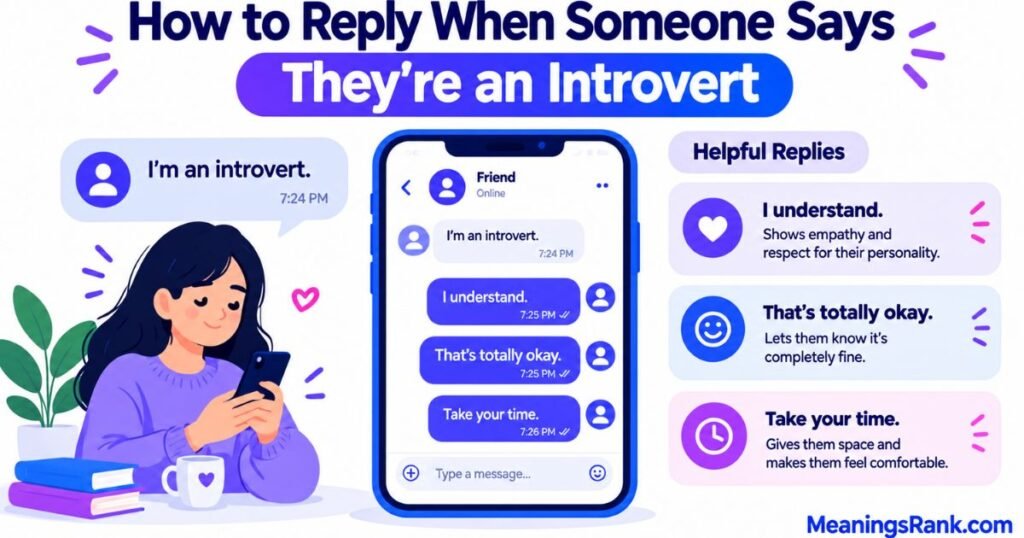
If a friend, coworker, or match on a dating app tells you they’re an introvert, how you respond matters. Here are some good ways to reply:
- “That’s totally fine, just let me know what works for you.”
- “No worries, I want to hang out one-on-one instead?”
- “Thanks for telling me, I’ll keep that in mind.”
- “Same here honestly, we can just keep it low-key.”
- “Take your time, no pressure to be social all the time.”
What Not to Say
Avoid responses that dismiss or challenge their personality, like:
- “You just need to get out more.”
- “That’s such a lame excuse.”
- “You’re not really an introvert, you talk a lot sometimes.”
These responses can feel invalidating, even if that’s not the intention. A little understanding goes a long way.
When to Use the Word Introvert
Using the word correctly helps avoid confusion or hurt feelings. It’s appropriate to use “introvert” when:
- Describing your own personality or preferences
- Explaining why you need quiet time after socializing
- Talking about personality types in a psychology or self-help context
- Setting a boundary politely, like declining a big event
- Describing a fictional character or public figure who clearly shows introverted traits
When to Avoid Calling Someone an Introvert
There are moments when it’s better to skip the label, especially without knowing the full picture:
- When someone hasn’t identified that way themselves
- As a way to excuse rude or dismissive behavior toward someone
- To explain away social anxiety, depression, or other mental health struggles without medical context
- In a professional evaluation without the person’s own input
- As a joke that mocks someone’s personality in front of others
If you’re unsure, it’s always safer to ask how someone identifies rather than assign a label for them.
Common Mistakes About Introverts
A lot of myths float around about what it means to be an introvert. Here are the most common ones, cleared up:
Myth: Introverts hate people.
Truth: Most introverts enjoy people just in smaller doses or quieter settings.
Myth: Introverts are always shy.
Truth: Shyness and introversion are different traits and don’t always overlap.
Myth: Introverts can’t be leaders.
Truth: Many successful leaders identify as introverts and lead through thoughtful, calm decision-making.
Myth: Introverts never want to socialize.
Truth: Introverts often enjoy socializing; they just need recovery time afterward.
Myth: Introversion means something is wrong.
Truth: It’s simply a personality trait, not a flaw or disorder.
Also Read: Aura Meaning in Slang: The Ultimate Guide to What Aura Means in Text
Similar Terms to Introvert
- Extrovert: Someone who gains energy from social interaction and external activity.
- Ambivert: Someone who falls in the middle, showing both introverted and extroverted traits.
- Shy: Feeling nervous or anxious in social situations, regardless of energy source.
- Homebody: Someone who prefers staying home, often overlapping with introvert traits.
- Loner: Someone who spends a lot of time alone, sometimes by choice, sometimes not.
- Socially reserved: A more neutral phrase for someone who holds back in group settings.
Origin and Popularity of the Term
The word “introvert” comes from the Latin roots “intro” (inward) and “vertere” (to turn) literally meaning “to turn inward.” Carl Jung introduced the psychological concept in his 1921 work on personality types, describing introversion and extroversion as two basic attitudes people use to interact with the world.
The term stayed mostly within psychology for decades. It gained massive mainstream popularity after Susan Cain’s 2012 book “Quiet: The Power of Introverts in a World That Can’t Stop Talking,” which encouraged introverts to embrace their personality instead of feeling pressured to act extroverted.
Today, thanks to social media, the word has become part of everyday internet culture used in bios, memes, and casual conversation far beyond its original psychological roots.
Quick Recap
- An introvert is someone who recharges through alone time rather than social interaction.
- Introversion is a personality trait, not the same as shyness or antisocial behavior.
- Context changes how the word is used psychology, casual chat, dating, and work all use it slightly differently.
- It’s commonly used online in bios, captions, and group chats to explain social preferences.
- The word isn’t inherently rude, but tone and intent matter.
- Letting people self-identify is the most respectful approach.
Frequently Asked Questions
What does introvert mean in simple words?
It means someone who feels recharged by alone time, not socializing.
Is being an introvert the same as being shy?
No, shyness is fear-based; introversion is about energy source.
Can an introvert still enjoy parties or socializing?
Yes, introverts can enjoy socializing but often need rest afterward.
Is calling someone an introvert an insult?
No, it’s a personality trait, not an insult or criticism.
What’s the opposite of an introvert?
The opposite is an extrovert, who gains energy from social interaction.
Can someone be both introverted and extroverted?
Yes, that’s called an ambivert, balancing both traits.
Final Thoughts
So, what does introvert mean at the end of the day? It’s simply a way of describing how someone gets their energy through quiet reflection instead of constant social interaction. It’s not a flaw, an excuse, or a personality defect. It’s just one way people naturally experience the world.
Whether you’ve seen it in a friend’s Instagram bio, a Discord chat, or a text message declining weekend plans, the word usually points to the same thing: someone who values their alone time and needs it to feel their best. Understanding the real meaning helps you use the word respectfully, whether you’re describing yourself or responding to someone else’s boundaries.
At the end of the day, introverts aren’t anti-people they’re just recharging for the next conversation that actually matters to them.