
If you scrolled through a comment section and saw someone type “DSL” under a photo, you probably paused for a second. It looks like a random abbreviation, maybe something technical. But in slang, DSL has nothing to do with internet routers or Wi-Fi speed. It’s a compliment, and once you know what it stands for, you’ll start noticing it everywhere on social media.
This guide breaks down the DSL meaning slang in plain English, shows you how it’s used on different apps, and helps you figure out when it’s okay to use and when you should probably skip it.
Quick Answer: What Does DSL Mean in Slang?
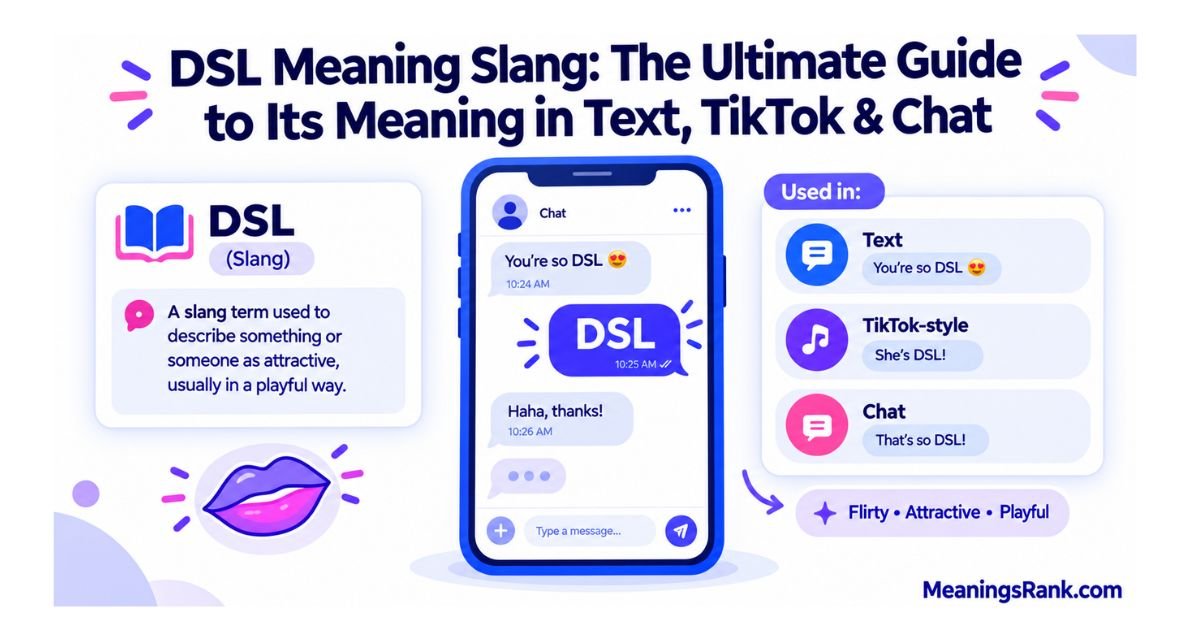
DSL stands for “Dick Sucking Lips.” It’s slang used mostly by younger people online to describe someone with full, attractive lips. It started as internet humor around 2012–2014 and is usually meant as a playful compliment, not a literal or serious comment. It shows up most in comment sections on Instagram, TikTok, and Twitter/X.
What Does DSL Mean?
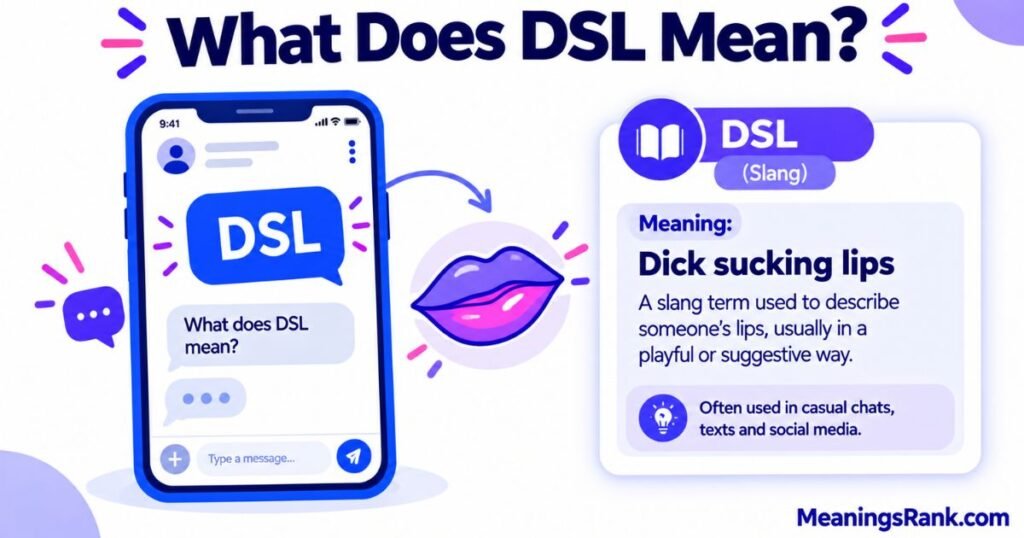
DSL is an acronym, and like a lot of internet slang, it takes a crude idea and turns it into shorthand. The phrase it’s built from is a blunt, sexually suggestive way of saying someone has nice, full lips. Over time, the acronym became more common than the full phrase itself, mostly because typing three letters is easier and feels a little less awkward than spelling it out.
It’s important to know that outside of slang, DSL has other meanings too. In tech, DSL stands for “Digital Subscriber Line,” a type of internet connection. In programming, it can mean “Domain Specific Language.” But in texting and social media comment sections, DSL almost always refers to the lips compliment.
The Main Slang Meaning of DSL
The core slang meaning is simple: someone is complimenting another person’s lips. It’s typically dropped in a comment under a selfie, a video, or a photo where someone’s lips are noticeable, whether that’s from lip liner, a pout, or just their natural shape.
Here’s what makes it different from a regular compliment:
- It’s meant to be a little bold or cheeky, not formal.
- It’s almost always used between people who are comfortable being casual with each other, or by strangers online being flirty in a joking way.
- It’s rarely said out loud in person. It lives mostly in comments and texts.
Alternative Meanings of DSL
While the lips meaning dominates online slang, DSL does have other definitions depending on where you see it.
| Meaning | Context | Common Users |
| Dick Sucking Lips | Social media slang | Teens, young adults on IG/TikTok |
| Digital Subscriber Line | Internet/telecom | ISPs, tech support, older internet users |
| Domain Specific Language | Software development | Programmers, coders |
| Dark Souls (fan shorthand, rare) | Gaming forums | Niche gaming communities |
If you see “DSL” in a tech support thread or an internet provider’s website, it’s talking about your connection speed, not slang at all. Context is everything here, and the next section explains exactly how to tell the difference.
How Context Changes the Meaning of DSL
The word “DSL” by itself doesn’t tell you much. You have to look at where it’s used and who’s saying it.
On a photo or video comment:
If someone comments “DSL” under a close-up selfie, it’s almost certainly the lips compliment.
In a tech conversation:
If your dad is asking why the DSL is slow, he’s talking about internet service, not slang.
In a coding chat:
If a developer mentions building a DSL for a project, they mean a specialized programming language, like SQL is a DSL for databases.
Also Read: What Does Introvert Mean? The Ultimate Guide to Introvert Meaning
In a gaming server:
Rare, but occasionally used as fan shorthand. Always check the surrounding messages before assuming.
A simple rule: if the conversation is about looks, appearance, or a photo, it’s slang. If it’s about internet, software, or tech setup, it’s not.
DSL Meaning on Different Platforms
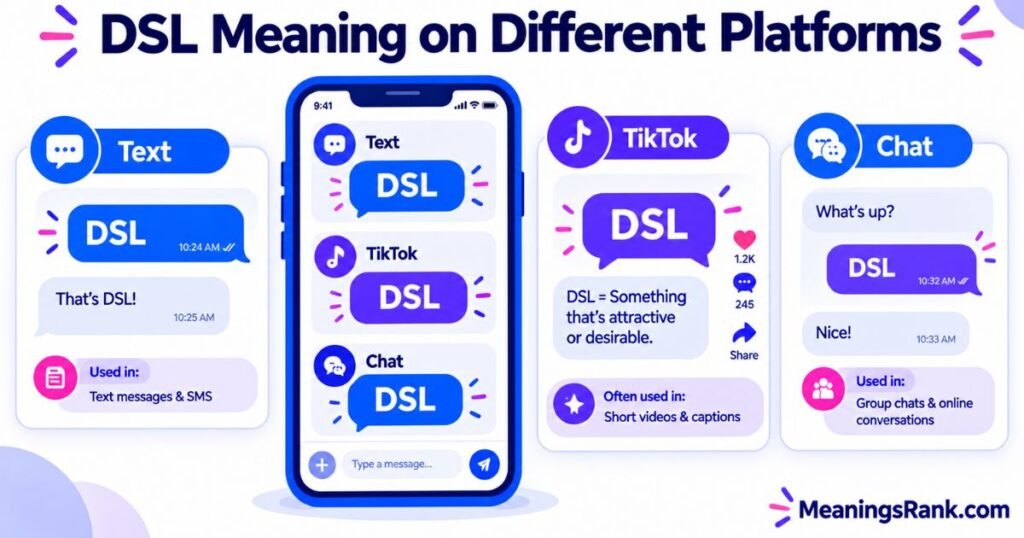
Slang doesn’t behave the same way on every app. Here’s how DSL typically shows up depending on where you see it.
DSL on Instagram
This is where the slang meaning is most common. You’ll see it dropped as a quick comment on selfies, especially close-up shots or photos with lip gloss or lip liner. It’s short, casual, and meant to be noticed quickly while scrolling.
DSL on TikTok
On TikTok, DSL shows up in comments under GRWM (get ready with me) videos, makeup tutorials, or POV-style content. It’s often paired with emojis like 🔥 or 👄 to soften the bluntness of the acronym.
DSL on Snapchat
Snapchat is more private, so DSL might be said directly to a friend after they send a selfie in a chat, rather than posted publicly. It carries a more personal, sometimes flirty tone here.
DSL on Twitter/X
Twitter users sometimes use DSL as a reply to a photo tweet, often mixed with humor or memes rather than a serious compliment.
DSL on Discord and Gaming Chats
In gaming spaces, DSL is less common as the lips slang and more likely to cause confusion, since gamers might assume it relates to internet connection or lag. If it does appear as slang here, it’s usually a joke between friends who already know each other well.
DSL in Workplace Chats
This one is straightforward: DSL should not appear in professional or workplace chats at all when used as slang. If it comes up in a work context, it almost always refers to a Digital Subscriber Line connection, like discussing internet setup for an office.
DSL Meaning in Text Messages and Chat
In one-on-one texting, DSL meaning slang is usually sent as a quick reaction to a picture someone shares. It’s short, doesn’t need explanation between people who already know slang, and often comes with a laughing or fire emoji to keep the tone light.
It’s rarely used as a conversation starter. Instead, it works more like a stamp of approval after seeing a photo.
Real Conversation Examples
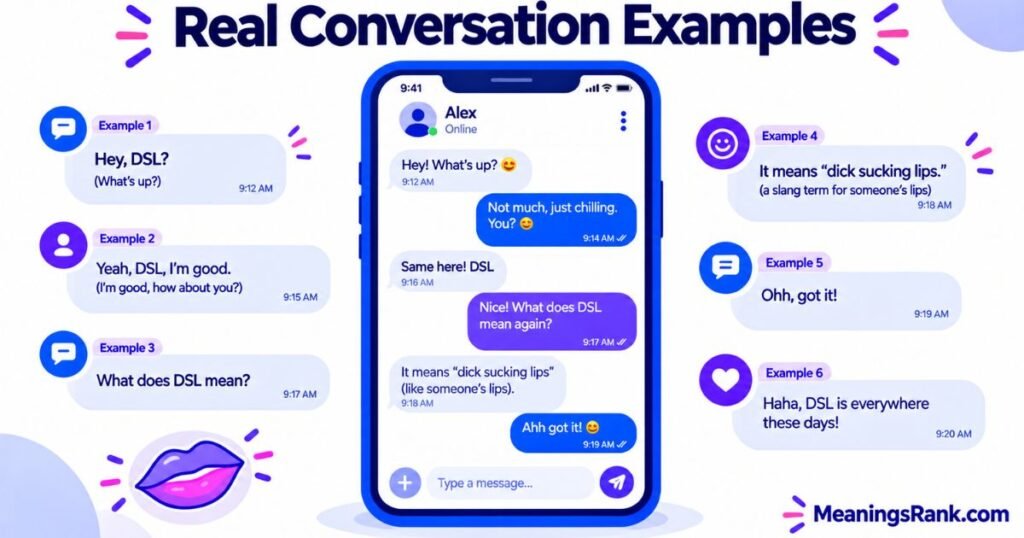
Instagram comment:
User: “New pic 💋” Reply: “okay DSL 🔥🔥”
Text message between friends:
“sent you that selfie lol” “dsl fr, where’d you get that lip combo”
TikTok comment under a GRWM video:
“the lip liner + gloss combo… DSL for real”
Discord (confused context):
“my DSL keeps dropping mid-game” “bro that’s not the slang lmao he means his internet”
Workplace chat (incorrect use to avoid):
“Great presentation today, DSL 😂” ❌ This should never appear in a professional setting, even as a joke.
Tone and Emotional Meaning of DSL
DSL usually carries a light, playful, and slightly bold tone. It’s meant to be flattering, not offensive, when used the way it’s intended. That said, tone depends heavily on the relationship between the people talking.
- Between close friends, it feels like a fun compliment.
- Between strangers online, it can come off as forward or even inappropriate, depending on the person receiving it.
- In a flirty context, it signals attraction in a joking way rather than a serious one.
Because the acronym is based on a crude phrase, the emotional impact isn’t neutral. It can feel funny to one person and uncomfortable to another, so reading the room matters more than the word itself.
How to Reply to DSL
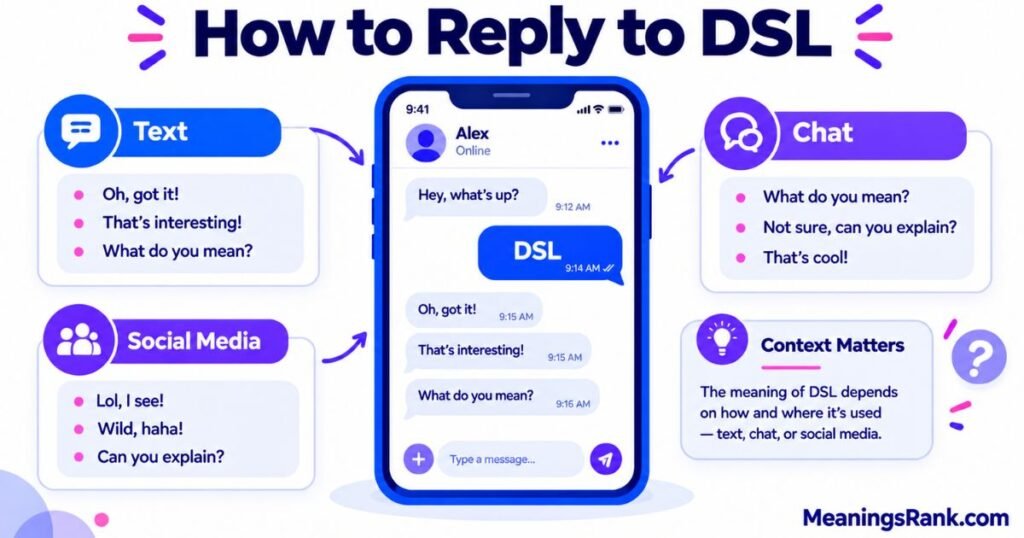
If someone comments or texts you DSL, here are a few natural ways to respond depending on how you feel about it:
- If you’re comfortable with it: “lol thank you 😂” or a simple laughing emoji works fine.
- If you want to keep it light: “stop 😭” is a common, casual reply that acknowledges the comment without making it a big deal.
- If you don’t like the comment: It’s okay to simply not respond, or to say directly, “not really my thing, but thanks anyway.”
- If it’s from a stranger and feels off: You’re allowed to ignore it completely or block/report if it feels inappropriate.
There’s no rule that says you have to respond at all. Comments like this are optional to engage with.
When to Use the Term DSL
- When texting close friends who already understand internet slang.
- When commenting casually on social media between people who know each other.
- When the tone of the conversation is already playful or flirty.
When to Avoid the Term DSL
- In professional or workplace settings, even in casual work group chats.
- When talking to someone you don’t know well, since it can come across as inappropriate.
- Around younger audiences or in spaces where the crude origin of the acronym wouldn’t be appropriate.
- When you’re unsure how the other person will take it. It’s better to skip it than to make someone uncomfortable.
Common Mistakes When Using DSL
Assuming everyone knows the slang meaning.
Older generations or people unfamiliar with internet slang may only know DSL as an internet connection type, leading to confusion.
Using it in professional spaces.
This is one of the most common and most avoidable mistakes.
Not considering the other person’s comfort level.
What feels like a joke to you might not land the same way for someone else.
Confusing it with unrelated acronyms
like DSL in coding (Domain Specific Language), especially in tech-related group chats.
Overusing it.
Repeating the same slang term too often in comments can come across as insincere or spammy.
Similar Slang Terms to DSL
| Term | Meaning | How It’s Used |
| Snack | Someone who looks attractive | “You’re such a snack in this pic” |
| Glow up | A noticeable improvement in looks | “Her glow up is insane” |
| Baddie | A stylish, confident, attractive person | “She’s a total baddie” |
| Ate | Did something extremely well, including looking good | “You ate with this fit” |
| Fine | Attractive | “He’s so fine” |
These terms overlap with DSL in the sense that they’re all casual compliment slang, but DSL is more specific since it only refers to lips, while the others are broader.
Also Read: Chopped Meaning in Slang: The Complete Guide to Its Meaning, Uses & Examples
Origin and Popularity of DSL
DSL traces back to internet culture around the early-to-mid 2010s, gaining traction alongside platforms like Vine and Tumblr before moving into Instagram and Twitter comment sections. It became one of many acronyms built from blunt or crude phrases turned into shorthand for humor and ease of typing.
Its popularity has stayed fairly steady in comment sections rather than exploding into mainstream use the way terms like “rizz” or “no cap” have. It’s more of a niche compliment acronym that specific online communities, especially younger social media users, continue to recognize and use. TikTok’s comment culture has kept it alive, especially under beauty and lifestyle content where lips are often the focus.
Quick Recap
- DSL is slang for a crude phrase used as a compliment about someone’s lips.
- It’s most common on Instagram, TikTok, and in texting between friends.
- Context matters: DSL can also mean Digital Subscriber Line (internet) or Domain Specific Language (coding).
- It’s best used casually between people who understand internet slang.
- It should be avoided in professional or unfamiliar settings.
Frequently Asked Questions
What does DSL meaning slang in a text message?
It usually means a compliment about someone’s lips in slang.
Is DSL a compliment or an insult?
It’s meant as a compliment, though tone depends on context.
Does DSL always mean internet connection?
No, in slang and social media it means something different entirely.
Is it okay to say DSL to a stranger online?
It’s risky since strangers may find it inappropriate or too forward.
What’s the difference between DSL and “snack” slang?
DSL refers specifically to lips, while “snack” describes overall attractiveness.
Where did the DSL slang term originate?
It started in early 2010s internet culture on platforms like Vine and Tumblr.
Final Thoughts
DSL is one of those internet slang terms that seems confusing at first but makes sense once you know the context. Outside of slang, it can mean an internet connection or a coding term, but in texts, TikTok comments, and Instagram replies, it almost always refers to a compliment about someone’s lips. Like most slang built from bold or crude phrases, it works best between people who already have a casual, comfortable relationship, and it’s not something you’d want to bring into a professional or unfamiliar conversation.
The main thing to remember is that slang meaning depends heavily on where you see it and who’s using it. If you come across DSL and you’re not sure which meaning applies, look at the surrounding conversation. A photo comment section points to the compliment. A tech support chat points to internet service. Understanding that difference helps you read digital conversations more accurately and avoid any awkward mix-ups, whether you’re replying to a friend’s selfie or troubleshooting your home internet.