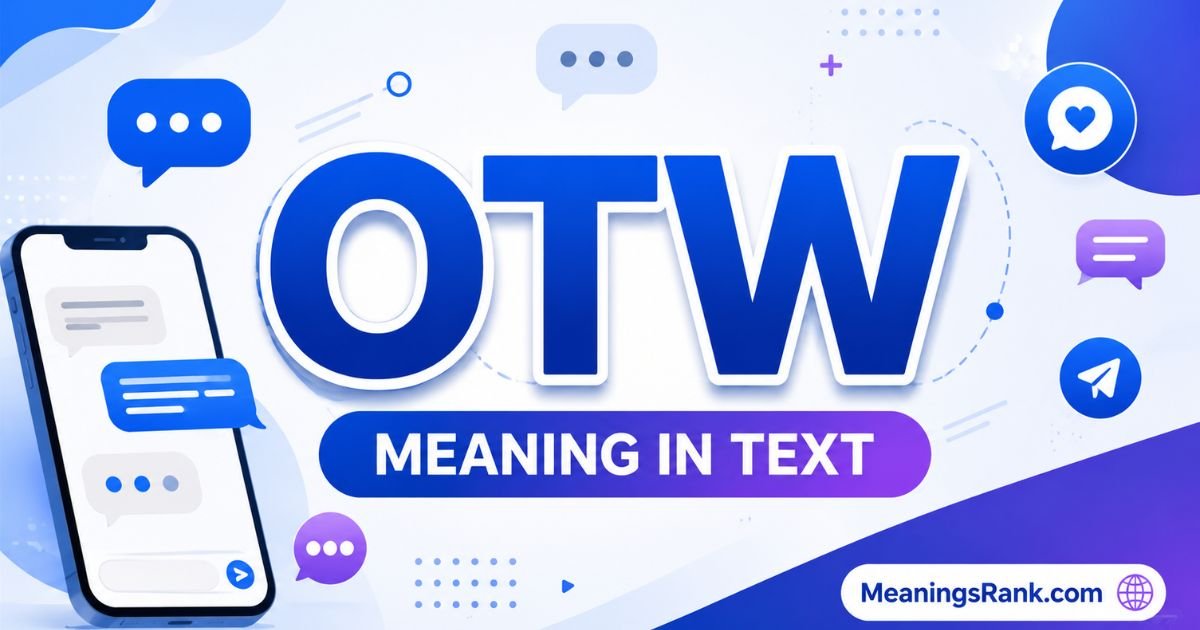

Someone just texted you “OTW” and you’re not totally sure what to do next wait, reply, or just start getting ready? The OTW meaning in text is simple: it means “on the way.” People use it to let others know they’re currently heading somewhere, whether that’s to a friend’s house, a date, or a work meeting.
You’ll see it everywhere texting, WhatsApp, Instagram DMs, Snapchat, and even gaming chats. It’s short, quick to type, and gets the point across instantly. Understanding OTW helps you respond at the right time and avoid unnecessary back-and-forth messages. Let’s go through everything this small abbreviation really means.
What Does OTW Meaning in Text?
OTW stands for “on the way.” It tells the other person that you’ve already started heading to a location, so they don’t need to keep asking where you are.
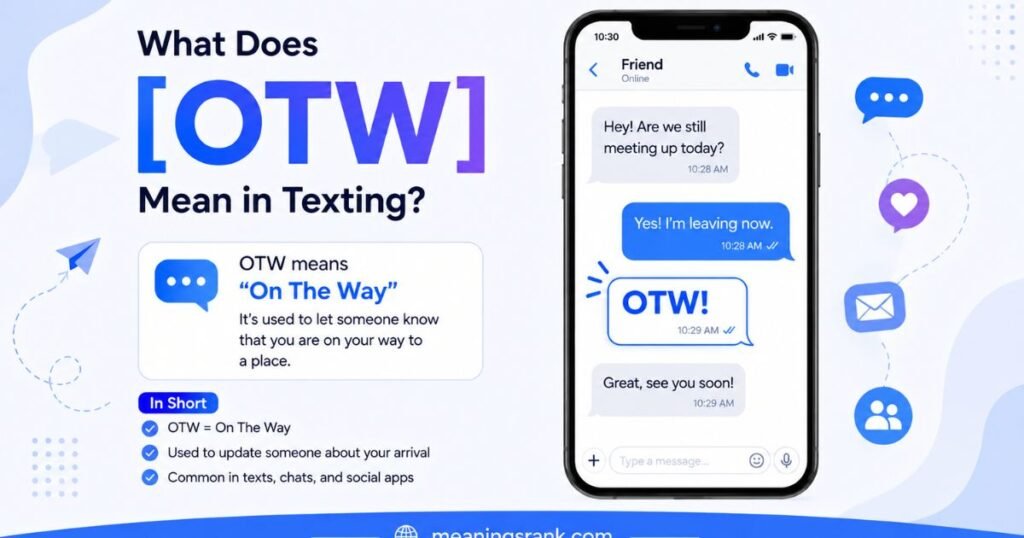
It’s a status update, not a question or opinion. People send it to reduce confusion, especially when plans involve timing.
Here’s a simple example:
Person A: “Are you close?”
Person B: “OTW, be there in 10.”
In this exchange, Person B isn’t just answering the question. They’re confirming movement has already started, which gives Person A a clear expectation of when they’ll arrive.
OTW shows up constantly in daily texting because plans change fast, and people want quick updates without typing long sentences.
Some quick facts about how OTW works:
- It always refers to physical movement toward a place
- It’s usually followed by a time estimate
- It works in both casual and semi-urgent situations
- It rarely carries emotion it’s mostly informational
For example, “OTW now” feels more immediate, while “OTW in 20” sets a clearer expectation. Either way, the core meaning stays the same: movement has already begun.
Once you notice this pattern, OTW becomes one of the easiest abbreviations to recognize in any conversation.
How Is OTW Used in Text Messages?
OTW usually stands alone or appears right at the start of a reply. It rarely needs extra words to make sense, though people often add a time estimate right after it.
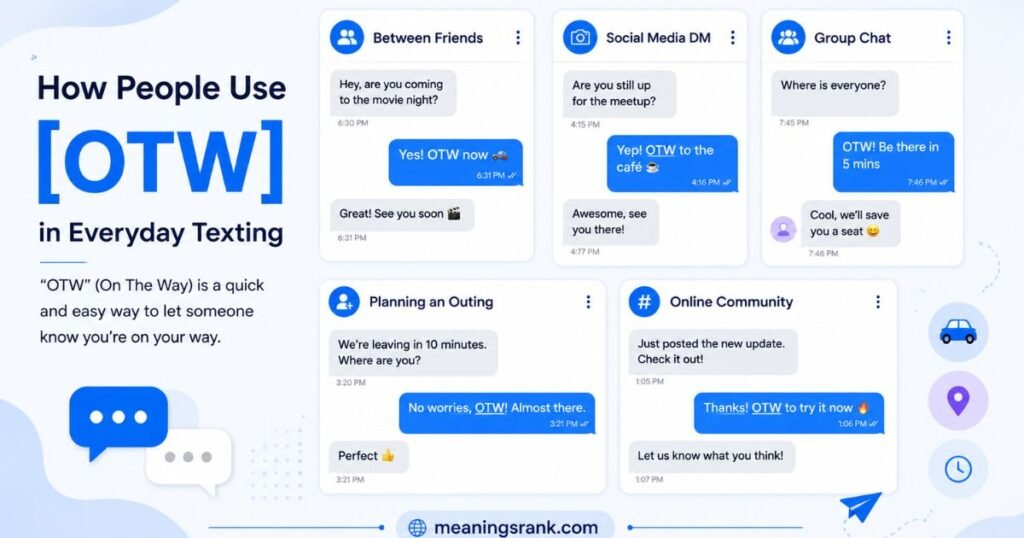
Typical Structure:
“OTW” or “OTW + time estimate”
Example: “OTW, 5 minutes away.”
Here’s how OTW looks across different platforms:
Text Messages:
“OTW, traffic is light so I’ll be quick.”
WhatsApp:
“OTW 🚗 give me 15 mins.”
Instagram DMs:
“OTW to the event now!”
Snapchat:
“otw lol don’t leave without me”
TikTok Comments:
“OTW to try this recipe right now 😂”
Gaming Chats:
“OTW to help, hold that position.”
Discord Servers:
“OTW to the voice channel, one sec.”
Workplace Chats:
“OTW to the office, running 5 minutes late.”
Across every platform, OTW carries out the same job confirming that movement has started. It works especially well in workplace messaging when someone needs a quick heads-up without a full explanation.
In group chats, OTW often prevents repeated questions like “where are you?” since it answers that instantly. It’s efficient, direct, and rarely misunderstood.
Because it’s so predictable in meaning, OTW rarely needs extra context to make sense, no matter which app or platform it’s used on.
Read More: MHM Meaning in Text: What It Means, How People Use It & How to Reply (2026 Guide)
OTW Examples in Real Conversations
Seeing OTW in different everyday situations makes its use even clearer. Below are realistic examples across common platforms.
Text Message:
Person A: “Dinner starts at 7.”
Person B: “OTW now, should make it on time.”
WhatsApp Group Chat:
Person A: “Is everyone here?”
Person B: “OTW, 10 minutes max.”
Instagram DM:
“OTW to your place, be there soon!”
Snapchat Caption:
“otw to the beach ☀️”
TikTok Comment:
“OTW to buy this after seeing your review.”
Gaming Voice/Text Chat:
“OTW to revive you, stay down.”
Discord Message:
“OTW to start the stream, give me 5.”
Workplace Slack Message:
“OTW to the client meeting, will update after.”
In each case, OTW clearly communicates that action has already started. This small detail matters because it shifts the tone from “I might go” to “I’m already going.”
Notice how OTW fits naturally in both relaxed chats and slightly more urgent workplace updates. It adjusts to the situation without needing rewording.
Whether it’s a casual hangout or a work commitment, OTW keeps communication quick and removes the need for extra confirmation messages.
Is OTW Polite, Rude, or Flirty?
OTW is neutral by nature. It simply reports movement, so it doesn’t carry rudeness or flirtation on its own.
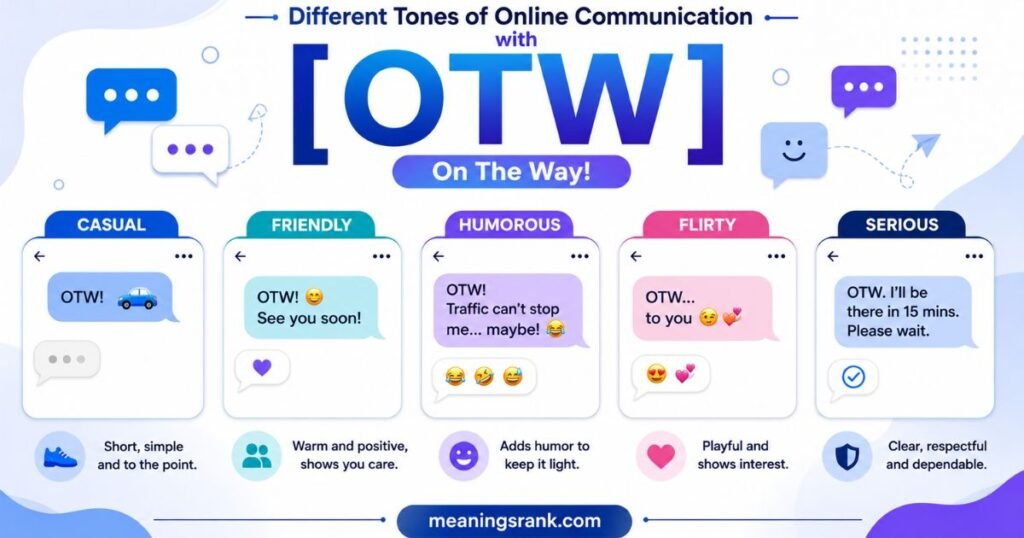
Why It’s Usually Polite:
Sending OTW shows effort and consideration. It reassures the other person that you’re already handling the plan instead of leaving them waiting without updates.
Example: “OTW, sorry for the delay!” comes across as thoughtful, not careless.
Could OTW Ever Feel Rude?
Only if it’s sent very late or without explanation after someone was clearly waiting a long time. Even then, the tone comes from timing, not the word itself.
Is OTW Ever Flirty?
Not typically. OTW is functional rather than emotional. But it can appear in flirty context depending on the message around it.
Example: “OTW to see you, can’t wait 😊”
Here, the flirty tone comes from the added words, not from OTW itself. The abbreviation simply confirms movement.
Quick Summary:
- In casual chats: friendly and efficient
- In workplace messages: professional and clear
- In flirty texts: neutral, but tone depends on context
- When sent very late: timing affects perception, not OTW itself
Because it stays so neutral, OTW works well across almost every type of relationship and setting.
How to Reply When Someone Says “OTW”
Replying to OTW is usually quick since it’s just a status update, not something requiring a long response.
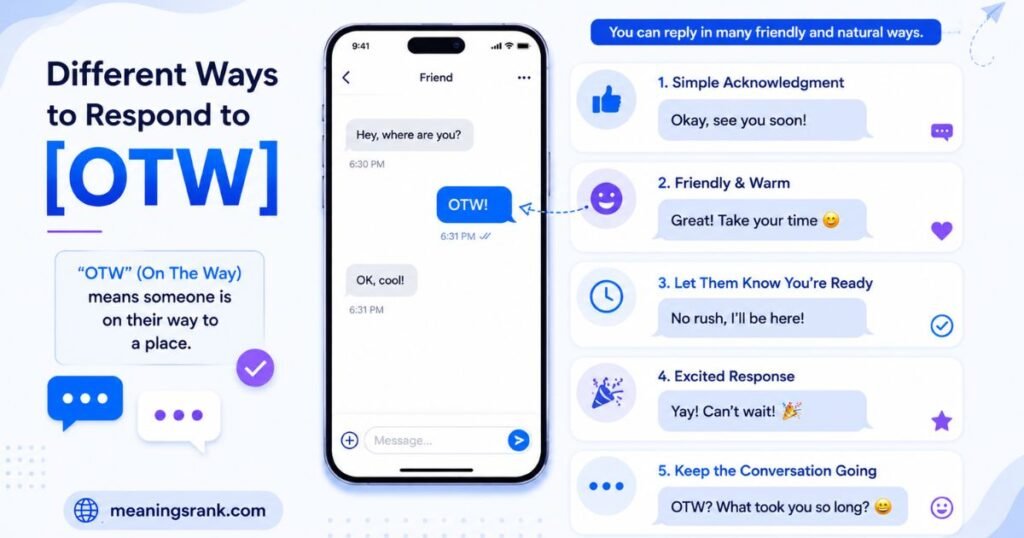
If You’re Waiting Casually:
“Okay, see you soon!” “No rush, drive safe.”
If Timing Matters:
“Perfect, we’re about to start.” “Hurry, we’re almost out of time.”
If You Want an Update:
“How far are you?” “Are you close yet?”
Here’s a quick example from a workplace chat:
Person A: “OTW to the meeting room.”
Person B: “Great, we’ll wait two more minutes.”
Notice how Person B responds based on the update instead of ignoring it. This keeps coordination smooth, especially in time-sensitive situations.
In casual chats, replies can be even simpler.
Example:
Person A: “otw to your place”
Person B: “kk see you soon”
The key with OTW replies is acknowledgment. A short response confirms the message was received and helps avoid unnecessary follow-up texts.
OTW vs Similar Text Abbreviations
OTW is often grouped with other movement or status-related abbreviations. Here’s how it compares.
| Term | Meaning | When to Use |
| OTW | On The Way | Confirming you’ve started heading somewhere |
| ETA | Estimated Time of Arrival | Giving a specific arrival time |
| BRB | Be Right Back | Stepping away briefly, not traveling |
| OMW | On My Way | Same meaning as OTW, less common |
| RN | Right Now | Emphasizing something happening immediately |
OTW vs ETA:
OTW confirms movement, while ETA gives a specific time estimate.
Example: “OTW” vs “ETA 15 minutes.”
OTW vs OMW:
These mean exactly the same thing. OMW is just a slightly less common variation.
OTW vs BRB:
BRB means stepping away temporarily, not traveling somewhere. They’re often confused but serve different purposes.
Knowing these differences helps you choose the clearest abbreviation depending on what information you actually need to share.
Read More: OTP Meaning in Text: What It Means in Texting, Social Media & Online Chats (2026 Guide)
When Should You Avoid Using OTW?
While OTW is useful, a few situations call for more formal or specific wording.
Formal Emails or Documents
OTW is casual slang and doesn’t fit professional writing. Use “I am on my way” instead.
When Exact Timing Is Critical
OTW alone doesn’t give a time estimate. In urgent situations, pair it with a specific ETA.
With People Unfamiliar With Texting Slang
Older relatives or new contacts may not recognize OTW immediately, so spelling it out avoids confusion.
When You Haven’t Actually Left Yet
Sending OTW before you’ve truly started moving can create false expectations and mistrust over time.
In Serious or Emergency Situations
Clear, direct language works better than abbreviations when safety or urgency is involved.
Being mindful of these situations helps keep communication clear and trustworthy, especially when timing matters to the other person.
Frequently Asked Questions About OTW
What does OTW mean in texting?
OTW means “on the way,” confirming travel has started.
Is OTW the same as OMW?
Yes, both mean exactly the same thing.
Can OTW be used in work chats?
Yes, it’s common in casual workplace messaging apps.
Does OTW include a specific arrival time?
No, pair it with ETA for exact timing.
Is OTW appropriate for formal emails?
No, use “on my way” instead formally.
Final Thoughts
The OTW meaning in text comes down to one clear idea: it tells someone you’re already heading their way. Whether it’s a quick text to a friend, a WhatsApp update, or a workplace message about running late, OTW keeps communication fast and clear.
We’ve covered what OTW stands for, how it’s used across different platforms, how to reply to it, and how it compares to similar terms like ETA and OMW. We also looked at situations where spelling it out works better than the abbreviation itself.
The next time you see OTW pop up in a chat, you’ll know exactly what it means and how to respond without missing a beat. Small abbreviations like this keep everyday conversations moving smoothly, and understanding them makes texting just a little bit easier.