
You’re texting a friend and they end the conversation with “HMU later.” No context, no explanation, just three letters. If you’ve ever paused to figure out what that meant, you’re not alone. The HMU meaning in text is simple: it’s a casual invitation to reach out or reconnect. You’ll see it everywhere texting, Snapchat, Instagram DMs, TikTok comments, and even Discord servers.
It’s short, friendly, and used constantly among friends and even in casual work chats. Understanding HMU helps you catch the tone of a message and respond the right way, especially since a quick “HMU” can carry more meaning than it looks like at first glance. Let’s break it all down.
What Does HMU Meaning in Text?
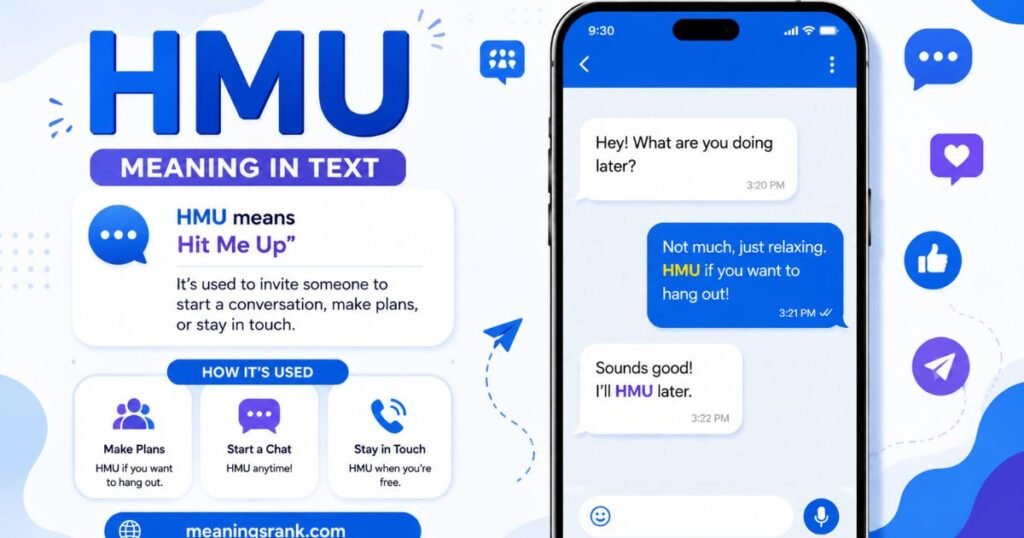
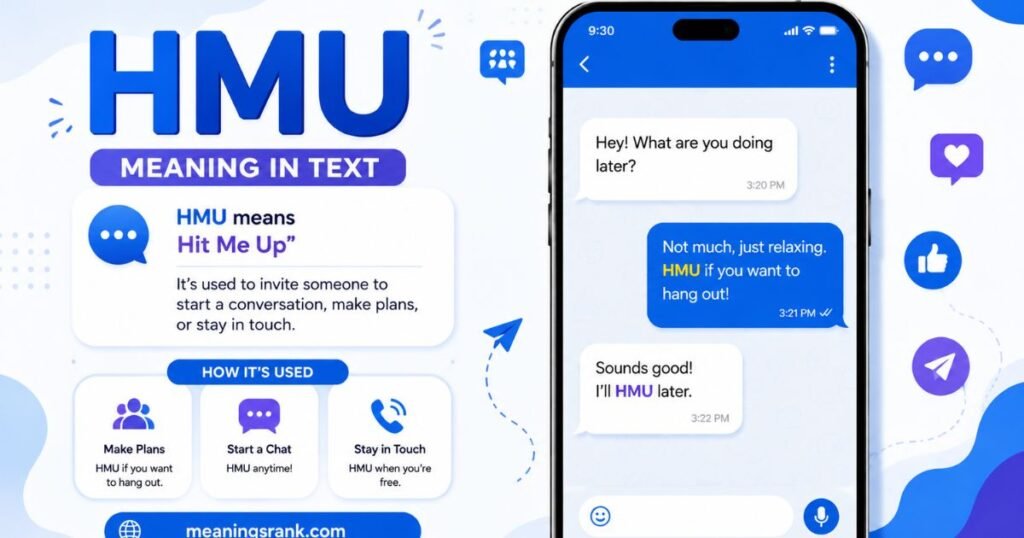
HMU is a quick way to invite someone to reach out to you. It’s used at the end of messages, in captions, or as a standalone text when someone wants to stay in touch.
It works like an open invitation. Instead of setting a specific plan, HMU leaves things flexible and casual.
Here’s a simple example:
Person A:
“I’m free this weekend if you want to hang out.”
Person B:
“Nice, HMU when you’re free!”
In this chat, Person B isn’t confirming exact plans. They’re simply saying, “reach out whenever, and we’ll figure it out.” That’s the whole point of HMU it keeps things open-ended.
This phrase shows up so often because plans rarely get locked in right away in casual texting. People like to leave room for spontaneity, and HMU fits that style perfectly.
A few quick things to know about how HMU works:
- It signals openness, not a firm commitment
- It’s mostly used with friends or casual acquaintances
- It can invite plans, conversation, or just general contact
- It rarely carries a serious or urgent tone
For example, “HMU if you’re bored” is casual and low-pressure, while “HMU when you land” is more about staying updated. Either way, HMU keeps the door open without forcing a specific response.
Once you understand this pattern, it becomes easy to spot HMU across almost any type of casual conversation.
What Does HMU Stand For?
HMU stands for “Hit Me Up.” It’s one of the most recognized invitations in texting culture, and it’s been around for years, especially in casual and social slang.
The phrase itself comes from everyday spoken English. People have said “hit me up” for a long time, especially in youth culture and music, long before texting turned it into a three-letter shortcut.
When texting became the main way people communicated quickly, phrases like “hit me up” naturally got shortened. HMU became popular because it captured the same casual, easygoing tone in far fewer keystrokes.
A few interesting facts about where HMU comes from:
- It grew out of slang already common in speech and music lyrics
- It became widely used through texting and early social media platforms
- It carries the same energy as saying “reach out” or “get in touch,” just more relaxed
- It’s mostly used in informal settings, rarely in professional writing
Read More: WYLL Meaning in Text: What It Means, How to Use It, and How to Reply (2026 Guide)
You’ll often see it written in lowercase (“hmu”) in texts and captions, and both versions mean exactly the same thing. Capitalization doesn’t change the meaning at all.
HMU is also sometimes paired with extra words for context, like “hmu later” or “hmu if you’re free.” These additions don’t change the core meaning they just clarify when or why someone wants to be contacted.
Because it mirrors something people already say out loud, HMU feels natural rather than like made-up internet slang, which is part of why it has stuck around for so long.
How Is HMU Used in Text Messages and Social Media?
HMU usually appears near the end of a message, right after the main point has been made. This placement makes it easy to recognize.
Typical Structure:
“[Main message] + HMU [condition or timing]”
Example: “I’m heading out soon, HMU if you want a ride.”
Here’s how HMU shows up across different platforms:
Text Messages:
“Running late, HMU when you get here.”
WhatsApp:
“HMU if you need help moving this weekend 📦”
Instagram Comments:
“Love this! HMU if you ever want to collab.”
Snapchat:
“hmu when ur up lol”
TikTok Comments:
“HMU if anyone else wants to try this recipe”
Gaming Chats:
“HMU when you’re online, we need a fourth player.”
Discord Servers:
“HMU if you want to join the new server event.”
Workplace Chats:
HMU shows up occasionally in casual workplace messaging, though it’s far less common than in personal texting.
Example: “HMU if you have questions about the project.”
Across every platform, HMU keeps its core function: inviting contact without demanding an immediate response. It works especially well in group chats and social media comments, where people want to stay connected without setting anything in stone.
On platforms like Snapchat and Instagram, HMU often shows up in stories or captions as a casual way to open the door for messages from friends or followers. In gaming and Discord chats, it’s frequently used to coordinate loosely without locking in exact plans.
Because it’s so flexible, HMU fits naturally into almost any casual conversation style.
Read More: WSG Meaning in Text: What It Means in Chat, Snapchat & Social Media (2026 Guide)
HMU Examples in Real Conversations
Seeing HMU across different real-life situations makes its meaning even clearer. Below are realistic examples from everyday digital conversations.
Text Message:
Person A: “What are you doing later?”
Person B: “Not sure yet, HMU around 6 and we’ll figure it out.”
WhatsApp Group Chat:
Person A: “Anyone want to grab food tonight?”
Person B: “HMU if you’re going, I might join.”
Instagram Comment:
“This is awesome! HMU if you ever do tutorials.”
Snapchat Caption:
“bored at home, hmu 😴”
TikTok Comment Section:
“HMU if you want the recipe, I’ll send it!”
Gaming Voice/Text Chat:
“HMU when you’re back online, we’ll queue up again.”
Discord Message:
“HMU if you want an invite to the new channel.”
Workplace Slack Message:
“HMU if you run into any issues with the file.”
In each of these examples, HMU keeps the tone light and open. Nobody’s making a firm commitment they’re simply leaving the door open for future contact.
This is exactly why HMU works so well in casual settings. It removes pressure from the conversation while still showing interest in staying connected. Whether it’s about hanging out, gaming, or just chatting more, HMU keeps things relaxed and easygoing.
Is HMU Flirty, Rude, or Friendly?
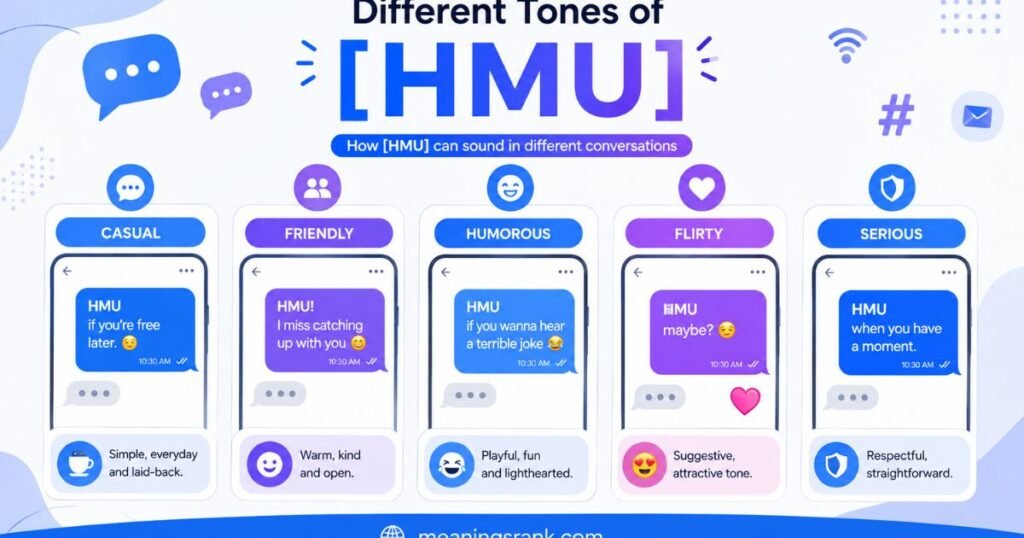
HMU is mostly friendly and neutral, but its tone can shift slightly depending on who’s using it and the context around it.
Why It’s Usually Friendly:
In most cases, HMU is simply a casual way to stay in touch. It works well between friends, classmates, teammates, or even coworkers in relaxed settings.
Example: “HMU if you want to study together” sounds welcoming and low-pressure, nothing more than that.
Can HMU Be Flirty?
Yes, depending on the context and who’s sending it. HMU is commonly used in flirty or interested conversations, especially when paired with certain emojis or tone.
Example: “You seem cool, HMU sometime 😉”
Here, the flirty tone comes from the wink emoji and phrasing, not HMU itself. The abbreviation is simply opening the door for more contact, but the surrounding words shape the vibe.
Is HMU Ever Rude?
Rarely. Since HMU is an invitation rather than a demand, it doesn’t usually come across as rude. However, it can feel a bit dismissive if used to end a serious conversation too casually.
Example:
Person A: “I really need to talk about what happened.”
Person B: “Yeah, HMU later.”
In this case, the casual tone of HMU might feel out of place if the topic is emotional or serious. Timing and context matter here more than the phrase itself.
Quick Summary:
- With friends: casual and friendly
- In flirty texts: can carry romantic interest depending on wording
- In serious conversations: may feel too casual or dismissive
- In workplace chats: fine when used casually and appropriately
Like most texting slang, HMU’s tone depends heavily on context, relationship, and what surrounds it in the message.
How to Reply When Someone Says “HMU”
Replying to an HMU message is usually easy since it’s an open invitation rather than a specific question.
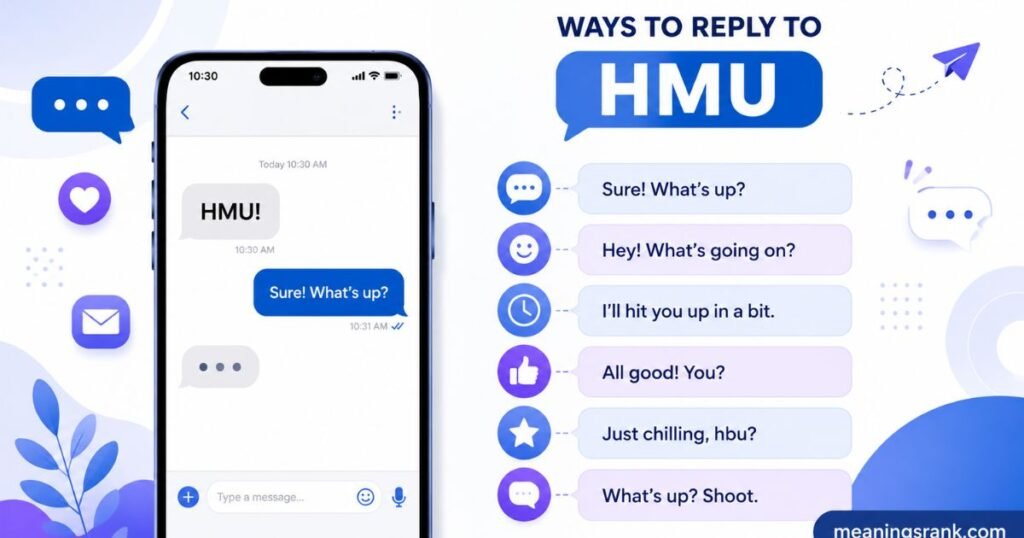
If You Want to Follow Up Later:
“Sounds good, I’ll hit you up tonight!” “Okay, will do!”
If You Want to Make Plans Now:
“Actually, are you free right now?” “Let’s just plan something now instead.”
If You’re Not Sure Yet:
“Maybe, I’ll let you know.” “I’ll see how my day goes.”
If You Want to Keep It Casual:
“For sure, talk soon!”
Here’s a quick example from a gaming chat:
Person A: “HMU when you’re back online, we’ll queue again.”
Person B: “Will do, give me like 20 minutes.”
Notice how Person B doesn’t overthink the reply. Since HMU is casual by nature, a short and simple response keeps the conversation moving naturally.
In quick-moving chats like Snapchat or Instagram DMs, replies can be even shorter.
Example:
Person A: “hmu when ur free”
Person B: “will do 👍”
The key with HMU replies is matching the casual tone. Since the phrase itself doesn’t require detailed planning, your response can stay short, friendly, and low-pressure without needing much explanation.
HMU vs Similar Texting Abbreviations
HMU is often grouped with other casual invitations and check-in phrases. While similar, each one carries a slightly different tone.
| Term | Meaning | When to Use |
| HMU | Hit Me Up | Inviting someone to reach out casually |
| LMK | Let Me Know | Asking for a response or update |
| TTYL | Talk To You Later | Ending a conversation temporarily |
| BRB | Be Right Back | Stepping away briefly during a chat |
| WYD | What You Doing | Casually checking what someone’s up to |
HMU vs LMK:
LMK asks for a response, while HMU invites contact without requiring one. LMK feels slightly more direct.
Example: “LMK if you’re coming.” (needs an answer) “HMU if you’re coming.” (open invitation, no pressure)
HMU vs WYD:
WYD is a direct question about someone’s current activity, while HMU is a general invitation to connect, not tied to a specific moment.
Example: “WYD right now?” (asking directly) “HMU whenever you’re free.” (open-ended)
HMU vs TTYL:
These are almost opposites in function. HMU invites future contact, while TTYL signals the end of a current conversation.
Example: “HMU tomorrow.” (inviting contact) “TTYL, gotta go!” (ending the chat)
Knowing these small differences helps you pick the right phrase depending on whether you want a direct answer, a casual invitation, or a simple goodbye.
Read More: HN Meaning in Text: What Does HN Mean in Chat, Texting & Social Media? (2026 Guide)
When Should You Avoid Using HMU?
While HMU is common and casual, there are situations where it’s better to skip it.
In Formal Emails or Professional Documents
HMU is internet slang and doesn’t fit the tone expected in formal business writing or official communication.
During Serious or Emotional Conversations
If someone is sharing something important or emotional, replying with “HMU later” can feel dismissive, even if that’s not the intention.
When Talking to Someone Unfamiliar With Slang
Older relatives, new coworkers, or people from different backgrounds might not recognize HMU right away, leading to confusion.
In Customer Service or Business Messaging
Businesses communicating with clients should avoid HMU entirely, since it can come across as too casual or unprofessional.
When Clear Plans Are Needed
HMU works well for loose, flexible invitations, but it’s not ideal when specific details, times, or commitments are required.
In Situations Requiring a Direct Answer
Since HMU doesn’t request a specific response, it’s not the best choice when you actually need confirmation or a clear yes or no.
Knowing when to skip HMU shows good communication awareness, especially in situations where clarity or professionalism matters more than casual tone.
Frequently Asked Questions About HMU
What does HMU mean in texting?
HMU means “Hit Me Up.” It’s a casual way to invite someone to reach out or reconnect later, without setting specific plans or requiring an immediate response.
Is HMU always flirty?
No, HMU is usually just friendly. It can carry a flirty tone depending on the wording, emojis, or relationship between the people texting, but it’s not flirty by default.
Can HMU be used in professional chats?
Rarely. HMU fits casual workplace messaging occasionally, but it should be avoided in formal emails or client communication where a professional tone is expected.
What’s the difference between HMU and LMK?
HMU is an open invitation to reach out, while LMK directly asks for a response or update. LMK feels more specific and action-based.
Does HMU require a reply?
Not necessarily. Since HMU is an open invitation, the other person can respond immediately or reach out later, depending on their schedule or interest.
Final Thoughts on the Meaning of HMU
At its core, the HMU meaning in text comes down to one simple idea: it’s a relaxed way to keep the conversation door open. Whether it shows up in a text message, an Instagram comment, or a gaming chat, its job stays the same inviting contact without pressure.
We’ve covered what HMU stands for, how it’s used across different platforms, how it compares to similar phrases like LMK and WYD, and when it’s smart to leave it out of a conversation altogether.
The next time HMU pops up in your messages, you’ll know exactly what it means and how to respond naturally. Small phrases like this one keep digital conversations easy and low-pressure, which is exactly why they’ve stuck around for so long.