
Someone texts you “WYA” out of nowhere, and you’re not sure if it’s urgent, casual, or something else entirely. You’re not alone in wondering this. The WYA meaning in text is actually pretty simple: it’s a quick way of asking where someone currently is. You’ll see it in text messages, WhatsApp chats, Snapchat, Instagram DMs, and even gaming lobbies when friends are trying to link up.
It’s short, fast, and gets straight to the point, which is exactly why it’s stuck around for so long. Understanding when and how people use WYA helps you reply the right way and avoid any awkward mixed signals. Let’s break down everything this small text really means.
What Does WYA Meaning in Text?
WYA is a quick question people use to ask about someone’s current location. It’s casual, direct, and usually expects a short answer.
Unlike some slang terms that carry a hidden meaning, WYA is mostly literal. It’s simply asking, “Where are you right now?”
Here’s a simple example:
Person A: “Hey, we’re heading to the mall soon.”
Person B: “WYA? I can meet you there.”
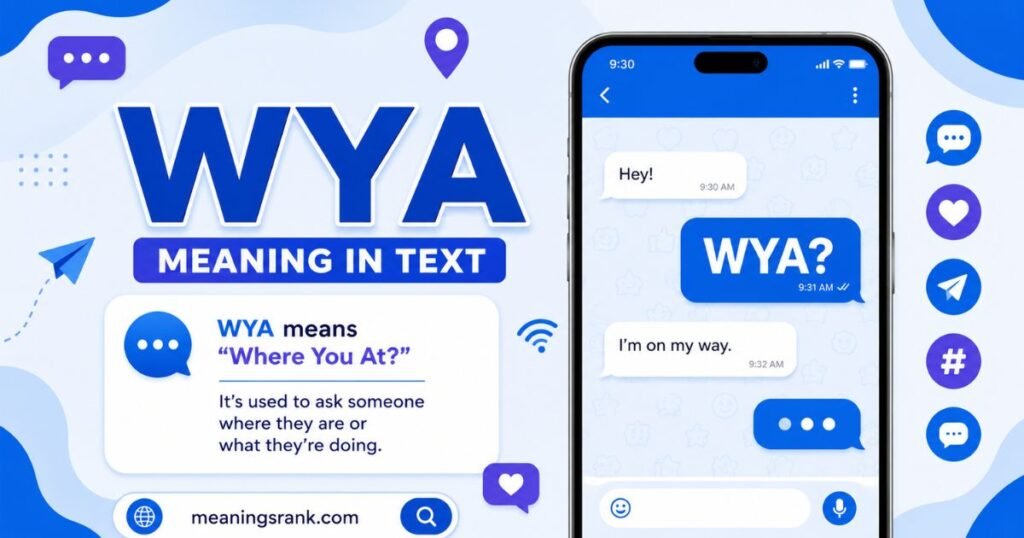
In this exchange, Person B isn’t confused or upset. They’re just trying to figure out the current location so they can plan the meetup properly.
WYA shows up constantly in everyday texting because location matters a lot in casual plans. Whether it’s meeting friends, coordinating rides, or just checking in, this short question saves time compared to typing out a full sentence.
Some quick facts about how WYA works:
- It almost always functions as a question
- It expects a location-based answer, not an opinion or feeling
- It’s used in both casual hangouts and semi-urgent situations
- It rarely carries sarcasm or hidden meaning
For example, “WYA, we’re waiting outside” signals urgency, while “WYA lol haven’t seen you in forever” feels more relaxed and friendly. The tone shifts slightly depending on the situation, but the core question stays the same.
Once you recognize this pattern, WYA becomes easy to spot and even easier to answer correctly.
What Does WYA Stand For?
WYA stands for “Where You At.” It’s a casual, shortened version of “Where are you at” or simply “Where are you.”
This phrase grew out of everyday spoken slang before it became common in texting. People have been saying “where you at” in casual conversation for decades, especially in informal or regional speech patterns.
When texting became the go-to way to communicate quickly, this phrase naturally got shortened into an acronym. WYA fit perfectly into fast paced digital conversations because it matched how people already talked out loud.
A few interesting points about WYA’s background:
- It became especially popular through texting and early social media messaging
- It reflects natural speech patterns rather than internet-only slang
- It’s commonly used across many age groups, not just teens
- It fits smoothly into both texting and voice-to-text conversations
You’ll usually see it written in all caps (“WYA”) or lowercase (“wya”), and both versions carry the same meaning. Capitalization doesn’t change anything in casual texting.
WYA is also sometimes combined with other slang for extra context, like “wya rn” (where you at right now) or “wya tho” (where you at though). These additions don’t change the core meaning they just add urgency or a more casual tone.
Because WYA mirrors real spoken language so closely, it feels natural rather than robotic, which is part of why it’s remained one of the most commonly used location based texting terms.
Read More: https://meaningsrank.com/btw-meaning-in-text/
How Is WYA Used in Text Messages and Online Chats?
WYA usually stands alone as a short question, though it can also be added to the end of a sentence for extra clarity.
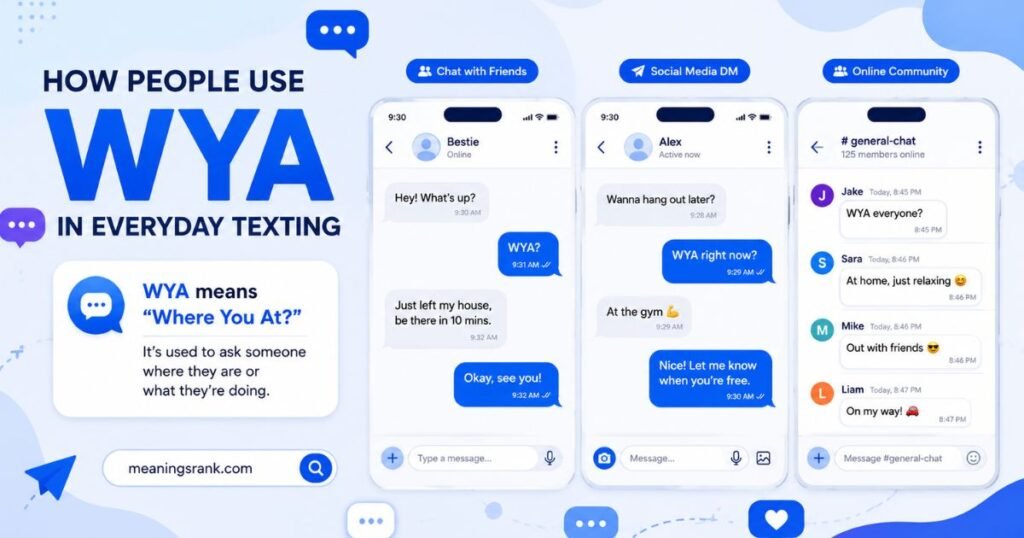
Typical Structure:
“WYA?” or “[Context], WYA?”
Example: “We’re outside the theater, WYA?”
Here’s how WYA shows up across different types of chats:
Text Messages:
“WYA? Dinner starts in 10 minutes.”
WhatsApp:
“wya, we just landed 🛬”
Instagram DMs:
“WYA lol I haven’t seen you post in weeks”
Snapchat:
“wya rn, sending you my location”
TikTok Comments:
“wya bestie this sound is everywhere except your page”
Gaming Chats:
“WYA? We need a fourth player for this match.”
Discord Servers:
“wya, the voice channel’s been empty for an hour.”
Workplace Chats:
WYA is rarely used here, since it’s too casual for most professional messaging, even in relaxed workplace cultures.
Across nearly every platform, WYA keeps the same core function: asking for a location or a quick check-in. In gaming and Discord chats, it often shows up when someone is missing from a group activity or match.
On social platforms like Snapchat and TikTok, WYA sometimes loses its literal meaning and becomes more of a lighthearted way to say, “I miss seeing you around,” especially in comment sections.
Because it’s short and instantly recognizable, WYA fits naturally into fast-moving conversations where typing a full question would slow things down.
WYA Meaning on Different Platforms
While WYA generally means the same thing everywhere, its tone can shift slightly depending on the platform.
Texting and WhatsApp:
Here, WYA is almost always literal. People use it to coordinate plans, rides, or meetups in real time.
Example: “WYA? I’m outside your building.”
Snapchat:
WYA often comes with real urgency here, especially since Snapchat is built around real-time sharing and location features.
Example: “wya, sending you my snap map location”
Instagram and TikTok:
On these platforms, WYA sometimes becomes more playful than literal. It’s often used in comments to tease someone about being inactive or missing from recent posts.
Example: “wya girl we miss your face on this app”
Gaming Platforms:
WYA is extremely common here, especially in multiplayer games where timing and coordination matter.
Example: “WYA? Match starts in two minutes.”
Discord:
Similar to gaming chats, WYA often pops up when someone is expected in a voice channel or event but hasn’t shown up yet.
Example: “wya, everyone’s already here for movie night.”
Workplace Chats:
WYA is best avoided here. If location matters in a work context, a more direct and professional phrase works better, like “What’s your ETA?”
Here’s a quick comparison of tone across platforms:
| Platform | Typical Tone | Common Use |
| Texting/WhatsApp | Literal, direct | Coordinating meetups |
| Snapchat | Urgent, real-time | Location sharing |
| Instagram/TikTok | Playful, casual | Comments, light teasing |
| Gaming/Discord | Functional, quick | Coordinating matches or calls |
| Workplace | Rarely used | Avoided due to casual tone |
Understanding these small shifts helps you read the real intent behind a WYA message, rather than assuming it always means the exact same thing.
WYA Texting Examples in Real Conversations
Seeing WYA in different real life situations makes its meaning even clearer. Below are natural examples from everyday digital conversations.
Text Message:
Person A: “The party already started.”
Person B: “wya, on my way now!”
WhatsApp Group Chat:
Person A: “We’re all sitting at the restaurant.”
Person B: “WYA? Table for how many?”
Instagram Comment:
“wya bestie, been way too long since your last post”
Snapchat Caption:
“wya, I’m bored and need company 😩”
TikTok Comment Section:
“wya, this creator needs way more views”
Gaming Voice/Text Chat:
“WYA? We’re one player short for ranked.”
Discord Message:
“wya, the event starts in five minutes.”
Workplace Slack Message (rare, informal teams only):
“Hey, WYA? Client call starts soon.” though even here, “What’s your status?” sounds more professional.
In each of these examples, WYA keeps its core function: asking for someone’s location or checking in on their whereabouts. The tone shifts slightly depending on urgency, but the intent stays consistent.
Notice how WYA works just as well in short bursts as it does with added context. Both “wya” alone and “wya, we’re waiting outside” get the message across clearly, which is exactly why this abbreviation has stayed so popular in fast texting culture.
Is WYA Rude, Flirty, or Offensive?
WYA is not offensive, and it’s rarely considered rude. It’s a neutral, functional question that focuses purely on location.
Why It’s Usually Neutral:
WYA doesn’t carry judgment or strong emotion on its own. It simply asks a question, which keeps most conversations feeling relaxed.
Example:
“WYA? We’re starting the movie” feels like a normal, friendly check-in, nothing more.
Could WYA Feel Pushy?
In certain situations, yes, especially if it’s sent repeatedly or right after someone said they’d be late.
Example:
Person A: “Running a bit late.”
Person B: “wya??”
Here, the double question mark and quick follow-up can feel a little impatient, though the word WYA itself isn’t the issue.
Is WYA Ever Flirty?
Yes, this is actually one of its most common uses in casual texting between people who are interested in each other.
Example:
“wya, I miss hanging out with you 👀”
In cases like this, WYA becomes less about logistics and more about wanting to spend time with someone. The flirty tone comes from the context and emojis, but WYA is often the opening question that starts that kind of conversation.
Quick Summary:
- In friend groups: neutral and functional
- In repeated messages: can feel slightly impatient
- In flirty texts: very common, especially with emojis or playful wording
- In professional settings: too casual, best avoided
Because WYA is so short and direct, its tone depends heavily on context, punctuation, and what’s said around it rather than the phrase itself.
How to Reply When Someone Says “WYA”
Replying to WYA is usually straightforward since it’s asking for a clear answer: your location or your status.
If You’re Nearby:
“Almost there, 5 minutes!”
“Just parked, walking in now.”
If You’re Running Late:
“Ugh sorry, stuck in traffic, wya patient with me 😅”
“Running behind, be there in 15.”
If You’re Not Going:
“Can’t make it tonight, sorry!”
“Staying in, not feeling well.”
If It’s Flirty or Playful:
“wya yourself, been thinking about you”
“Home, bored, why? 👀”
Here’s a quick example from a gaming chat:
Person A: “WYA? We need you for this match.”
Person B: “Logging in now, give me two minutes.”
Notice how Person B answers directly instead of ignoring the question. This keeps things moving quickly, especially in situations where timing actually matters, like gaming or group meetups.
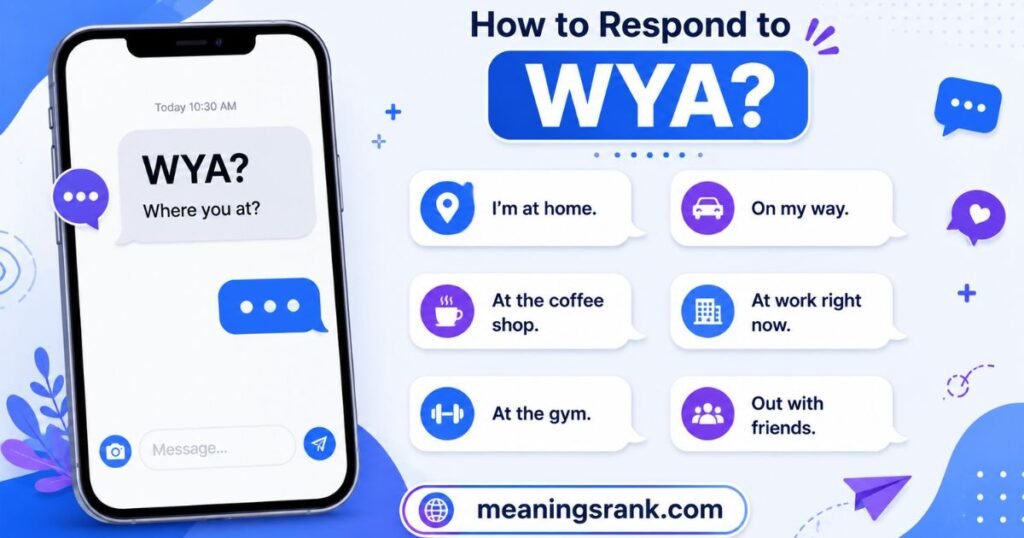
In casual chats, especially on Snapchat or Instagram, replies can be even shorter.
Example:
Person A: “wya”
Person B: “home lol whats up”
The key with WYA replies is simple: give a clear answer, even if it’s brief. Since the question is usually straightforward, overcomplicating your reply isn’t necessary. A short, honest response keeps the conversation moving naturally.
WYA vs Similar Texting Abbreviations
WYA often gets grouped with other location or check-in related texting terms. While they seem similar, each one serves a slightly different purpose.
| Term | Meaning | When to Use |
| WYA | Where You At | Asking someone’s current location |
| WYD | What You Doing | Asking what someone is currently doing |
| OMW | On My Way | Letting someone know you’re heading there |
| ETA | Estimated Time of Arrival | Sharing or asking about arrival time |
| BRB | Be Right Back | Letting someone know you’re stepping away briefly |
WYA vs WYD:
WYA asks about location, while WYD asks about activity. They’re often used together but answer different questions.
Example:
“wya” → “at home”
“wyd” → “just watching tv”
WYA vs OMW:
These two often appear in the same conversation, but they serve opposite roles. WYA asks a question, while OMW answers one.
Example:
“WYA? We’re already here.”
“omw, be there in 10!”
WYA vs ETA:
ETA is more specific and slightly more formal, often used when timing needs to be precise, like ride shares or deliveries.
Example:
“WYA?” (casual check-in)
“What’s your ETA?” (more precise, semi-formal)
Knowing these small differences helps you choose the right term depending on whether you’re asking about location, timing, or activity.
When Should You Avoid Using WYA?
While WYA is common in casual conversations, there are situations where it’s better to skip it.
1. Professional Emails or Work Documents
WYA is far too casual for formal writing. Professional messages should use clearer phrasing like “What is your current status?”
2. Conversations With Teachers, Elders, or Formal Contacts
Even in texting, WYA might come across as too informal for people unfamiliar with casual slang.
3. Customer Service or Business Messages
Businesses reaching out to clients should avoid WYA entirely, since it can feel unprofessional or overly casual.
4. Emergency or Urgent Safety Situations
In situations involving real safety concerns, clearer and more direct language works better than casual slang, which could be misread or ignored.
5. First-Time Conversations With Strangers
Using WYA with someone you just met, especially online, can come across as overly familiar or even a little presumptuous.
6. When Precise Timing Matters
For situations like ride shares, deliveries, or scheduled meetings, asking for an ETA is more accurate than a general WYA.
7. Formal Group Settings
In structured group chats, like school announcements or official community groups, WYA can feel out of place compared to clearer language.
Knowing when to avoid WYA shows good communication awareness, especially in situations where clarity and professionalism matter more than speed.
Frequently Asked Questions About WYA
1. What does WYA mean in a text message?
WYA means “Where You At.” It’s a quick, casual way of asking someone’s current location, often used when coordinating plans, meetups, or check-ins between friends.
2. Does WYA always mean something urgent?
Not necessarily. WYA can be urgent, like coordinating a ride, or completely casual, like checking in with a friend. Context and punctuation usually reveal the real tone.
3. Can WYA be used to flirt?
Yes, it’s actually a common opener in flirty conversations. When paired with playful wording or emojis, WYA often signals interest in spending time together, not just logistics.
4. Where is WYA most commonly used?
WYA is common in texting, WhatsApp, Snapchat, and gaming chats. It’s especially popular for coordinating meetups, rides, or checking in during multiplayer games.
5. Is WYA considered rude?
Generally, no. It’s a neutral question. It can feel slightly impatient if repeated quickly after someone says they’re running late, but the word itself isn’t disrespectful.
6. What’s the difference between WYA and OMW?
WYA asks a question about location, while OMW answers it by confirming someone is on their way. They often appear together in the same back-and-forth conversation.
Final Thoughts on the Meaning of WYA
At its core, the WYA meaning in text comes down to one simple idea: it’s a fast way to ask where someone is. Whether you’re planning a hangout, checking in during a game, or texting someone you’re interested in, this short phrase gets straight to the point.
We’ve covered what WYA stands for, how it shifts across different platforms, how it compares to terms like WYD and OMW, and when it’s smarter to avoid using it altogether.
Texting slang like this moves fast, but WYA has stuck around because it mirrors how people naturally speak. The next time it shows up in your messages, you’ll know exactly what it means and how to reply without missing a beat.