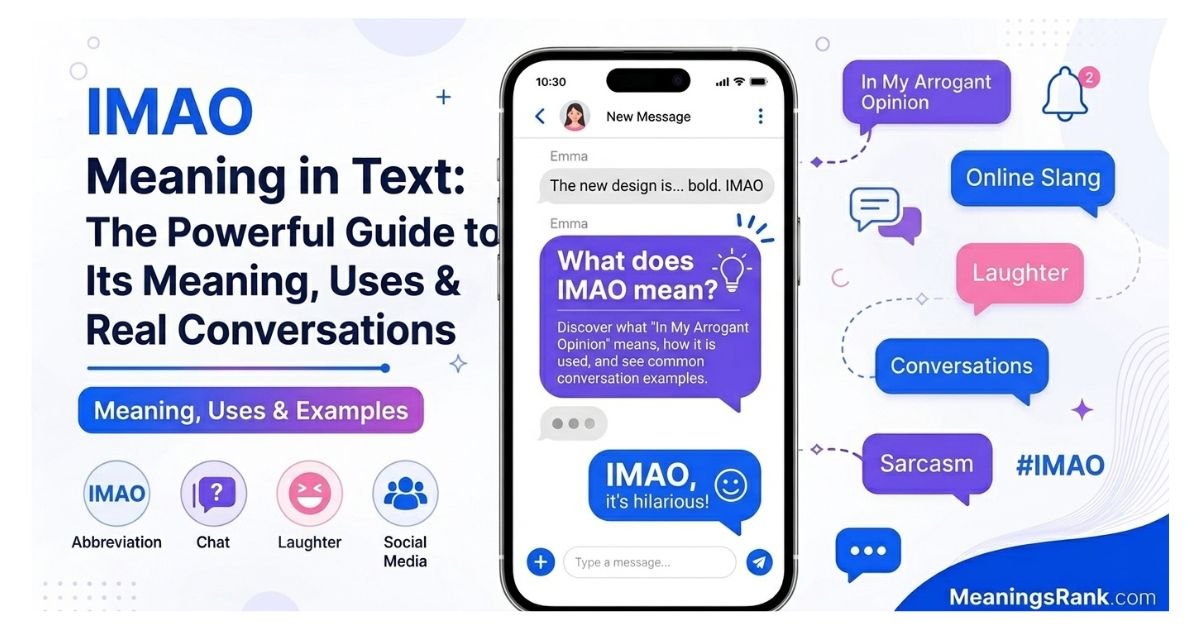

If you’ve seen IMAO pop up in a text and wondered what it means, you’re not alone. Texting slang moves fast, and new abbreviations show up every year, but IMAO has stuck around for a while. It’s one of those short forms that mixes humor with a bit of attitude, and it often gets confused with its more famous cousin, LMAO. In this guide, we’ll break down the IMAO meaning in text in plain, simple language.
You’ll learn where it came from, how people actually use it on WhatsApp, Instagram, TikTok, and Snapchat, and how it’s different from similar slang. By the end, you’ll know exactly when (and when not) to drop IMAO into your own chats.
What Does IMAO Mean in Text & Chat?
IMAO stands for “In My Arrogant Opinion.” It’s a playful, slightly sarcastic way of sharing a thought while poking fun at yourself for being a little too confident about it. Think of it as the cheeky cousin of “IMO” (In My Opinion) or “IMHO” (In My Humble Opinion). Instead of sounding humble, IMAO meaning in text flips the script and adds a joking, “I know I’m right” tone.
People use IMAO when they want to state an opinion but don’t want to sound too serious about it. It softens strong statements with humor, so the person reading it knows you’re not trying to start an argument. It’s commonly used in group chats, comment sections, and casual texting between friends who enjoy a bit of banter.
Here’s a quick example:
- “IMAO, pineapple absolutely belongs on pizza.”
- “This new season of the show is mid, IMAO.”
In both cases, the sender is stating an opinion but wrapping it in a joke about their own confidence level.
Full Form, Stands For & Short Meaning of IMAO
The most common full form of IMAO is:
In My Arrogant Opinion
Some people also use it loosely to mean “In My Absolute Opinion” or even confuse it with “I’m Amazed/Amused” in rare, informal contexts, but the arrogant opinion version is by far the most widely recognized meaning across texting platforms and slang dictionaries.
Short meaning: IMAO is a funny, self-aware way to give your opinion while joking that you think you’re always right.
It’s important to note that IMAO is different from IMAO’s louder cousin, LMAO (Laughing My A** Off), even though the two are frequently mixed up because they look so similar in text. We’ll cover that difference in detail later in this guide.
Also Read: WSP Meaning in Text: The Ultimate Breakdown of Its Meaning in Chats & Social Media
Origin, History & First Known Use of IMAO
IMAO grew out of early internet chat culture in the late 1990s and early 2000s, during the days of AOL Instant Messenger, chat rooms, and early text messaging. Back then, people were shortening common opinion phrases like “in my opinion” (IMO) and “in my humble opinion” (IMHO) to save time while typing on slow keyboards and flip phones.
IMAO likely came from that same wave of opinion-based abbreviations, but with a comedic twist added by internet forum culture, where users loved poking fun at overly confident posters. Calling your own opinion “arrogant” was a way to joke about internet debates, where everyone acts like they know best.
Interestingly, IMAO meaning in text also became associated with a satirical political blog in the mid-2000s called “IMAO” (short for “In My Arrogant Opinion”), which helped push the term further into mainstream internet slang. Over time, it spread from forums and blogs into texting and social media, where it lives today as a lighthearted way to state opinions.
When Should You Use IMAO? Casual, Funny & Social Media Examples
IMAO works best in casual, low-stakes conversations where humor is welcome. Here are situations where it fits naturally:
- Debating something silly with friends, like the best fast food or movie
- Reacting to a hot take in a group chat
- Commenting on social media posts about trends, shows, or celebrities
- Joking around during online gaming chats
- Adding a funny twist to a strong opinion you know others might disagree with
Example texts:
- “IMAO, Monday mornings should be illegal.”
- “IMAO, the sequel was better than the original movie.”
- “This meme is peak comedy, IMAO.”
Avoid using IMAO in serious, professional, or emotionally heavy conversations. It’s meant for fun, not for delivering bad news or discussing sensitive topics.
How People Use IMAO in Daily Conversations
In everyday texting, IMAO usually shows up right before or after an opinion. It acts like a little disclaimer that says, “I know this is just my take, but I’m saying it with confidence.”
Common patterns include:
- Starting a message: “IMAO, this new phone update is worse than the last one.”
- Ending a message: “That restaurant is overrated, IMAO.”
- Responding to someone else’s opinion: “IMAO, you’re wrong, but I respect it.”
It’s also often paired with emojis like 😏, 😂, or 🙃 to make the joking tone even clearer. Since text lacks tone of voice, these small additions help the reader understand you’re not being genuinely arrogant, just playful.
IMAO Meaning Across WhatsApp, Instagram, TikTok & Snapchat
While IMAO means the same thing everywhere, how it’s used can shift slightly depending on the platform.
WhatsApp:
Mostly used in group chats among friends or family when debating something lighthearted, like weekend plans or which restaurant to pick.
Instagram:
Common in comment sections under posts, especially when reacting to opinions about fashion, food, or trending topics.
TikTok:
Used in comments to react to a creator’s take, often paired with humor or sarcasm about trends and challenges.
Snapchat:
Used in quick chats between close friends, often as a joking way to settle small disagreements or share a strong take on something happening that day.
Across all these platforms, the tone stays casual and self-aware. It’s rarely used to start real conflict; it’s more about adding personality to an opinion.
IMAO vs LMAO, LOL & Other Laughing Slang: What’s the Difference?
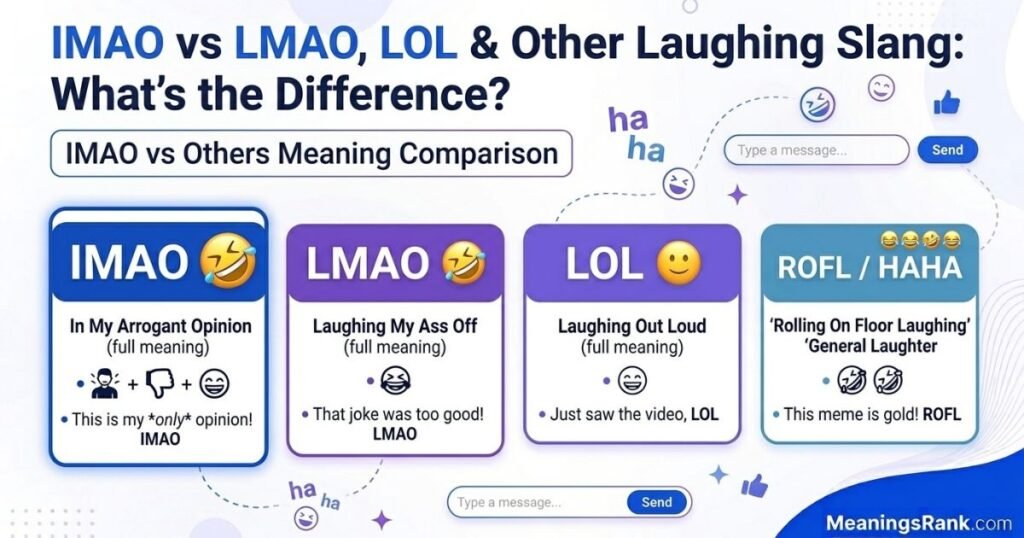
This is where a lot of confusion happens, since IMAO and LMAO look almost identical at a glance. Here’s a simple comparison to clear things up.
| Term | Full Form | Meaning | When to Use |
| IMAO | In My Arrogant Opinion | Sharing an opinion jokingly | When stating a confident or funny take |
| LMAO | Laughing My A** Off | Expressing strong laughter | When something is very funny |
| LOL | Laughing Out Loud | General laughter or amusement | For mild to moderate humor |
| IMO | In My Opinion | Sharing a neutral opinion | For straightforward opinions |
| IMHO | In My Humble Opinion | Sharing an opinion humbly | When trying to sound less confident |
The key difference is intent. IMAO is about opinions, while LMAO and LOL are about laughter. People often mix them up simply because the letters look similar and both are used in casual texting.
Different Meanings of IMAO in Other Fields
Outside of texting slang, IMAO has a few other, much less common meanings depending on context:
Gaming communities:
Occasionally used as a tag or username abbreviation, though this is rare and not standardized.
Business or forum contexts:
Sometimes jokingly used in casual internal chats to soften a strong professional opinion, though this is uncommon in formal settings.
Blogging/political commentary:
As mentioned earlier, IMAO was historically tied to a satirical blog name, which some older internet users still associate with political commentary.
These alternate meanings are far less common than the standard texting definition, so context always matters. In 99% of everyday conversations, IMAO means “In My Arrogant Opinion.”
Also Read: ML Meaning in Text: The Ultimate Guide to Decoding Chat & Social Media Slang
Common Confusions, Mistakes & Wrong Interpretations
Here are the most frequent mix-ups people run into with IMAO:
Confusing it with LMAO:
The most common mistake. Remember, IMAO is about opinions, LMAO is about laughing.
Taking it too literally:
Some readers think the sender is genuinely being arrogant. In reality, it’s meant as a joke.
Using it in serious conversations:
IMAO can come across as dismissive or rude if used while discussing something emotional or important.
Assuming it’s rude:
Because of the word “arrogant,” some people think it’s an insult. It’s actually self-deprecating humor, not an attack on anyone else.
Understanding tone is key here. Text lacks facial expressions and voice inflection, so IMAO can sometimes be misread if the reader isn’t familiar with internet slang.
Similar Terms, Alternatives & Related Slang
If you want to mix things up, here are some similar terms you can use depending on the tone you’re going for:
- IMO = In My Opinion (neutral, no humor)
- IMHO = In My Humble Opinion (polite, softer tone)
- TBH = To Be Honest (direct opinion sharing)
- NGL = Not Gonna Lie (casual honesty)
- FWIW = For What It’s Worth (adding an opinion humbly)
- IJS = I’m Just Saying (light opinion with a shrug)
Each of these fits slightly different moods, but IMAO stands out because of its playful, self-aware arrogance, which most of the others don’t have.
Examples of IMAO in Real Chat Situations
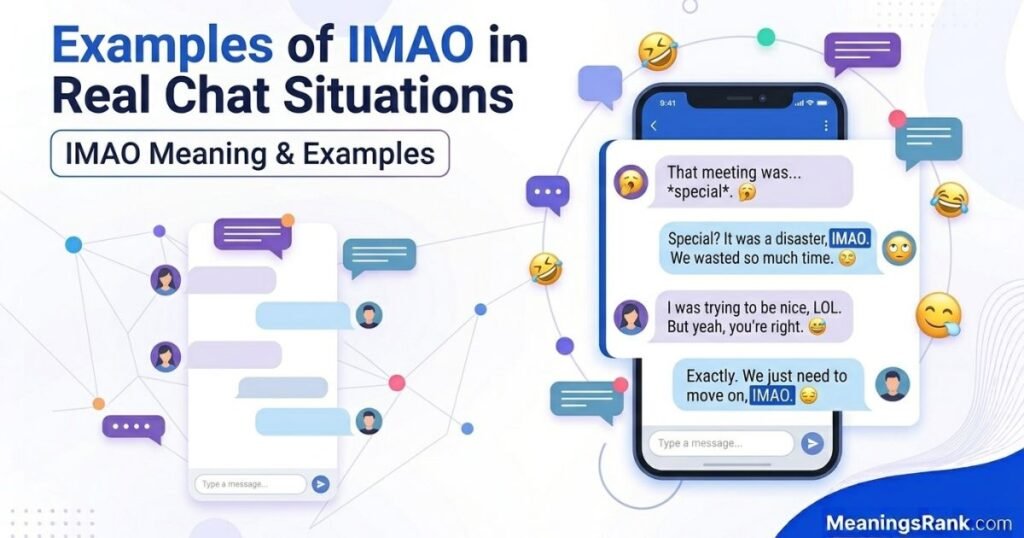
Friends group chat (WhatsApp):
“IMAO, we should’ve picked the beach trip instead of the mountains.”
Instagram comment:
“IMAO, this outfit is giving main character energy.”
TikTok comment:
“IMAO, that dance trend peaked three months ago.”
Discord gaming chat:
“IMAO, that was a skill issue, not lag.”
Workplace casual Slack chat (non-formal team):
“IMAO, Fridays should be half days from now on.”
Snapchat between close friends:
“IMAO, your ex texting you again is wild.”
These examples show how flexible IMAO is across different platforms while keeping the same playful tone.
How to Reply When Someone Says IMAO
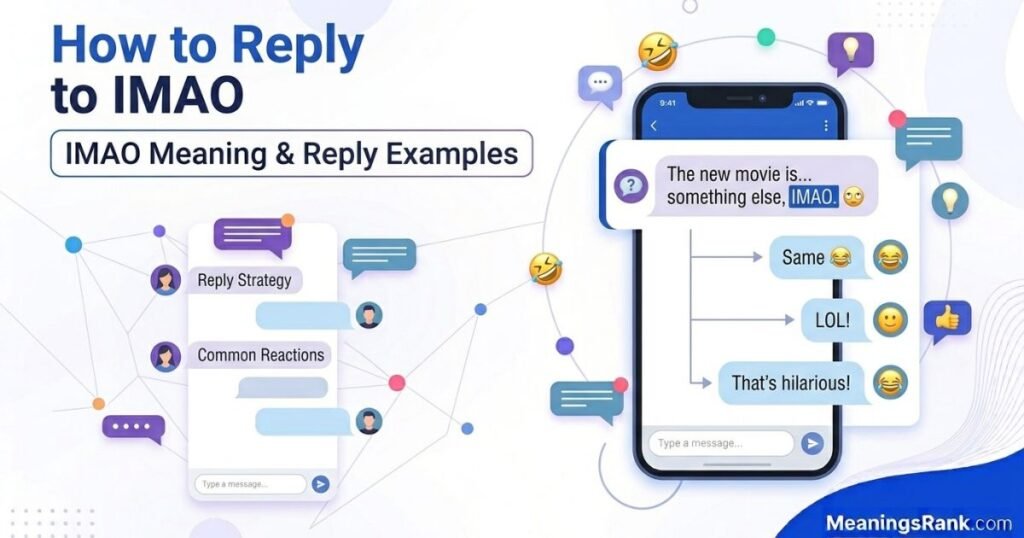
Replying to IMAO is easy since it’s meant to be lighthearted. Here are a few natural responses:
- Agree playfully: “IMAO, you’re actually right this time.”
- Disagree jokingly: “Hard disagree, but I respect the confidence.”
- Add humor: “😂 the arrogance is showing today.”
- Ask for backup: “Okay, but why though?”
- Simply react with an emoji like 😂, 👀, or 🙃
Since IMAO already carries a joking tone, matching that energy in your reply keeps the conversation fun instead of turning it into a debate.
Is IMAO Still Popular? Trends & Online Usage
IMAO isn’t as widely used today as LOL or LMAO, but it still shows up regularly in comment sections, group chats, and casual online debates. It tends to be more popular among people who grew up with early internet culture, though younger users still use it, especially in comment threads where humor and opinions mix.
While newer slang terms come and go quickly, IMAO has stayed relevant because it fills a specific gap: joking about your own confidence while still getting your point across. It’s not a trending term with viral spikes, but it remains a steady, recognizable piece of internet slang.
Also Read: Simping Meaning: What Does Simping Mean in Text & Slang?
Quick Facts Section
- Full Form: In My Arrogant Opinion
- Category: Opinion-based internet slang
- First Popularized: Late 1990s–early 2000s chat culture
- Common Platforms: WhatsApp, Instagram, TikTok, Snapchat, Discord
- Tone: Playful, self-aware, joking
- Not to be confused with: LMAO (Laughing My A** Off)
- Best used for: Casual opinions, banter, light debates
FAQs
What does IMAO meaning in text message?
IMAO means “In My Arrogant Opinion,” a joking way to share opinions.
Is IMAO the same as LMAO?
No, IMAO is about opinions, while LMAO is about laughing.
Can IMAO be used in professional chats?
It’s best avoided in formal or serious workplace conversations.
Is IMAO rude or offensive to use?
No, it’s meant as playful, self-deprecating humor, not an insult.
Where is IMAO most commonly used today?
It’s common on WhatsApp, Instagram, TikTok, and Discord comment chats.
Does IMAO have any other meanings?
Rarely, it’s tied to old blog names or gaming tags occasionally.
Conclusion
So, what’s the real IMAO meaning in text? It simply stands for “In My Arrogant Opinion,” a fun and self-aware way to share your thoughts without sounding too serious. Whether you’re debating pizza toppings on WhatsApp, reacting to a TikTok trend, or joking around in a Discord chat, IMAO adds a bit of humor to everyday conversations. Just remember to keep it casual, since it doesn’t fit well in serious or professional settings. Now that you know the difference between IMAO, LMAO, and similar slang, you can use it confidently (arrogantly, even) the next time you want to drop your opinion into a chat. Understanding slang like this helps you communicate better and avoid awkward misunderstandings online.