
You’re reading a text or a username and you spot a lonely underscore sitting between words, like “just_vibes” or “wait… _”. If you paused wondering what it means, you’re not alone. The _ meaning in text isn’t one fixed thing it changes depending on where it shows up. Sometimes it’s just a spacer in usernames.
Other times, on its own in a chat, it can hint at silence, awkwardness, or a loss for words. You’ll spot it in texting, Instagram handles, TikTok comments, Discord usernames, and gaming tags. Understanding the different ways people use the underscore helps you read tone correctly and avoid misreading a message. Let’s break it all down.
What Does _ Mean in Text? – Quick Meaning
The underscore symbol (_) has more than one job in texting. Its meaning depends heavily on context, which makes it a little different from typical slang abbreviations.
Here’s a simple breakdown of its main uses:
- As a spacer:
Used in usernames or handles where spaces aren’t allowed, like “sara_jane” or “night_owl_23.”
- As a stand-in for silence:
Sent alone in a chat, it can mean the person doesn’t know how to respond.
- As a placeholder:
Used to represent a blank, like filling in a sentence: “I can’t believe you just _____.”
- As a visual pause:
Sometimes repeated (“___”) to create a longer, more dramatic gap in a message.
Here’s a quick example:
Person A: “I accidentally texted my ex instead of you.”
Person B: “_”
In this chat, Person B isn’t ignoring the message. The single underscore acts like a stunned silence, showing they don’t quite know how to react yet.
Because it’s so flexible, the underscore doesn’t have one single “correct” meaning. Instead, it borrows its tone entirely from the situation it appears in.
Also Read: MT Meaning in Text: The Ultimate Guide to What “MT” Means in 2026
Origin & Background of _
The underscore has been part of computer keyboards and typing systems for decades, long before texting slang existed. It was originally used in typewriters and early computing to create blank lines for filling in forms.
When usernames and email addresses became common, the underscore became a popular way to separate words since spaces usually weren’t allowed. That’s how names like “john_smith92” or “coding_life” became so normal across the internet.
Later, as texting and social media grew, people began using the underscore in new, more expressive ways. Sending just “_” as a reply became a shorthand for reactions that are hard to put into words, similar to trailing off mid-sentence in real conversation.
A few background points worth knowing:
- The underscore predates most modern internet slang by decades
- It started as a purely functional symbol before gaining expressive use
- Its meaning as a “silent reaction” grew mostly through texting and messaging apps
- It’s still heavily used in usernames, hashtags, and file names today
Because it started as a technical symbol, the underscore feels different from slang words like “lol” or “omg.” It’s less about vocabulary and more about visual style and tone.
How _ Is Used in Real-Life Conversations
The underscore shows up in a few clear patterns once you know what to look for.
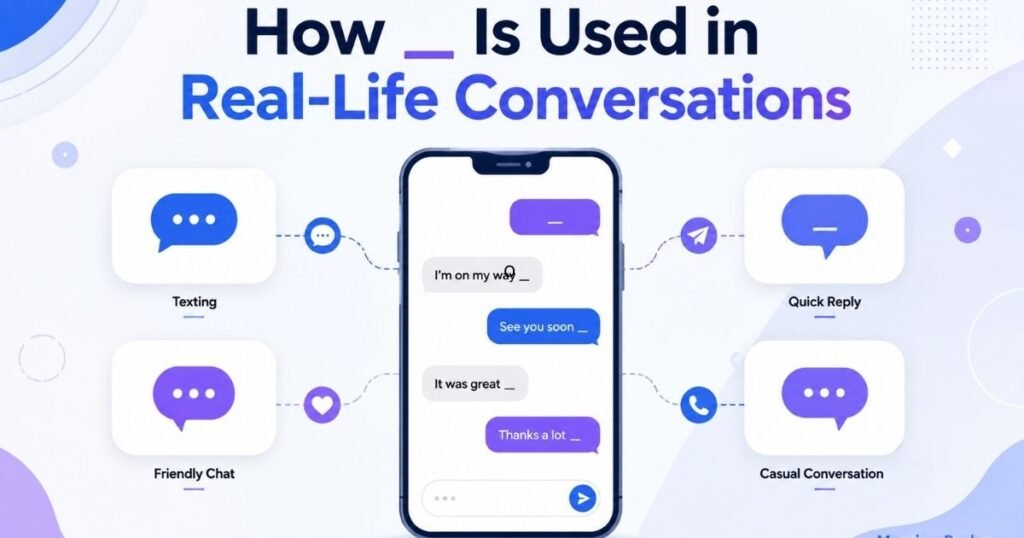
As a Username Separator:
“alex_martinez,” “pixel_gamer99,” “coffee_and_code”
As a Standalone Reaction:
Sent alone, usually right after something surprising, awkward, or hard to respond to.
Here’s how it looks across different platforms:
Text Messages:
Person A: “I think I just called my teacher ‘mom.'”
Person B: “_”
WhatsApp:
“_” (sent after an awkward voice note plays by accident)
Instagram Comments:
“wait what 💀 _”
Snapchat:
Username example: “snowy_days_22”
TikTok Comments:
“_” used under an unexpected or cringe-worthy video
Gaming Chats:
Username example: “shadow_striker_07”
Discord Servers:
Username example: “pixel_ronin”
Workplace Chats:
Rarely used as a standalone reaction here mostly appears in professional usernames or file names, like “q3_report_final.”
Across casual platforms, the standalone underscore usually reacts to something unexpected. In usernames and file names, it simply keeps words readable without spaces.
What Does _ Mean Emotionally?
Emotionally, a standalone underscore usually represents speechlessness. It’s what people send when words genuinely fail them for a second.
Unlike typing “lol” or “omg,” which show clear reactions, “_” leaves things open. It can suggest shock, awkwardness, secondhand embarrassment, or even quiet judgment, depending on what came before it.
For example: “I told my crush I loved their dog instead of them.” “_”
Here, the underscore captures that pause where the listener is processing something a little cringeworthy, without needing to spell out the reaction in words.
It can also carry a teasing tone:
Person A: “I may have eaten your leftovers.”
Person B: “_”
In this case, the underscore feels like a playful, silent stare rather than genuine anger.
Because it’s so minimal, the emotional weight of “_” depends entirely on the conversation around it, more than almost any other texting symbol.
_ Meaning in Different Contexts
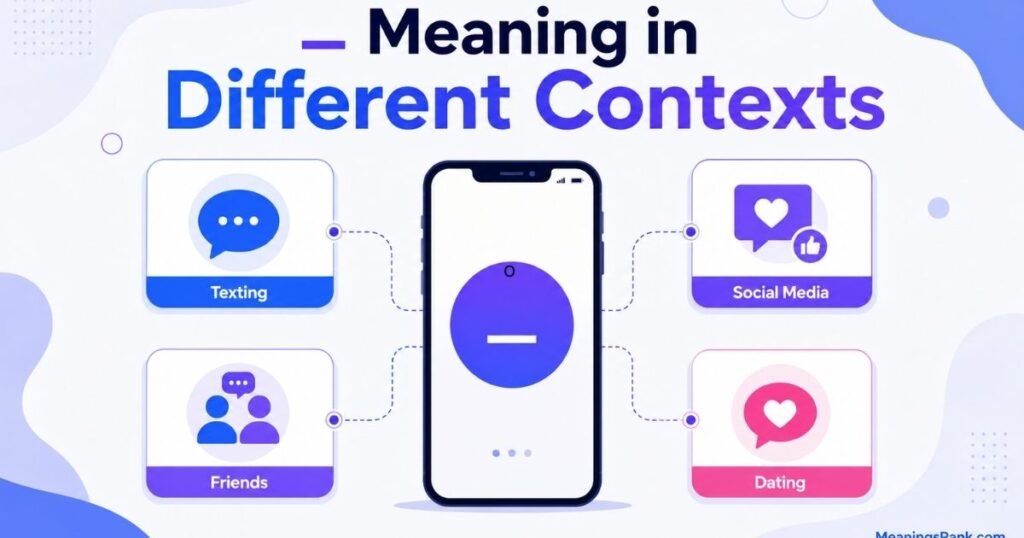
The underscore shifts meaning depending on where and how it’s used. Here are some real-world examples.
As a Username Element:
“luna_writes,” “night_shift_23,” “coffee_before_chaos”
As a Reaction to Awkwardness:
TikTok comment: “_ this is so cringe I can’t”
As a Placeholder in Sentences:
“Fill in the blank: My favorite food is _____.”
As a File or Document Naming Tool:
“project_notes_final,” “budget_2026_v2”
As a Dramatic Pause:
“wait… _ … did that really just happen”
In Gaming Tags:
“ghost_sniper_99,” “midnight_raider_x”
Each example shows how flexible the underscore really is. It can organize text, replace a blank space, or carry an emotional pause, all depending on the setting it’s used in.
Also Read: FLM Meaning in Text: The Ultimate Guide to What FLM Means
When Should You NOT Use _?
While the underscore is common, a few situations call for leaving it out or using it differently.
- Formal emails or documents:
Standalone underscores as reactions don’t belong in professional writing.
- Serious or emotional conversations:
Replying with just “_” to heavy news can feel dismissive or confusing.
- When clarity matters most:
If a clear response is needed, a vague symbol like “_” can leave the other person unsure how you feel.
- In customer service or client messages:
Businesses should avoid casual symbol-only replies entirely.
- With people unfamiliar with texting trends:
Older relatives or new contacts may not understand what a lone underscore means.
Skipping the underscore in these situations keeps your message clear and appropriately toned.
Common Misunderstandings About _
Misunderstanding 1: A standalone underscore always means something negative.
Not true. It can reflect surprise, humor, or awkwardness just as easily as discomfort or annoyance.
Misunderstanding 2: Underscores in usernames have hidden meaning.
Usually not. Most of the time, they’re just there to separate words since spaces aren’t allowed.
Misunderstanding 3: “_” is the same as ignoring someone.
It’s actually a reaction, even if a minimal one. Ignoring a message means no reply at all.
Misunderstanding 4: Repeated underscores (“___”) always mean anger.
They usually just create a longer visual pause, similar to trailing off in speech, not necessarily anger.
Misunderstanding 5: The underscore is a new trend.
Its functional use goes back decades, even though its expressive use as a reaction is more recent.
_ Meaning: Comparison Table
| Symbol/Term | Meaning | When to Use |
| _ (standalone) | Speechless reaction, awkward pause | Reacting to something surprising or cringe |
| ___ (repeated) | Longer dramatic pause | Emphasizing a bigger reaction |
| … | Trailing off, hesitation | Similar pause, slightly more open-ended |
| 💀 | Something is “dead” funny or cringe | Reacting with humor |
| lowercase “k” | Short, flat reply | Showing mild annoyance or disinterest |
Variations and Different Meanings of _
The underscore appears in a few different forms depending on the platform or intent.
- Single underscore (“_”):
The most common standalone reaction, usually representing a quick pause.
- Repeated underscores (“” or “__”):
Suggests a longer, more dramatic pause or hesitation.
- Underscore in usernames:
Purely functional, replacing spaces between words.
- Underscore in file names:
Keeps documents organized and easy to read, like “meeting_notes_july.”
- Underscore as a blank line:
Used in fill-in-the-blank sentences or forms.
These variations don’t overlap much in meaning, which is part of why context matters so heavily when interpreting an underscore in any message.
How to Respond When Someone Uses _
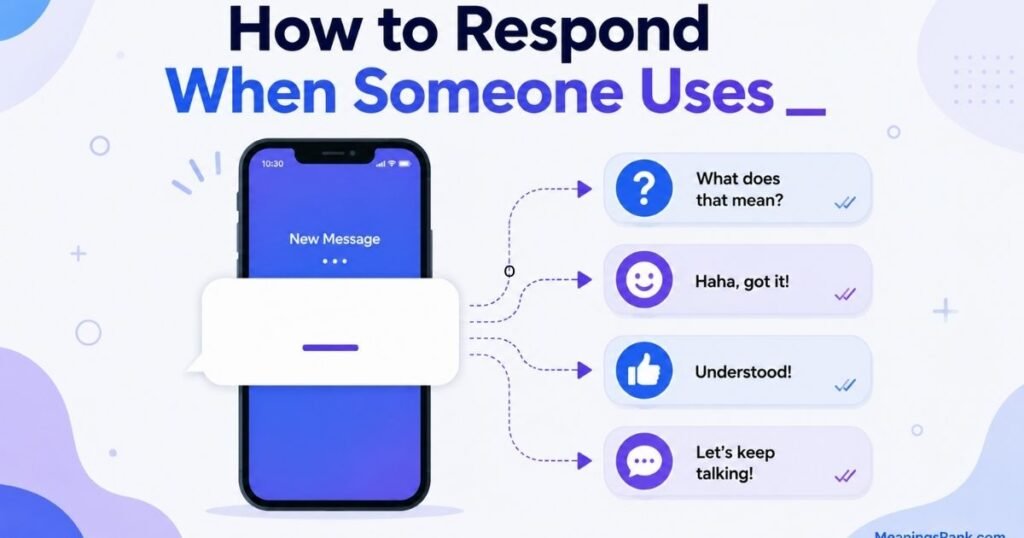
Responding to a standalone underscore depends on what caused the reaction in the first place.
If They Seem Shocked:
“Haha I know, right?”
If They Seem Awkward or Embarrassed:
“It’s okay, we’ve all been there 😅”
If You Want to Explain Further:
“Yeah it was so random, let me explain.”
If It Feels Playful:
“Lol stop, don’t judge me”
Example from a group chat:
Person A: “I may have liked his photo from 2019 by accident.”
Person B: “_”
Person A: “I know, I panicked and left.”
Notice how Person A continues the story naturally, treating the underscore as an invitation to explain further rather than a dead end in the conversation.
Regional & Cultural Usage of _
The underscore’s use as a username separator is nearly universal, appearing across almost every country and platform without much variation.
- In the U.S. and U.K., the standalone “_” reaction is common in youth texting culture, especially on platforms like Snapchat and TikTok.
- In many non-English-speaking regions, the underscore is used the same way in usernames, though the “speechless reaction” trend varies depending on local texting habits.
- Gaming communities worldwide rely heavily on underscores in usernames, since many platforms don’t allow spaces or special characters.
Because its functional use is tied to keyboard and internet formatting rather than language, the underscore doesn’t carry strong regional slang differences the way spoken phrases sometimes do.
Is _ Appropriate for Kids?
The underscore itself is completely harmless and contains no inappropriate content, making it appropriate for kids and teens.
- It’s commonly used in usernames for gaming platforms, school accounts, and social apps.
- As a reaction symbol, it’s mild and doesn’t carry offensive meaning.
- Parents may want to explain the “speechless reaction” use, since younger kids might not immediately understand why someone sent just a symbol.
Compared to slang tied to curse words or mature themes, the underscore is one of the safest symbols used in everyday texting.
Also Read: FYB Meaning in Text: The Complete Guide to Its Meaning & Usage
Frequently Asked Questions About _ Meaning
What does a lone underscore mean in text?
It usually means the sender is speechless, shocked, or unsure how to respond to what was just said.
Why do usernames use underscores?
Because most platforms don’t allow spaces, underscores separate words in usernames and handles.
Does “_” mean someone is upset?
Not always. It can reflect surprise, humor, or awkwardness just as often as annoyance.
Is sending “_” the same as ignoring a text?
No, it’s still a reaction. Ignoring someone means sending nothing at all.
What does “___” (repeated underscores) mean?
It usually signals a longer, more dramatic pause than a single underscore alone.
Can underscores be used in professional messages?
Only in file names or formal usernames, not as a standalone reaction in workplace chats.
Conclusion
Understanding the _ meaning in text really comes down to context. As a username separator, it’s purely functional. As a standalone reply, it becomes a small, wordless reaction to something surprising, awkward, or hard to put into words.
We’ve covered how the underscore is used across different platforms, what it means emotionally, how it compares to similar reaction symbols, and when it’s better left out of a conversation.
The next time you see a lone “_” in a chat, you’ll know it’s saying more than it looks like sometimes silence really does speak for itself.